If you’ve ever stood in the haircare aisle wondering whether your brush is silently sabotaging your strands, you’re not alone. A bamboo hair brush has quietly become one of the most talked-about swaps in modern haircare, promising gentler detangling, less frizz, and a smaller environmental footprint compared to the plastic brush that’s probably been sitting in your bathroom drawer for years. But is this just another eco-trend riding the sustainability wave, or does bamboo genuinely outperform plastic when it comes to real, measurable hair health?
That’s exactly what we’re unpacking today. We’ll walk through the science, the everyday practicalities, and the honest trade-offs so you can decide for yourself whether it’s time to retire your plastic brush for good.
Most people spend more time choosing a shampoo than they do choosing a brush, yet the tool you drag through your hair every single day plays a huge role in how healthy your strands actually look. Every stroke either smooths your cuticle or roughs it up, and that difference compounds over months and years.
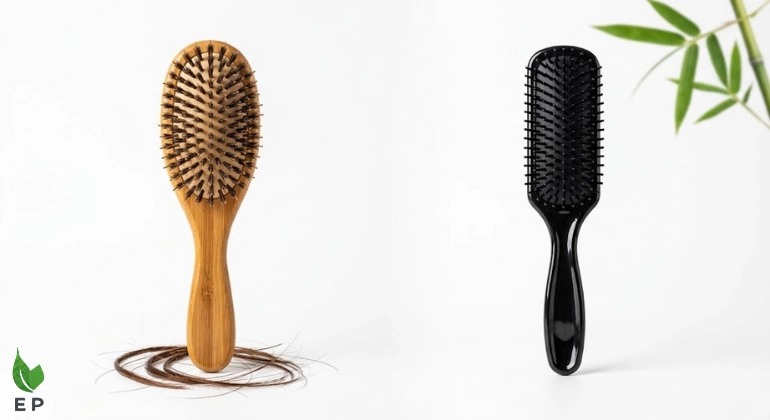
Plastic brushes, especially the cheaper mass-produced ones, tend to generate friction and static because of the material’s synthetic nature. This friction doesn’t just make your hair look frizzy on a humid day — it physically lifts the hair cuticle, making strands more prone to breakage and tangling. A wooden hair brush vs plastic comparison almost always starts here, at the friction level, because that’s where most day-to-day hair damage quietly begins.
Bamboo, on the other hand, is a natural, slightly porous material that behaves very differently against hair fibers. It’s this fundamental difference in texture and conductivity that sets the stage for everything else we’re about to discuss.
A bamboo hair brush typically features a handle and base carved from sustainably harvested bamboo, paired with either natural bristles (like boar bristle) or bamboo-tipped pins arranged in a cushioned base. Unlike plastic brushes that are injection-molded in a single synthetic piece, bamboo brushes are crafted from a renewable grass-like plant that grows back rapidly without needing replanting.
This matters for two reasons. First, bamboo is naturally antibacterial to a degree, which helps reduce the buildup of bacteria and oils on the brush surface over time. Second, because bamboo doesn’t hold static charge the way plastic does, it interacts with your hair in a fundamentally gentler way — something you’ll notice within the first few brush strokes if you switch.
If you’re curious what this actually looks like in practice, our bamboo hair brush uses this exact natural-bristle-on-bamboo-base design, which is the same structure most dermatologists and stylists point to when recommending a switch away from plastic.
Let’s get concrete about this, because “natural is better” is a claim thrown around a lot without much substance behind it. Here’s how the two materials actually stack up when you look past the marketing.
| Factor | Bamboo Hair Brush | Plastic Hair Brush |
|---|---|---|
| Static & Frizz | Low static, smoother strokes | Higher static, more frizz |
| Hair Breakage Risk | Reduced due to gentle bristle flex | Increased with rigid, sharp-edged bristles |
| Scalp Circulation | Often improves with massage-style bristles | Varies, usually stiffer contact |
| Hygiene | Naturally antibacterial surface | Prone to oil and bacteria buildup |
| Environmental Impact | Biodegradable, renewable resource | Non-biodegradable, petroleum-based |
| Longevity | Durable with proper care | Durable but not eco-friendly at end of life |
Looking at this table, the pattern becomes pretty clear: bamboo doesn’t just win on the “feel good about the planet” front — it genuinely outperforms plastic on several hair-health metrics too. That said, plastic brushes aren’t universally terrible; some premium options do minimize static. The bigger issue is that most affordable, everyday plastic brushes cut corners exactly where bamboo naturally excels.
When people ask what makes a bamboo brush for hair worth the switch, the answer usually comes down to a handful of consistent advantages that show up across most user experiences and dermatological recommendations.
These aren’t just isolated perks — they work together. Less static means less mechanical stress on the cuticle, which directly supports the breakage-reduction point above. It’s a bit like how a good night’s sleep improves your mood, energy, and focus all at once; one root cause (gentler material behavior) produces multiple downstream benefits.
Here’s where we should be honest rather than purely promotional. There isn’t a mountain of peer-reviewed clinical research specifically comparing bamboo brushes to plastic ones — haircare tool studies are notoriously underfunded compared to skincare or pharmaceutical research. What we do have is a strong body of practical evidence from trichologists, hairstylists, and material science.
Trichologists frequently point out that hair damage is largely a friction and tension problem. Every time a brush pulls too hard against a tangle or generates static that lifts the cuticle layer, you’re creating micro-damage that adds up. Bamboo bristles, especially when combined with boar bristle tips, tend to distribute tension more evenly across the hair shaft rather than concentrating stress at single points the way stiff plastic pins sometimes do.
Think of it like the difference between untangling a necklace chain with your fingers versus with a fork. The fork (plastic) might get through it faster, but it’s far more likely to snag and bend links in the process. Your fingers (bamboo, functionally) take a beat longer but handle the delicate parts with far more care.
So, is a bamboo hairbrush good for hair? Based on both material logic and consistent anecdotal feedback from long-term users, the answer leans strongly toward yes — particularly for people dealing with frizz, static, or fine, breakage-prone hair.
No brush, bamboo or otherwise, can directly grow new hair from your scalp — that’s simply not how hair follicles work. But there’s a legitimate secondary effect worth discussing here. Regular gentle brushing with a bamboo brush for hair growth can stimulate blood flow to the scalp, which supports the follicle environment that hair grows from.
Here’s a simple everyday example: many people incorporate a two-minute scalp massage using their bamboo brush before bed, working in small circular motions from the hairline back. Over weeks, this habit can help distribute natural scalp oils more evenly (reducing dryness-related breakage at the roots) and create a small but noticeable improvement in scalp comfort and hair texture. It’s not a miracle growth serum, but it is a low-effort habit that supports the conditions hair needs to grow well.
If you’re pairing this brushing routine with other bamboo grooming tools, a bamboo wooden double tooth pocket comb works nicely as a travel-friendly companion for detangling on the go without reintroducing plastic-related static.
This is where things get a little more nuanced, because “bamboo” often isn’t standing alone — many premium bamboo brushes actually combine a bamboo base with boar bristle tips for the best of both worlds.
Boar bristle is prized for how it naturally distributes scalp oils down the hair shaft, adding shine and reducing dryness at the ends. Bamboo, meanwhile, contributes the anti-static, biodegradable, lightweight handle structure. Plastic, by comparison, usually can’t replicate either benefit convincingly — it’s neither great at oil distribution nor particularly gentle on friction.
For most hair types, a bamboo-and-boar-bristle combination brush tends to outperform pure plastic brushes on nearly every comfort and health metric, though pure bamboo-bristle brushes (without boar) still offer a solid step up from plastic on the static and biodegradability front alone.
It would be incomplete to talk about bamboo brushes without addressing why so many people are making this switch in the first place — and it’s not purely about hair health. Plastic-free grooming has become a meaningful lifestyle shift for households trying to reduce their overall waste footprint.
A single plastic hairbrush can take hundreds of years to break down in a landfill, slowly fragmenting into microplastics rather than disappearing. Bamboo, by contrast, is compostable and comes from one of the fastest-growing plants on Earth, making it a genuinely renewable material rather than a “recyclable in theory” one.
This same environmental logic is why so many of our customers who switch to a bamboo hair brush also tend to swap out other bathroom staples over time. If this resonates with you, our guide on bamboo bathroom products for an eco-friendly routine walks through how small swaps across your whole bathroom shelf add up to a genuinely lower-waste lifestyle.
Not all bamboo brushes are created equal, and picking the right one depends largely on your hair type and daily routine. A few practical things worth checking before you buy:
If you’re shopping for your first one, our bamboo hair brush is designed with exactly these considerations in mind, pairing a natural bristle setup with an ergonomic bamboo handle for everyday use.
One common concern people raise before switching is hygiene — after all, wood sounds like it might absorb moisture and bacteria more than sealed plastic. In practice, quality bamboo brushes are treated to resist this, but a little routine care goes a long way.
Cleaning your brush weekly by removing trapped hair, then wiping the bristles and base with a slightly damp cloth (avoiding full submersion in water) keeps it fresh without damaging the wood. Letting it air-dry bristle-side down afterward prevents moisture from settling into the base, which is really the only real risk factor for bamboo tools long-term.
This same care philosophy applies across most bamboo grooming tools — if you’re also using a bamboo face brush or a set of bamboo cosmetic brushes, the same light-cleaning, air-dry approach keeps everything in good shape without introducing plastic-style buildup.
Pulling everything together, the pros and cons of a bamboo brush lean fairly decisively in bamboo’s favor for most people. It reduces static, handles tangles more gently, supports better scalp circulation habits, and — perhaps most importantly for long-term hair health — it doesn’t concentrate the kind of friction damage that cheap plastic brushes are notorious for.
The trade-off is usually price and slightly more mindful care, since bamboo does need to stay dry and clean rather than being tossed carelessly into a wet shower caddy. For most households, that small adjustment is a fair exchange for gentler hair handling and a genuinely lower environmental footprint.
If you’ve already made the switch on oral care, our piece on bamboo toothbrush vs plastic toothbrush covers a strikingly similar pattern — same material, same core benefits, different part of your routine.
Is a bamboo hair brush good for hair? Yes, bamboo brushes generally reduce static and friction compared to plastic, which helps minimize breakage and frizz over time, especially when paired with natural bristles.
Does a bamboo brush help with hair growth? It doesn’t directly grow hair, but regular gentle brushing can improve scalp circulation and oil distribution, creating better conditions for healthy hair growth.
How is a bamboo hair brush different from plastic? Bamboo generates less static, flexes more gently against hair strands, resists bacteria naturally, and biodegrades at the end of its life, unlike petroleum-based plastic.
How often should I clean my bamboo hairbrush? Removing loose hair daily and doing a light damp-cloth clean weekly, followed by air-drying, keeps a bamboo brush hygienic without damaging the wood.
Can bamboo brushes work for all hair types? Yes, though those with fine or breakage-prone hair tend to notice the biggest improvement, since bamboo’s reduced friction is especially helpful for delicate strands.
Switching your hairbrush might seem like a small decision, but as we’ve seen, it touches everything from daily frizz and breakage to your household’s environmental footprint. A bamboo hair brush isn’t a magic fix, but it consistently outperforms plastic on the factors that actually matter for long-term hair health — less friction, less static, better hygiene, and a far kinder impact on the planet.
If you’re ready to make the switch, explore our full range of eco-friendly personal care products and start building a bathroom routine that’s genuinely better for both your hair and the environment.

Subscribe our newsletter & get notification about information discount.
Subscribe to get special offers, free giveaways, and once-in-a-lifetime deals.