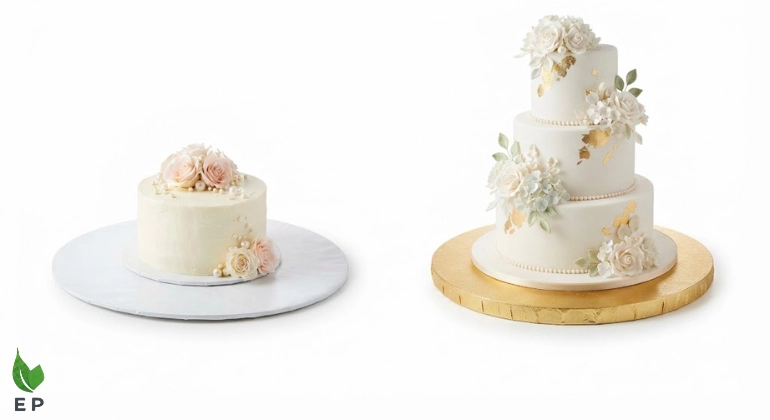
If you’ve ever stood in a bakery supply aisle scratching your head over which base to pick for your next cake, you’re not alone. The debate around Cake Drum Board vs Regular Cake Board confuses even experienced home bakers, because both look similar at first glance — round, flat, and foil-wrapped. But the truth is, these two boards serve very different purposes, and picking the wrong one can literally make your cake collapse mid-celebration. In this guide, we’re breaking down everything you need to know: material, thickness, strength, pricing, and exactly when to use each one.
By the end of this article, you’ll know precisely which board fits your baking project — whether it’s a simple birthday cake or a towering wedding centerpiece.
A regular cake board — sometimes called a cake circle — is a thin, lightweight base typically made from cardboard cake board material. It’s designed to sit under a cake for easy handling, transport, and presentation.
Regular cake boards are the everyday workhorses of the baking world. If you’re baking a simple sponge cake, a cupcake display, or a small celebration cake, this is usually all you need. You can browse a full range of these in our cake boards collection, including popular finishes like the white cake board, golden cake board, and silver cake board.
Because of their lighter build, regular cake boards aren’t designed to bear heavy weight. If you stack multiple tiers on a standard cake board, there’s a real risk of bending, warping, or even snapping — especially once buttercream or fondant adds extra mass.
Now let’s talk about the heavyweight champion: the cake drum board. This is where things get interesting.
A cake drum board is a thick, rigid, professional-grade base engineered to support significantly more weight than a standard cake circle. Most cake drum boards are constructed from masonite cake board material — a dense, compressed wood fiber board known for its strength and durability.
This is why cake drum boards are considered a cake presentation board as much as a cake base board — they don’t just support the cake, they elevate its visual appeal too. You’ll find our full drum board range in the cake drum board category, featuring options like the golden cake drum board, black cake drum board, silver cake drum board, and white cake drum board.
So, what exactly separates a cake drum vs cake board? Let’s break it down in a simple comparison table so you can see it side by side.
| Feature | Regular Cake Board | Cake Drum Board |
|---|---|---|
| Material | Cardboard, thin fiberboard | Masonite, dense fiberboard |
| Thickness | 3mm – 6mm | 12mm – 20mm |
| Weight Capacity | Light cakes only | Heavy, multi-tier cakes |
| Strength | Moderate, can bend | Sturdy cake board, rigid |
| Water Resistance | Limited | Often waterproof cake board |
| Best Use | Single-tier, cupcakes, small cakes | Cake board for tiered cakes, weddings |
| Price Range | Budget-friendly | Slightly higher (cake drum board price varies by size/finish) |
Think of a regular cake board as a paper plate — perfectly fine for everyday use but not built to hold a feast. A cake drum board, on the other hand, is more like a serving platter — solid, dependable, and designed to carry serious weight without buckling.
Thickness is honestly the single biggest giveaway when comparing these two boards. Here’s a quick breakdown of what you’ll typically encounter:
The rule of thumb? The heavier and taller your cake, the thicker your board needs to be. Skimping on thickness is one of the most common (and costly) mistakes new bakers make.
Wedding cakes are the ultimate test for any cake board. With multiple tiers, dense fillings, and hours of transport and display time, a flimsy base simply won’t cut it.
This is exactly why professional bakers rely on cake drum for wedding cakes setups almost exclusively. A quality drum board offers:
If you’re planning a wedding cake or a large tiered dessert table, pairing your cake with a proper drum board isn’t optional — it’s essential. And if you’re also sourcing packaging for cake slices or cupcakes at the same event, our cake slice boxes and single cupcake boxes make for a seamless, professional presentation.
Choosing the right size is just as important as choosing the right thickness. Here’s a general cake drum board size chart to guide your selection:
A helpful tip: always choose a board that’s 2 to 4 inches larger than your cake’s base diameter. This gives you room for decorative borders, drips, or piped details without overcrowding the edges.
Pricing naturally varies based on a few key factors, and understanding them helps you budget smartly:
While a cake drum board price is generally higher than a regular cardboard cake board, the added durability, professional finish, and peace of mind make it a worthwhile investment — especially for anyone selling cakes commercially.
Interestingly, cake drum board uses extend beyond just cakes. Because of their sturdy, food-safe surface, they’re also popular for:
This versatility is part of why professional bakeries keep a stock of drum boards on hand at all times.
Here’s the honest, no-fluff answer: it depends entirely on your cake.
Choose a regular cake board if:
Choose a cake drum board if:
At the end of the day, matching the board to the cake’s weight and purpose isn’t just about aesthetics — it’s about preventing disasters. Nobody wants their beautifully decorated cake sliding off a bent board in front of guests.
For bakers who regularly work with both types, it’s smart to keep a mixed stock. You can explore our complete range under the bakery packaging category for everything from boards to boxes in one place. And if you’re also setting up full bakery packaging, our detailed cake box for bakery complete guide is a great companion read.
Understanding the difference between cake drum and cake board isn’t just technical trivia — it’s practical knowledge that protects your hard work. A regular cake board handles everyday baking beautifully, while a cake drum board steps in when strength, stability, and presentation matter most.
Next time you’re prepping for a big order, a wedding cake, or even just a heavier home bake, take a moment to match your base to your bake. Your cake — and your reputation as a baker — will thank you for it.
Whether you need a lightweight cake board for a quick weekend bake or a heavy-duty drum board for your next big order, EcoProduct.pk has you covered with durable, foil-finished options in gold, silver, black, and white. Browse our full cake board and drum board collection today and give every cake the strong, beautiful foundation it deserves.
Q1: What is the main difference between a cake drum board and a regular cake board? The main difference lies in thickness and material. A regular cake board is thin cardboard suited for light cakes, while a cake drum board is a thick, sturdy masonite base built to support heavy, multi-tier cakes.
Q2: Can I use a regular cake board for a wedding cake? It’s not recommended. Wedding cakes are typically heavy and multi-tiered, requiring the extra strength and stability that only a cake drum board can provide.
Q3: What is a cake drum board made of? Most cake drum boards are made from masonite or high-density fiberboard, wrapped in a foil or laminated finish for a clean, professional look.
Q4: How thick should a cake drum board be for a two-tier cake? For a two-tier cake, a thickness of at least 12mm to 16mm is generally recommended to prevent bending or sagging.
Q5: Is a cake drum board reusable? Yes, many cake drum boards are durable enough to be cleaned and reused multiple times, making them a cost-effective long-term investment for bakeries.
Q6: Why is a cake drum board more expensive than a regular cake board? The higher price reflects the denser material, added thickness, and superior weight-bearing capacity, all of which justify the cost for heavier or professional cakes.

Subscribe our newsletter & get notification about information discount.
Subscribe to get special offers, free giveaways, and once-in-a-lifetime deals.