If you’ve ever tossed a used cotton bud into the trash without a second thought, you’re not alone — but that tiny habit carries a bigger environmental cost than most people realize. The debate around bamboo cotton buds vs plastic cotton buds isn’t just a trendy sustainability talking point; it’s a genuine turning point in how households across Pakistan and the world are rethinking everyday waste. What looks like a harmless bathroom essential has quietly become one of the most common contributors to ocean pollution, and the good news is that fixing it doesn’t require a lifestyle overhaul. It just requires one small, smart swap.
In this guide, we’ll unpack exactly why plastic cotton buds cause so much environmental damage, what makes bamboo cotton buds a genuinely better alternative, and how this single change fits into a broader zero-waste bathroom routine. Along the way, we’ll look at real numbers, real examples, and practical steps you can take starting today.
Plastic cotton buds seem harmless because they’re small, cheap, and disposable — but that’s exactly what makes them dangerous. Most plastic swabs are made from polypropylene, a petroleum-based material that takes hundreds of years to break down. When flushed down toilets or washed into drains, their lightweight stems easily slip past water treatment filters and end up in rivers, then oceans.
This isn’t a small-scale issue. Beach cleanups around the world consistently list plastic cotton bud sticks among the top ten items found on shorelines, right alongside straws and bottle caps. Once in marine environments, these sticks don’t just sit there quietly — they break down into microplastics pollution, tiny fragments that enter the food chain through fish and other marine life. From there, it’s not a stretch to say those microplastics eventually make their way back to human diets through seafood consumption.
The environmental impact of cotton buds also extends to production. Manufacturing plastic stems relies on fossil fuel extraction, contributing to carbon emissions long before the product ever reaches a store shelf. So the damage begins at manufacturing and continues well beyond disposal, creating a lifecycle that’s difficult to justify for something used for mere seconds.
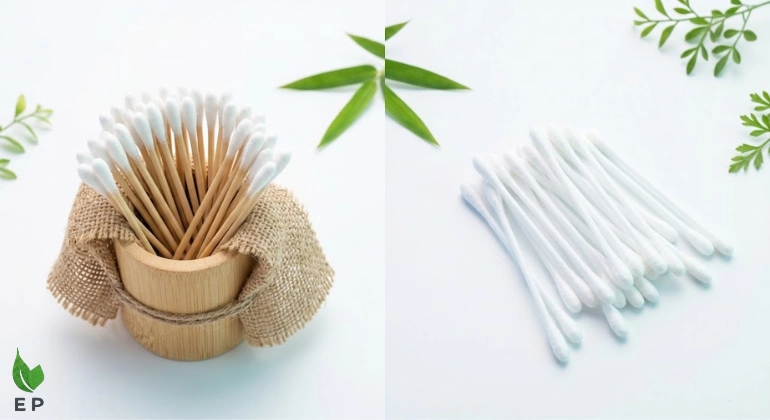
Bamboo cotton buds tackle the same problem from a completely different angle, starting with the stem material itself. Instead of petroleum-based plastic, the stick is made from bamboo — a renewable resource that grows remarkably fast, requires no pesticides, and regenerates without needing to be replanted. This single material swap changes everything about the product’s environmental footprint.
Because bamboo is a natural, biodegradable material, it breaks down in composting conditions within months rather than centuries. That’s the core distinction in the biodegradable vs non-biodegradable debate: one material returns safely to the earth, while the other lingers indefinitely, fragmenting into pollution.
Beyond the environmental angle, bamboo cotton buds also tend to feel sturdier in hand. Many users switching over for the first time notice the stem has a slightly firmer, more natural texture compared to the sometimes flimsy feel of plastic. If you’re curious how this compares to other bamboo personal care swaps, our breakdown on the bamboo toothbrush vs plastic toothbrush debate follows a very similar pattern — same core idea, different product.
Ecoproduct.pk’s own cotton buds are a good example of this shift done right: biodegradable bamboo stems paired with cruelty-free cotton tips, designed specifically to eliminate the plastic waste problem at its source.
When you place both products side by side, the differences become impossible to ignore. Here’s a straightforward breakdown of how they stack up across the factors that actually matter.
| Factor | Bamboo Cotton Buds | Plastic Cotton Buds |
|---|---|---|
| Stem Material | Natural, renewable bamboo | Petroleum-based plastic |
| Decomposition Time | A few months (compostable) | 100–500+ years |
| Ocean Impact | Breaks down safely, no microplastics | Major contributor to marine pollution |
| Feel & Sturdiness | Firm, natural texture | Often flexible or flimsy |
| Production Footprint | Low carbon, minimal processing | High carbon, fossil fuel-based |
| Cost | Slightly higher per unit | Cheaper upfront |
The one area where plastic still “wins” is upfront price — but that small savings comes at the cost of long-term environmental damage that far outweighs the few extra rupees spent on the eco-friendly cotton buds alternative. When you factor in the bigger picture of plastic waste reduction, the math shifts pretty quickly in bamboo’s favor.
It’s easy to underestimate how much a single-use item can matter until you see the scale of the problem. Millions of cotton buds are used and discarded daily around the world, and even if a small percentage end up in waterways, that adds up to an enormous volume of plastic waste entering marine ecosystems every single year.
Ocean pollution doesn’t stay contained to one region either. Ocean currents carry debris across continents, meaning a plastic stem discarded in one country can wash up on a completely different shoreline months later. This is part of why marine life protection efforts increasingly focus on reducing single-use plastic at the source rather than relying solely on cleanup efforts after the fact — prevention is simply more effective than remediation.
Switching to biodegradable materials like bamboo directly interrupts this cycle. Because the stem decomposes naturally, it never has the chance to persist in the water long enough to fragment into microplastics or entangle marine animals. If you’re looking to understand how these small swaps fit into a bigger sustainability puzzle, our guide on 10 easy zero-waste swaps for Pakistani households covers several other everyday products worth rethinking, and our piece on a letter to the oceans in 2030 paints a vivid picture of what’s at stake if these habits don’t change.
Beyond the environmental argument, there’s a practical health dimension worth addressing. Bamboo naturally carries antimicrobial properties, meaning the stem itself resists bacterial buildup better than plastic under similar storage conditions. For a product that’s used near sensitive areas like ears, that small detail carries real weight.
Most quality bamboo cotton buds also pair the stem with organic, cruelty-free cotton tips — meaning no animal testing was involved in production, and no synthetic fibers were used in the tip itself. This makes them a natural fit for anyone building a vegan personal care products routine or simply trying to minimize the chemicals and synthetic materials in their daily hygiene habits.
It’s worth noting that neither bamboo nor plastic cotton buds should be inserted deep into the ear canal — that guidance applies universally regardless of material. The safety difference here isn’t about usage technique; it’s about what happens to the product after it’s thrown away.
Theory is helpful, but seeing how this plays out in daily life makes the case even stronger. Consider a typical household bathroom cabinet: a family of four might go through two to three plastic cotton bud packs per month. Multiply that across a year, and you’re looking at dozens of plastic stems entering the waste stream from a single home — stems that, once discarded, will likely outlive everyone currently using them.
Now picture that same household making the switch to bamboo. The routine doesn’t change at all — same usage, same convenience, same storage in a bathroom cup or drawer. The only difference is what happens after disposal: instead of decades of persistence, the bamboo stems return to the soil within months if composted, or break down significantly faster even in general waste compared to plastic.
Retailers and eco-conscious brands are noticing this shift too. Many customers who’ve already switched their toothbrushes, straws, or cutlery to bamboo alternatives find the cotton bud swap to be the easiest one yet, simply because it requires zero adjustment in habit. If you’d like to see how other Pakistani households have approached this kind of transition, our feature on Pakistanis who switched to eco products shares some genuinely relatable stories.
Making this change doesn’t require research, budgeting, or lifestyle disruption — it’s genuinely one of the simplest sustainable swaps available. Here’s how most households approach it:
If you’re interested in extending this mindset across your entire bathroom setup, our detailed piece on how to make your bathroom sustainable offers a practical, room-by-room approach that builds naturally on this first step.
A few misconceptions tend to hold people back from making this switch, so it’s worth addressing them directly. Some assume bamboo cotton buds are noticeably weaker or less absorbent than plastic ones, but in practice, quality bamboo stems paired with well-made cotton tips perform just as reliably for everyday use.
Others worry that eco-friendly products always come with a steep price premium. While bamboo cotton buds are typically priced slightly above their plastic counterparts, the difference is usually marginal — often just a few extra rupees per pack — and increasingly, competitive eco brands are closing that gap even further as demand grows.
Finally, there’s a common assumption that switching to sustainable products means giving up convenience. In reality, bamboo cotton buds work exactly the same way plastic ones do: same shape, same usage, same storage. The only thing that changes is what happens after you’re done using them, which is precisely the point.
Are bamboo cotton buds as effective as plastic ones? Yes. The cotton tip performs identically regardless of stem material, since effectiveness depends on the cotton quality, not the stick itself.
How long do bamboo cotton buds take to decompose? Under proper composting conditions, bamboo stems typically break down within a few months, compared to centuries for plastic.
Are bamboo cotton buds more expensive than plastic ones? They’re usually priced slightly higher, but the difference is minor and reflects the sustainable sourcing and biodegradable materials used.
Can bamboo cotton buds be composted at home? Yes, most bamboo stems can go into a standard home compost bin, though the cotton tip should ideally be removed first if it contains any synthetic blend.
Do bamboo cotton buds help reduce ocean pollution? Directly, yes. Since they don’t persist as microplastics, they eliminate one of the many small but cumulative sources of marine plastic waste.
The comparison between bamboo cotton buds and plastic cotton buds ultimately comes down to a simple question: why choose a material that lingers for centuries when a better alternative exists that performs just as well and disappears responsibly? This isn’t about perfection or overhauling your entire lifestyle overnight — it’s about recognizing that small, consistent choices compound into meaningful impact over time.
Every plastic-free swap, including this one, chips away at the volume of single-use plastic entering our oceans and ecosystems. And unlike many sustainability changes that require sacrifice, this particular swap asks for almost nothing in return — same usage, same convenience, dramatically reduced environmental cost.
If you’re ready to make the switch, explore our full range of eco-friendly cotton buds and bathroom essentials and take that first small step toward a cleaner, more ocean-friendly routine today.

Subscribe our newsletter & get notification about information discount.
Subscribe to get special offers, free giveaways, and once-in-a-lifetime deals.