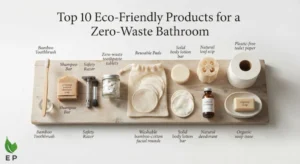
If you have ever wondered why eco-conscious brands, architects, and everyday households keep gravitating toward one humble plant, the answer lies in a simple truth: bamboo sustainable material status is not a marketing gimmick — it is backed by biology, chemistry, and decades of environmental data. From your morning toothbrush to the flooring under your feet, bamboo has quietly become the gold standard for why is bamboo sustainable, outpacing plastic, cotton, and even traditional hardwood in almost every measurable category. This is not just another “green trend” article. It is a deep, honest look at why bamboo consistently earns its title as the most sustainable material on earth, and what that means for your home, your wallet, and the planet you will hand down to the next generation.
Bamboo is technically a grass, not a tree, and that single biological fact changes everything about how sustainable it really is. Unlike hardwood species that take twenty to sixty years to mature, bamboo reaches full harvestable height in just three to five years, with some species growing nearly a meter in a single day under the right conditions. This makes bamboo one of the fastest-growing plants on the planet, and that speed is the foundation of its eco-friendly reputation.
Because bamboo regenerates from its own root system after harvesting, there is no need to replant it the way you would with a felled tree. The root network, called a rhizome, simply sends up new shoots, which means a single bamboo grove can be harvested repeatedly for decades without soil disturbance or the heavy machinery typically required for logging operations. This natural regeneration cycle is a major reason bamboo is often described as a bamboo renewable resource rather than a finite one.
There is also the matter of land efficiency. Bamboo produces significantly more usable biomass per acre than most timber species, which means less land needs to be cleared to meet the same material demand. In regions struggling with deforestation, this makes bamboo a practical deforestation alternative that reduces pressure on old-growth forests while still supplying industries with strong, workable fiber.
One of the most compelling arguments for bamboo’s sustainability credentials involves its relationship with carbon dioxide. Bamboo absorbs significantly more CO2 and releases more oxygen than an equivalent stand of hardwood trees, largely because of how quickly it grows and how densely it can be planted. This process, known as carbon sequestration, means bamboo groves function as efficient carbon sinks, actively pulling greenhouse gases out of the atmosphere while producing raw material at the same time. When people ask how bamboo reduces carbon emissions, this rapid biomass production paired with continuous regrowth is the core mechanism at play.
Bamboo also requires drastically less water than comparable crops. Cotton, for example, is notoriously thirsty, often requiring irrigation and heavy pesticide use to thrive. Bamboo, by contrast, typically survives on rainfall alone in its native climates and rarely needs chemical fertilizers or pesticides to flourish. This low water consumption profile is a significant reason why bamboo textiles and bamboo-based fabrics are increasingly popular alternatives in the fashion and home goods industries.
Bamboo’s dense root system does more than regenerate the plant itself; it also stabilizes soil on slopes and riverbanks, playing an important role in soil erosion prevention. In regions prone to landslides or heavy monsoon rains, bamboo forest ecosystems act as natural barriers that hold soil in place. This is one of the lesser-known benefits of bamboo for environment health, and it explains why bamboo cultivation is often encouraged in reforestation and land-restoration projects. Interestingly, bamboo forests also support biodiversity, most famously serving as the primary panda habitat in parts of China, a reminder that sustainable materials and wildlife conservation frequently go hand in hand.
When people compare materials side by side, the differences become impossible to ignore. Plastic is derived from fossil fuels, takes centuries to decompose, and contributes heavily to global pollution, while traditional hardwood, though natural, requires decades to regrow and often involves significant deforestation. Bamboo sits in a category of its own, offering the biodegradability that plastic lacks and the growth speed that hardwood cannot match.
| Factor | Bamboo | Plastic | Traditional Hardwood |
|---|---|---|---|
| Growth/Production Time | 3–5 years | Instant (fossil-based) | 20–60 years |
| Biodegradability | Fully biodegradable | Never fully decomposes | Biodegradable but slow |
| Water Requirement | Very low | N/A (industrial) | Moderate to high |
| Carbon Impact | Carbon-negative growth cycle | High carbon footprint | Moderate footprint |
| Renewability | Self-regenerating roots | Non-renewable | Requires replanting |
This table alone answers a question many shoppers ask directly: is bamboo better than wood, or does it simply trade one set of problems for another? Based on the data, bamboo consistently outperforms both plastic and hardwood across nearly every environmental metric, which is exactly why brands committed to genuine sustainability, rather than superficial “greenwashing,” continue to build entire product lines around it.
For a deeper look at how this plays out in everyday products, our comparison guide on bamboo toothbrush vs plastic toothbrush breaks down the numbers even further, while our piece on why birchwood cutlery is the best alternative to plastic explores how wood-based alternatives compare within the same eco-conscious category.
Bamboo’s environmental advantages would mean little if they stayed confined to research papers, but the reality is that bamboo has quietly infiltrated nearly every category of modern eco-conscious living. In construction, bamboo is used as a green building material for flooring, scaffolding, and structural framing in parts of Asia and Latin America, valued for a strength-to-weight ratio that in some tests exceeds that of steel. Homeowners renovating with sustainability in mind increasingly choose bamboo flooring over traditional hardwood, drawn by its durability and significantly shorter regrowth cycle.
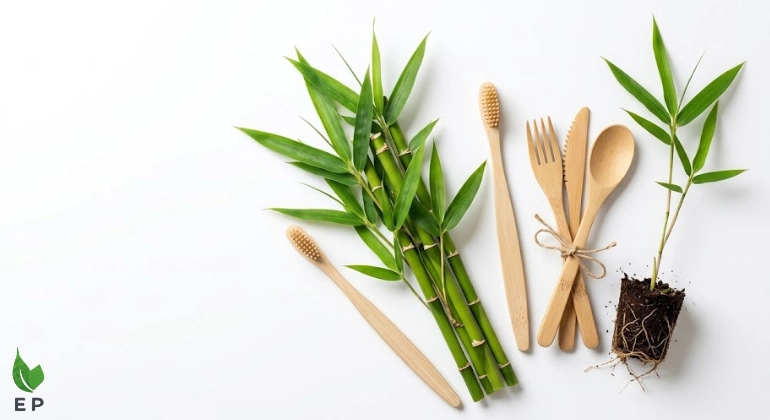
In the personal care and kitchen space, bamboo has become the default material for zero-waste products ranging from toothbrushes to cutlery sets. A single bamboo toothbrush, for instance, biodegrades within a few years, compared to a plastic version that can persist in landfills for over four centuries. This is precisely why households across Pakistan searching for sustainable bamboo products often start their eco-friendly journey with something as simple as a toothbrush swap, something we cover in detail in our best eco-friendly toothbrushes Pakistan buyer’s guide.
Bamboo cutlery has also become a practical, everyday example of sustainable bamboo farming translating into real household impact. Lightweight, naturally antibacterial, and sturdy enough for repeated use, a reusable bamboo cutlery set fits easily into a bag or lunchbox, eliminating the need for disposable plastic forks and spoons on the go. Similarly, bathroom essentials like a self-draining bamboo soap dish and a bamboo face brush for gentle exfoliation show how far bamboo has moved beyond furniture and flooring into intimate, daily self-care routines.
For readers ready to overhaul an entire room, our guide to bamboo bathroom products for an eco-friendly space walks through practical swaps that reduce plastic dependency without sacrificing comfort or hygiene.
Sustainability today is not just about where a material comes from; it is equally about where it goes after use. This is where bamboo earns another significant advantage, fitting naturally into circular economy principles because it returns to the earth rather than lingering as waste. A bamboo product at the end of its life can be composted, broken down naturally, or repurposed, closing the loop in a way that synthetic plastics simply cannot replicate.
This biodegradable material quality also positions bamboo as a genuine plastic pollution solution, particularly in single-use categories like straws, cutlery, and packaging where plastic waste has become an environmental crisis. Countries like Pakistan, where plastic waste management remains a persistent challenge, stand to benefit enormously from wider bamboo adoption, and local eco-conscious brands are already leading that shift with practical alternatives such as bamboo straws and broader zero-waste swaps outlined in our 10 easy zero-waste swaps for Pakistan guide.
For readers who want the essential numbers without wading through pages of explanation, here is a quick snapshot of the bamboo sustainability facts that matter most:
These facts collectively answer one of the most common NLP-driven questions people search for online: what makes bamboo sustainable, and why does it consistently outperform conventional materials across growth speed, water use, and end-of-life impact.
Sustainability conversations often feel abstract until they connect to daily life, and this is where the bamboo story becomes genuinely actionable. As more households across Pakistan search for practical ways to reduce plastic dependency, bamboo offers an accessible entry point that does not require a complete lifestyle overhaul. Small swaps, a toothbrush here, a cutlery set there, gradually add up to a meaningful reduction in household plastic waste, echoing broader themes explored in our sustainable living guide for Pakistan and our zero-waste guide to eco-sustainable products in Pakistan.
What makes this shift particularly encouraging is that it does not demand sacrifice. Bamboo products tend to be durable, visually appealing, and often more affordable over their lifespan than disposable plastic equivalents that require constant repurchasing. For anyone browsing a full range of eco-conscious essentials in one place, our eco-friendly product category brings together bamboo-based and biodegradable alternatives suited to kitchens, bathrooms, and everyday routines.
Stepping back from the individual facts and figures, the bigger picture becomes clear: bamboo is not sustainable because of a single standout feature, but because it excels simultaneously across growth speed, water efficiency, carbon absorption, soil protection, and biodegradability. Few materials on earth can claim that combination, which is precisely why environmental scientists, architects, and everyday consumers keep returning to it as a genuine solution rather than a passing trend.
Choosing bamboo over plastic or conventional hardwood is rarely a dramatic decision. It usually starts small, a toothbrush, a straw, a cutlery set, and grows into a broader awareness of how everyday choices ripple outward into environmental impact. If you are ready to begin that shift, exploring a trusted source for genuinely sustainable products makes the transition far easier, and our overview of why EcoProduct.pk is Pakistan’s most trusted eco-friendly store is a good place to see how that journey can look in practice.
The planet does not need perfect environmentalists. It needs millions of people making slightly better choices, consistently, over time. Bamboo makes that easier than almost any other material available today, and that is exactly why it has earned its reputation as the most sustainable material on earth.
Why is bamboo considered the most sustainable material? Bamboo grows exceptionally fast, regenerates without replanting, requires minimal water, and biodegrades naturally, giving it a combined environmental advantage that few materials can match.
Is bamboo really better than plastic? Yes. Bamboo is biodegradable, renewable, and requires no fossil fuel extraction, while plastic persists in the environment for centuries and relies on non-renewable resources.
How fast does bamboo actually grow? Certain bamboo species can grow up to 91 centimeters in a single day, and most reach full maturity for harvesting within three to five years.
Does bamboo farming harm the environment? When cultivated responsibly, bamboo farming supports soil stability, requires little to no pesticide use, and helps prevent soil erosion, making it far less harmful than conventional logging.
Can bamboo replace wood in construction? In many regions, bamboo is already used as a green building material for flooring, scaffolding, and structural elements due to its strength-to-weight ratio and rapid renewability.

Subscribe our newsletter & get notification about information discount.
Subscribe to get special offers, free giveaways, and once-in-a-lifetime deals.