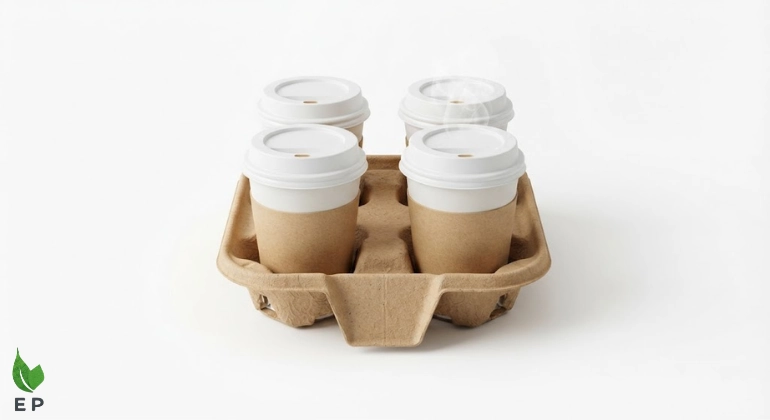
If you’ve ever watched a barista juggle four hot drinks across a busy counter without spilling a drop, you’ve probably seen the quiet hero of that moment — a sturdy little tray holding everything together. That’s the magic of Kraft Coffee Cup Carriers, and if you run a cafe, coffee shop, or delivery-based beverage business, this simple piece of packaging might be doing more for your brand than you realize. It’s not just about carrying cups from point A to point B; it’s about protecting your product, reducing waste, and making a subtle but powerful statement about who you are as a business.
In this guide, we’ll walk through everything cafe owners, packaging buyers, and eco-conscious entrepreneurs need to know — from what these carriers are made of, to how to choose the right size, to why they’re becoming the default choice across Pakistan’s growing cafe culture.
At their core, kraft coffee cup carriers are lightweight trays designed to hold multiple takeaway cups securely in place, usually for two or four drinks at a time. They’re typically made from kraft paper packaging — a strong, unbleached material known for its durability and natural brown finish. Unlike flimsy plastic rings or unstable makeshift solutions, these carriers are engineered specifically for grip, balance, and heat resistance.
What makes them so appealing isn’t just function, though. There’s something reassuring about handing a customer a neatly packed tray instead of a wobbly stack of cups. It signals care, attention to detail, and professionalism — three things every cafe wants associated with its brand. If you’re exploring cup carrier packaging options for the first time, browsing through a dedicated coffee cup carrier collection is a good starting point to understand the range available.
Pakistan’s cafe scene has changed dramatically over the past few years, and so have customer expectations. People no longer just want good coffee — they want to know the packaging around it isn’t harming the planet. This shift is exactly why eco-friendly coffee cup carriers have moved from a “nice-to-have” to a near-essential part of doing business.
Kraft-based carriers are biodegradable, often compostable, and made from renewable materials rather than petroleum-based plastics. That matters more than most business owners initially assume, because sustainability has quietly become a purchasing decision factor — especially among younger, urban customers who actively choose cafes that align with their values.
There’s also a practical, less talked-about benefit: sustainable cafe packaging tends to be cheaper to source at scale compared to specialty plastic alternatives, and it disposes of more easily, which matters for cafes dealing with high daily waste volumes.
A few reasons cafes are making the switch:
This is one of the most common questions cafe owners ask before placing a bulk order — and rightly so, because material quality directly affects durability. Kraft cup carriers are made from recycled or virgin kraft paperboard, a dense, fibrous material pressed into shape and often reinforced along stress points where fingers grip the tray.
The paper itself comes from wood pulp, processed using the “kraft process” (hence the name), which strengthens the fibers without heavy chemical bleaching. This is why kraft packaging retains that natural brown tone — it’s minimally processed, which keeps both cost and environmental impact low.
Some premium versions include a light wax or water-based coating for extra moisture resistance, particularly useful in Pakistan’s humid coastal cities or during monsoon season when spills and condensation are more common.
Not every order needs the same solution, which is why kraft cup holder for cafes typically comes in two standard formats. Choosing between them depends largely on your average order size and customer behavior — a small specialty cafe with mostly solo customers has very different needs than a busy office-district coffee shop handling large group orders.
| Carrier Type | Best For | Typical Use Case |
|---|---|---|
| 2-Cup Carrier | Couples, small orders | Dine-in pickup, small deliveries |
| 4-Cup Carrier | Groups, office orders | Bulk takeaway, corporate deliveries, drive-thru |
If your cafe frequently serves group orders, stocking both the kraft 2-cup coffee cup carrier and the kraft 4-cup drink carrier ensures you’re never scrambling during peak hours. Many cafes actually keep a 70/30 stock ratio favoring 4-cup carriers, since group orders tend to generate higher per-transaction value.
Beyond sustainability and aesthetics, there’s a very real operational side to why cafes love these carriers. Anyone who’s worked a busy shift knows that speed and accuracy matter just as much as presentation. A well-designed cup carrier tray genuinely speeds up service — baristas can prep multiple drinks in advance, slot them into the carrier, and hand them off in one smooth motion instead of making several trips or risking a spill.
There’s also a customer-experience angle that’s easy to underestimate. When someone orders four coffees for their office and receives them precariously stacked in their hands, it creates friction — literally and figuratively. A sturdy carrier removes that friction entirely, making pickup and delivery feel effortless.
For cafes juggling walk-in traffic, dine-in service, and delivery apps simultaneously, this small packaging choice contributes to smoother operations across the board. It’s worth pairing your carrier choice with the right cup size too — our guide on choosing the right coffee cup size for your cafe covers how cup dimensions and carrier compatibility go hand in hand.
Here’s something a lot of cafe owners overlook: every carrier that leaves your counter is essentially free advertising walking through the streets, into offices, and onto social media feeds. Custom printed cup carriers turn a purely functional item into a branding tool — your logo, tagline, or even a seasonal design riding along with every order.
This matters more than it might seem at first. In a market where dozens of cafes compete for the same customer base, small visual touches build recognition over time. A distinctive kraft carrier with your branding printed on it does double duty: it protects the drinks and quietly markets your business to everyone who sees it.
If you’re already using custom coffee cups, extending that same branding to your carriers creates a cohesive, professional look. Pairing this with options like the 12oz customized coffee cup with screen printing helps build a consistent visual identity from cup to carrier.
Delivery has become a massive part of cafe revenue in Pakistan, especially through platforms that prioritize speed and presentation reviews. And here’s the uncomfortable truth: a poorly packed delivery order can undo weeks of good reputation-building in a single bad review.
A coffee cup carrier for delivery orders isn’t optional in this context — it’s protective infrastructure. Riders navigating traffic, sudden stops, and uneven roads need cups that stay upright and secure. Without a proper carrier, even the best-made coffee can arrive lukewarm, spilled, or embarrassingly messy.
For businesses running high delivery volumes, this is often the single highest-ROI packaging investment, since it directly reduces refund requests, complaint tickets, and negative reviews tied to spillage.
Cost is naturally a major factor, especially for cafes managing tight margins on high-volume items. Generally speaking, kraft carriers remain one of the more affordable packaging categories, particularly when purchased through wholesale kraft packaging channels rather than one-off retail orders.
A few pricing factors worth understanding before placing a bulk order:
Most established suppliers offer noticeably better per-unit pricing once order volumes cross certain thresholds, so it’s worth planning purchases around monthly or quarterly cycles rather than restocking in small batches.
Selecting the right carrier isn’t just about picking whatever’s cheapest — it’s about matching packaging to your actual operational needs. Start by looking honestly at your order patterns: if solo orders dominate, a 2-cup format may cover 80% of your needs, while businesses near offices or universities often see far more multi-cup orders.
Material thickness matters too. Thin, low-grade kraft board can bend or tear under the weight of four full-sized drinks, especially double-wall cups, which are heavier than single-wall alternatives. Understanding cup weight differences helps here — our comparison on double-wall vs single-wall coffee cups breaks down why this affects packaging choices too.
Finally, think about branding needs. If marketing visibility matters to your business model, factor in customization costs early rather than treating them as an afterthought.
This is one of the most frequent questions cafe owners search for, and the answer has become increasingly one-sided as sustainability regulations tighten across Pakistan and globally.
| Factor | Kraft Cup Carriers | Plastic Cup Carriers |
|---|---|---|
| Environmental Impact | Biodegradable, compostable | Non-biodegradable, pollutes landfills |
| Cost at Scale | Generally lower with bulk orders | Often higher due to material sourcing |
| Customer Perception | Seen as eco-conscious, premium | Increasingly viewed negatively |
| Durability | Strong with proper design | Sturdy but environmentally costly |
| Branding Flexibility | Excellent print customization | Limited surface for branding |
The takeaway here is fairly clear — while plastic once dominated due to cost, recyclable cup carrier alternatives have closed that gap significantly, while offering far better brand perception. For a deeper look at similar material comparisons, our article on kraft paper bags vs plastic bags explores this shift in more detail.
Cafe packaging trends are moving in a fairly predictable direction: less plastic, more kraft, and increasingly personalized branding across every touchpoint — cups, sleeves, carriers, and bags alike. Customers have grown more perceptive about packaging choices, often associating kraft materials with quality and authenticity rather than just eco-friendliness.
There’s also a growing preference for cafes that use compostable materials across their entire packaging line, not just isolated items. This “full ecosystem” approach — where cups, carriers, sleeves, and bags all follow the same sustainable standard — is becoming a genuine differentiator in a crowded market. Cafes exploring this broader shift often start with foundational packaging like kraft standup pouches before extending the same philosophy to cup carriers and coffee sleeves.
Kraft coffee cup carriers might seem like a minor operational detail buried somewhere on your supply list, but they quietly influence customer experience, delivery reliability, brand perception, and environmental responsibility all at once. In a market where cafes increasingly compete on experience rather than just product quality, these small details add up to something customers genuinely notice — even if they can’t quite articulate why.
Whether you’re running a single neighborhood cafe or managing packaging for multiple locations, investing in reliable, well-made cafe packaging solutions pays off in fewer spills, stronger branding, and a business that feels considerate by design.
If you’re ready to upgrade your cafe’s packaging setup, explore the full range of coffee cup carriers and complementary coffee cups available for bulk ordering — and see firsthand how a small change in packaging can reshape how customers experience your brand.
What are kraft cup carriers made of? They’re primarily made from kraft paperboard, a durable, minimally processed material derived from wood pulp. Some versions include a light water-based coating for extra moisture resistance.
What is the best coffee cup carrier for cafes with high delivery volume? 4-cup kraft carriers with reinforced grip points typically perform best for delivery-heavy cafes, since they reduce spillage risk during transit.
How do I choose the right cup carrier packaging for my cafe? Base your choice on average order size, cup weight (single vs double-wall), and whether branding visibility is a priority for your business.
Are kraft paper cup carriers better than plastic ones? Yes, in most practical and environmental measures. Kraft carriers biodegrade naturally, cost less at bulk volumes, and are increasingly preferred by eco-conscious customers.
What sizes do coffee cup carriers typically come in? Standard sizes include 2-cup and 4-cup carriers, designed to accommodate both single-wall and double-wall paper cups securely.
Can I get custom printed cup carriers for branding? Yes, most suppliers offer custom printing options, allowing cafes to add logos or designs directly onto kraft carriers for consistent branding.

Subscribe our newsletter & get notification about information discount.
Subscribe to get special offers, free giveaways, and once-in-a-lifetime deals.