Every online seller knows the sinking feeling of getting a message that says, “My order arrived broken.” The product was perfect when it left your shelf, but somewhere between your packing table and the customer’s doorstep, it got dropped, squeezed or thrown. This is exactly why bubble wrap for ecommerce shipping is not an optional extra. It is the cheapest and most reliable insurance policy a small business can buy.
In this guide, I’ll walk you through why bubble wrap works, how it protects your products, which type to choose, how much you need and how to use it properly. I’ll also cover how it affects return rates, customer reviews and your profit margins. Whether you sell glassware, cosmetics, electronics or home décor, you will leave with a clear packing plan.
Bubble wrap is a flexible sheet of polyethylene film with small air-filled bubbles trapped between two layers. Each bubble acts like a tiny cushion. When a parcel is bumped or dropped, the bubbles compress and spread the impact across a wider area instead of letting it hit one point of your product. This is called shock absorption, and it is the basic reason bubble wrap is the most popular form of protective cushioning in the world.
Think of it like the airbag in a car. The airbag does not stop the crash, but it slows down the force reaching you. Bubble wrap does the same thing for your product. It also keeps items from rubbing against each other, which prevents scratches, scuffs and chipped corners that don’t look like “breakage” but still lead to unhappy customers.
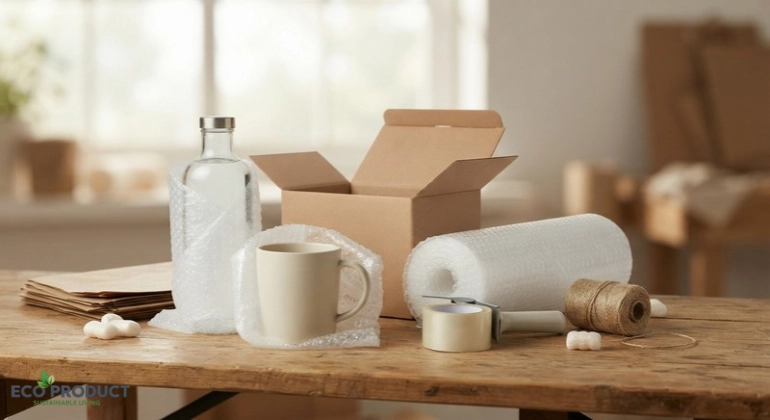
If you want to see what a ready-to-use option looks like, you can check this bubble wrap roll that works well for both small parcels and bulk packing.
To understand why you need bubble wrap, you need to understand what your parcel goes through. A package does not travel gently. It is scanned, sorted, stacked, loaded, unloaded and carried by several people before it reaches the customer. During courier handling, boxes get dropped from conveyor belts, pressed under heavier parcels and shaken inside trucks on bumpy roads.
Most damage comes from three forces: impact (drops), compression (weight from other parcels) and vibration (long road journeys). A thin cardboard box alone can’t handle all three. Your product needs a protective layer inside that absorbs and spreads these forces. This is where inner packaging such as bubble wrap does its real work, while the outer box simply gives structure.
Many new sellers try to save a few rupees by using newspaper, cloth scraps or nothing at all. It looks smart on the packing table, but the math rarely works out. When a product breaks, you lose far more than the item price.
You pay for the original product, the shipping to the customer, the return or replacement shipping and the time spent handling the complaint. On top of that, you risk a bad review, which can scare away dozens of future buyers. Customers rarely blame the courier. They blame the seller who “sent a broken product.”
A single broken order can easily wipe out the profit from several successful ones. Compared to that, the cost of bubble wrap per parcel is tiny. That is why experienced sellers treat it as a business expense that pays for itself, not as a luxury.
The benefits of bubble wrap go beyond simply “protecting things.” Here is what it really does for your business:
It’s also light and easy to cut, so even a one-person business can pack dozens of orders per day without slowing down. And because it is transparent, it gives a tidy, professional look when the customer opens the box.
Fragile goods like glass bottles, ceramic mugs, perfume, candles and electronics need more than a box. They need layered protection. Bubble wrap provides fragile goods protection in three clear ways.
First, it absorbs impact. If the box falls from a table or conveyor, the air bubbles compress and take the force instead of your product. Second, it creates distance between the product and the outer wall of the box. Most damage happens when something hits the box edge, and a few centimeters of cushioning can be the difference between safe and shattered. Third, it stops movement. A product that can’t move inside the box is far less likely to crack, chip or rub against another item.
For delicate food-related items, the same principle applies. If you’ve ever wondered how bakers deliver cakes safely, our guide on how to package a cake for delivery without damage shows the same cushioning logic in a different industry.
Not all bubble wrap is the same. The size of the bubble changes how it performs, and choosing the wrong one is a common mistake. Small bubbles are better for surface protection and light items, while large bubbles are better for cushioning heavy or bulky goods.
| Bubble Size | Best For | Protection Level | Typical Products |
|---|---|---|---|
| Small (about 10 mm) | Light, delicate items and surface wrapping | Medium | Cosmetics, jewelry, phone accessories, small gadgets |
| Medium (about 15–20 mm) | General ecommerce use | Medium to High | Books, mugs, small appliances, bottles |
| Large (about 25 mm and above) | Heavy or fragile bulky items | High | Glassware, décor, electronics, void fill |
If you sell a mix of items, keep two sizes at your packing station. Use the small one as the first layer to protect surfaces and the larger one as the outer layer for shock absorption. There’s also anti-static bubble wrap, which is usually pink or light-colored and designed for electronics, circuit boards and sensitive devices that can be damaged by static electricity.
This is one of the most common questions new sellers ask. The honest answer is that it depends on the product’s weight, shape and fragility, but a simple rule works well in most cases.
For light and moderately fragile products, wrap the item two full times so there are at least two layers around every side. For very fragile or heavy items such as glassware, use three layers or combine bubble wrap with void fill. Always make sure the corners are covered, because corners take the hardest hits. After wrapping, secure it with good-quality clear packaging tape so the wrap doesn’t unravel in transit.
A quick shake test helps. Place the wrapped product in the box, close it and give it a gentle shake. If you can feel or hear movement, add more cushioning. If nothing moves, you’re ready to seal.
Good packing is a process, not a guess. Here is a method that works for most online sellers, from beginners to experienced shops.
Step 1: Choose the right box. Pick a box that gives about 5 cm of space around the product for cushioning. A box that is too tight leaves no room for protection, and one that is too big lets the product move. For strong outer protection, sturdy 3-ply and 5-ply ecommerce boxes are a reliable choice, and our guide to ecommerce boxes in Pakistan explains how to pick the right size and thickness.
Step 2: Wrap the product. Wrap the item completely, keeping the bubbles facing inward toward the product. This gives a smoother surface and better cushioning. Cover edges and corners with extra layers.
Step 3: Add a base layer. Place a cushion of bubble wrap or paper at the bottom of the box before putting in the product.
Step 4: Fill the empty space. Use extra bubble wrap, air pillows or crumpled paper to fill any gaps. Empty space is where damage begins.
Step 5: Seal and label. Close the box and seal all seams with strong tape using the “H-tape” method (center seam plus both edge seams). Add a “Fragile” label so couriers know to handle it with care.
Step 6: Test it. Give the box a gentle shake and, if you sell high-value items, even try a short drop test from waist height.
Bubble wrap isn’t the only cushioning option. Packing peanuts, foam wrap, air pillows and paper all have their place. The right choice depends on your product and budget.
| Material | Cushioning | Weight | Best Use | Limitation |
|---|---|---|---|---|
| Bubble wrap | Excellent | Very light | Fragile and surface-sensitive items | Plastic-based |
| Packing paper | Moderate | Light | Void fill and wrapping non-fragile goods | Weak shock absorption |
| Packing peanuts | Good | Very light | Irregular shapes | Messy, can shift |
| Air pillows | Good | Very light | Void fill | Pop if punctured |
| Foam wrap | Good | Light | Surface protection | Less impact absorption |
Packing peanuts are cheap and fill space well, but they tend to settle at the bottom during transit and leave the top of your product exposed. Paper is great for eco-friendly void fill but doesn’t absorb impact as well. If you want a deeper comparison, read our detailed breakdown of bubble wrap vs packing paper. In many cases, the smartest approach is a mix: bubble wrap around the product and paper or air pillows for the empty space.
Customer experience starts the moment the parcel is opened. A product that arrives intact, neatly wrapped and secure feels trustworthy. A product that arrives cracked or scratched makes the customer doubt your whole brand, even if the product itself was excellent.
Shipping damage affects customer satisfaction in a direct and emotional way. People don’t just want a replacement. They want to feel that the seller cares. Good packaging quietly says, “We took care of your order.” That small detail turns first-time buyers into repeat customers and encourages them to leave good reviews.
From a numbers point of view, fewer damaged orders mean fewer returns, fewer refunds and fewer support messages. Sellers who invest in proper protective packaging often notice that complaints about broken items drop sharply. It is one of the easiest ways to lower product return rates without changing your product at all.
If you run a small home-based store, you might wonder whether bubble wrap is worth the cost. The answer is almost always yes. Small businesses depend heavily on reviews and word-of-mouth, so a single bad delivery hurts more than it would for a large brand.
The good news is that bubble wrap is affordable, especially when you buy in bulk. Buying bubble wrap rolls in bulk brings the per-parcel cost down to a few rupees, which is tiny compared with the cost of replacing a broken item. You also save time because you don’t have to hunt for random packing materials every day. Many shops keep a roll, tape, boxes and a rope or two ready as a standard kit. Our packing materials collection puts the basics together in one place, including items like packing rope and cling film for extra security.
If you ship lightweight items like jewelry, accessories, cosmetics, small electronics or books, bubble wrap mailers can save you time and money. These are padded envelopes with a built-in bubble lining, so you don’t need to wrap each item separately. They are lighter than boxes, which can reduce courier charges, and they are quick to pack.
However, mailers are not ideal for very fragile or heavy products. Glass, ceramics and anything that can be crushed should still go in a rigid box with proper cushioning inside. Think of mailers as a convenience tool, not a replacement for a full protective setup.
Since bubble wrap is made from polyethylene film, many conscious sellers ask whether it can be recycled and what greener options exist. Bubble wrap can be reused several times, and many customers keep it for their own storage or moving needs. Reusing it is the simplest way to reduce waste. In some places it can be collected with plastic film recycling, but availability varies, so check what’s possible locally.
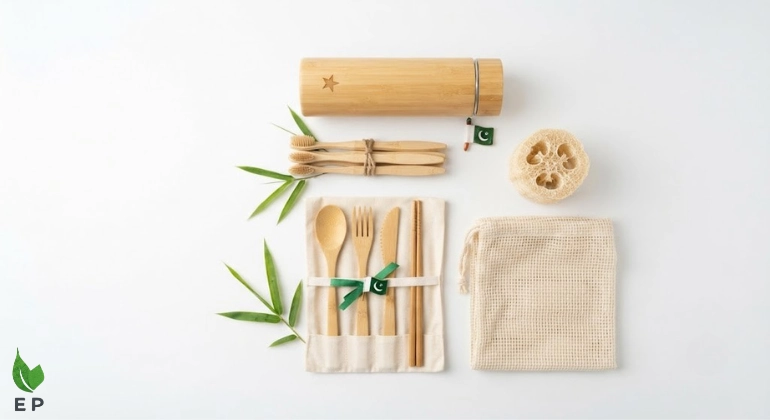
If sustainability is part of your brand, you don’t have to give up protection. You can combine reused bubble wrap with recycled kraft paper, corrugated inserts or honeycomb paper for void fill, and use recyclable boxes and paper-based tape. For more ideas, explore our guides on eco-friendly packaging products in Pakistan and sustainable packaging solutions. The best green approach is often not “no bubble wrap,” but “right-sized packaging with less waste.”
Even with the right material, small mistakes can reduce protection. These are the ones I see most often:
Avoiding these errors costs nothing and can noticeably reduce your damage rate.
When choosing a supplier, look for consistent bubble quality, strong film thickness, clear roll sizes and fair bulk pricing. Cheap, thin bubble wrap tends to pop easily and loses its cushioning value quickly, so it often costs more in the long run.
At EcoProduct.pk, you can find bubble wrap along with boxes, tape, rope and other shipping supplies for online business, so you can get your entire packing kit from one place. Browse the full shop or start with the bubble wrap roll to upgrade your packing today.
Bubble wrap for ecommerce shipping is one of the simplest and smartest investments an online seller can make. It absorbs shock, keeps products from moving, protects surfaces and helps your parcels survive the rough journey through courier networks. In return, you get fewer damaged orders, fewer returns, happier customers and stronger reviews.
The best approach is simple: choose the right bubble size, wrap every side of the product, fill empty spaces, seal the box properly and test before shipping. Combine bubble wrap with sturdy boxes and good tape, and you’ll have a packing system that protects both your products and your reputation.
Stop worrying about broken parcels and negative reviews. Get your bubble wrap, ecommerce boxes, tape and packing essentials from EcoProduct.pk today, and give every order the protection it deserves. 👉 Shop packaging supplies now
1. How does bubble wrap protect products during shipping?
The air-filled bubbles compress on impact and spread the force across a wider area, which reduces the shock that reaches the product. It also keeps items from moving or rubbing against each other inside the box.
2. Why is bubble wrap important for online stores?
It lowers the chance of damage in transit, which reduces returns, refunds and bad reviews. For small online stores, that directly protects both profit and reputation.
3. How much bubble wrap do I need for shipping?
Most items need at least two layers on every side. Very fragile or heavy items such as glass should have three layers, with extra cushioning at the corners and no free space left in the box.
4. Does bubble wrap reduce return rates?
Yes. Because fewer products arrive damaged, fewer customers request refunds or replacements, which helps lower overall return rates.
5. Is bubble wrap better than packing peanuts?
For fragile items, usually yes. Bubble wrap holds its shape and absorbs shock more consistently, while packing peanuts can shift and settle during transit.
6. Can bubble wrap be recycled?
It’s made of polyethylene film, so recycling depends on local facilities. The easiest way to reduce waste is to reuse it, and you can pair it with paper-based void fill as a greener option.

Author at Eco Product — passionate about sustainable living and eco-friendly products.

Subscribe our newsletter & get notification about information discount.
Subscribe to get special offers, free giveaways, and once-in-a-lifetime deals.