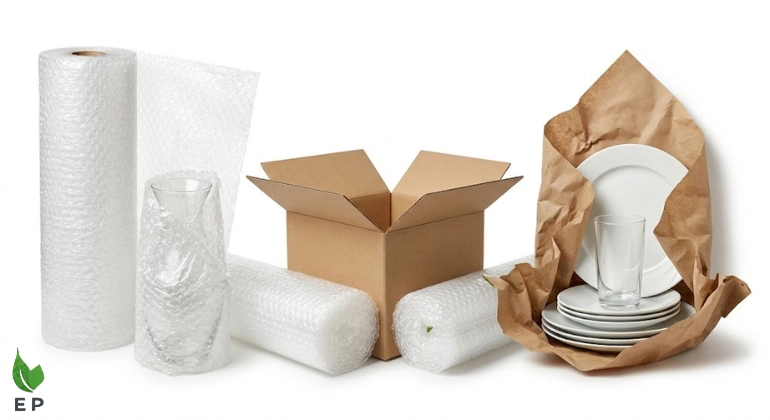
When comparing bubble wrap vs packing paper, the better choice depends on what you are packing, how far it will travel, and the type of damage you need to prevent. Bubble wrap generally provides stronger impact protection for highly fragile or valuable objects, while packing paper is better for scratch protection, lightweight wrapping, and filling empty spaces inside boxes. In many situations, the safest solution is not choosing one over the other—it is using both strategically.
Whether you are moving house, shipping customer orders, or placing delicate household items into storage, the wrapping material you choose can determine whether an item arrives safely or in several disappointing pieces.
This guide compares packing paper vs bubble wrap based on cushioning, cost, sustainability, ease of use, and suitability for dishes, glassware, electronics, furniture, and other breakable items.
Bubble wrap offers better shock absorption and impact protection, making it the stronger choice for delicate, expensive, or irregularly shaped items. Packing paper provides excellent surface protection and void filling, but several layers may be needed to create meaningful cushioning.
Here is a quick packing materials comparison:
| Factor | Bubble Wrap | Packing Paper |
|---|---|---|
| Impact protection | Excellent | Moderate |
| Scratch protection | Good when used correctly | Excellent |
| Void filling | Good but bulky | Excellent |
| Moisture resistance | Strong | Weak |
| Flexibility | Excellent | Excellent |
| Cost-effectiveness | Better for high-risk items | Better for general packing |
| Recyclability | Depends on local facilities | Usually widely recyclable |
| Best use | Fragile and valuable objects | Dishes, surfaces, and empty spaces |
The short verdict: Bubble wrap protects better against drops, vibration, and impact. Packing paper is often the more practical and lower-waste option for everyday packing, surface protection, and filling gaps.
Bubble wrap is a flexible plastic protective packaging material containing sealed, air-filled bubbles. These bubbles create a cushioning layer between an object and external pressure, vibration, or impact.
When a box is dropped or bumped during transportation, the air pockets help distribute some of the force. This shock absorption makes bubble wrap for fragile items especially useful during moving, courier delivery, and long-term storage.
The main advantages of bubble wrap include:
For reliable protection during moving or shipping, an appropriate bubble wrap roll for protective packaging can be used around glassware, ceramics, electronics, mirrors, collectibles, and other delicate products.
Bubble wrap is highly protective, but it is not perfect.
To reduce its environmental impact, keep sheets clean and reuse them for future storage, moving, or customer orders. If recycling is available locally, follow the recycler’s instructions rather than placing soft plastic in a general recycling bin.
Packing paper is clean, flexible paper used to wrap products, separate stacked items, and fill empty spaces inside moving boxes or shipping packages. Unlike printed newspaper, proper packing paper should not transfer ink onto dishes, furniture, clothes, or other surfaces.
Flat sheets work well for item wrapping. Once crumpled, the paper becomes a useful cushioning material for void filling and box padding.
The important advantages of packing paper include:
For people searching for eco-friendly packing materials, recycled or responsibly sourced paper is often preferable to single-use plastic. Clean, uncoated paper can usually be recycled, although local recycling rules still apply.
Packing paper also has weaknesses:
Packing paper performs best when items are packed tightly enough to prevent movement, but not so tightly that pressure could cause cracks or breakage.
The answer to which protects better, bubble wrap or packing paper becomes clearer when each material is evaluated against specific packing risks.
Bubble wrap is the winner for direct impact protection.
Its air pockets absorb and distribute force more effectively than flat paper. Even crumpled packing paper may compress quickly under a heavy object, reducing the space available for cushioning.
For fragile ceramics, electronics, mirrors, decorative glass, or valuable collectibles, bubble wrap is usually the best protective packaging material of these two options.
Packing paper can still contribute to impact protection when:
Winner: Bubble wrap
Packing paper is often safer for direct contact with delicate surfaces.
Soft paper can prevent plates, furniture parts, glassware, and polished objects from rubbing against one another. It does not have raised bubbles that might leave temporary patterns or impressions.
For sensitive surfaces, use packing paper or another non-abrasive material as the first layer. Bubble wrap can then be added as the outer cushioning layer.
Winner: Packing paper
An item can be wrapped perfectly and still break if it moves around inside the box. Empty spaces allow products to slide, collide, and strike the walls of cardboard boxes.
Crumpled packing paper is particularly effective for:
Bubble wrap can also fill empty areas, but using large quantities for this purpose is usually less cost-effective. Save it for wrapping and use paper for the remaining gaps.
Winner: Packing paper
Standard packing paper absorbs moisture and may weaken when wet. Bubble wrap creates a water-resistant barrier around an item, although it does not make a package completely waterproof.
For electronics, metal objects, artwork, or goods being stored in humid conditions, bubble wrap offers stronger moisture protection. Moisture-sensitive items may require additional barriers or specialist packaging.
Winner: Bubble wrap
Unused packing paper lies flat and takes up relatively little space. Bubble wrap rolls are lightweight but bulky, which can be inconvenient in small homes, warehouses, and dispatch areas.
However, bubble wrap can reduce the number of layers required for a fragile object. Storage efficiency therefore depends on how much material you need and how often you pack.
Winner: Packing paper
Bubble wrap is generally faster for high-risk items because one or two suitable layers may provide substantial package cushioning. Packing paper can take longer because multiple sheets may be needed.
For ordinary kitchenware, books, utensils, and lightweight décor, paper is quick and straightforward. For delicate or expensive items, bubble wrap provides faster confidence—plus the irresistible temptation to pop the leftovers.
Winner: Tie, depending on the item
The best material for packing fragile items is not always the same. Item weight, shape, surface, value, and fragility all affect the required protection level.
When considering bubble wrap vs packing paper for dishes, packing paper is usually suitable for plates and bowls if the box is packed correctly.
Use this method:
Bubble wrap is recommended for fine china, ceramic serving pieces, heirloom dishes, or boxes travelling through courier networks.
Best choice: Packing paper for standard dishes; bubble wrap for high-value or exceptionally fragile pieces.
For bubble wrap vs packing paper for glassware, a combination offers the safest result.
First, wrap the glass in clean paper to protect its surface. Carefully support hollow sections where appropriate, without forcing paper into delicate stems or narrow openings. Add bubble wrap around the outside for impact protection.
Stemware requires particular care:
Best choice: Packing paper plus bubble wrap.
Electronics need cushioning, movement control, and moisture protection. Bubble wrap is usually more effective than packing paper, but anti-static packaging may be required for exposed circuit boards or highly sensitive devices.
Before packing:
Best choice: Bubble wrap, combined with appropriate anti-static protection where necessary.
Mirrors and framed artwork need surface protection before cushioning. Place clean paper, glassine, or a suitable non-abrasive sheet against sensitive surfaces. Then add bubble wrap as an outer protective layer.
Corner protectors and sturdy boxes provide additional damage prevention.
Do not place standard bubble wrap directly against fresh paint, delicate finishes, or artwork for extended storage unless the material is confirmed safe.
Best choice: A protective paper layer followed by bubble wrap.
Packing paper can protect furniture surfaces from dust and light scratches. Bubble wrap is better for corners, handles, legs, glass sections, and decorative details.
For larger items:
Natural sisal packing rope for secure bundling can help organise suitable packages, but it should not be tightened directly around fragile surfaces where pressure could leave marks.
Best choice: Paper for surfaces and bubble wrap for vulnerable sections.
Collectibles often combine fragile materials, irregular shapes, and high financial or sentimental value. Wrap each piece separately. Use a soft first layer and bubble wrap outside it, then place the item in a correctly sized box with no room to shift.
For exceptionally valuable items, consider double-boxing.
Best choice: Both materials, with bubble wrap providing primary cushioning.
Shipping packages often face greater risk than boxes moved personally. Courier parcels may experience drops, stacking pressure, vibration, temperature changes, and repeated handling.
For bubble wrap vs packing paper for shipping, bubble wrap usually provides stronger protection for fragile products. However, wrapping alone cannot compensate for a weak or oversized box.
A dependable shipping system includes:
For e-commerce orders, 3-ply and 5-ply corrugated shipping boxes provide different strength options for varying loads. Businesses can also review this guide to e-commerce boxes and professional product packaging before choosing a carton.
After packing, seal the top and bottom seams securely with strong clear packaging tape. Do not rely on interlocking box flaps alone for shipping.
Before sealing the parcel permanently, gently move the box from side to side.
A fragile item should sit in a stable cushioning zone rather than floating loosely or being squeezed under excessive pressure.
For an entire household move, choosing only paper or bubble wrap for moving is rarely practical. Different belongings need different levels of protection.
People preparing for storage and moving can explore available packaging materials for home shifting to coordinate wrapping, cushioning, sealing, and box protection.
Practical verdict: Packing paper is the best packing material for moving in bulk, while bubble wrap is the better protective material for the move’s most vulnerable items.
Packing paper is generally less expensive for wrapping large quantities of everyday belongings and filling empty spaces. Bubble wrap may cost more per roll or wrapped item, but its stronger protection can prevent expensive damage.
The real cost is not simply the purchase price. It should include:
For a low-cost mug, several paper sheets may be sufficient. For an expensive electronic device, artwork, or collectible, saving a small amount on cushioning could lead to a much larger loss.
Businesses should treat packaging as part of product quality. Preventing shipping damage protects inventory, customer trust, and brand reputation.
Packing paper usually has the environmental advantage when it is made from recycled content, used efficiently, and recycled after use. Clean, uncoated paper is widely recyclable and may break down more readily than plastic film.
However, no wrapping material is automatically sustainable.
Packing paper may be a better option when it is:
Paper production still requires raw material, water, energy, and transportation. Calling all paper “zero impact” would be inaccurate.
Bubble wrap may have a lower practical impact when it is:
A damaged product can create more waste than the packaging used to protect it. Replacement manufacturing, additional shipping, and disposal all add environmental costs.
For a broader strategy, read about sustainable packaging solutions in Pakistan and practical ways to reduce plastic waste.
Use the following hierarchy:
This balanced approach supports sustainable packaging without sacrificing safe transportation.
Even the best cushioning material can fail when applied poorly.
Heavier or more delicate objects may need larger bubbles, multiple layers, foam inserts, or double-boxing.
Packing paper works best when it creates both a surface barrier and a stable cushioning structure.
Avoid using loosely crumpled balls that collapse immediately. Paper should be firm enough to restrict movement but not so dense that it creates damaging pressure.
Good materials cannot rescue a careless packing technique. Avoid these common mistakes:
A well-packed box should protect against impact from every direction—not only from the bottom.
In the overall bubble wrap vs packing paper comparison, bubble wrap provides better protection against impact, vibration, drops, and moisture. It is the stronger choice for electronics, glassware, mirrors, collectibles, ceramics, and other high-risk items.
Packing paper is better for protecting surfaces, wrapping ordinary household goods, separating dishes, and filling empty spaces. It is also generally easier to recycle and more economical for large moving projects.
The best strategy is simple:
Instead of asking which material wins every time, match the material to the risk. Fragile items do not care about packing debates—they care about whether they reach the destination in one piece.
Protecting your belongings starts with choosing the right wrapping material, but reliable boxes, tape, and secure packing techniques are just as important.
Explore Eco Product’s bubble wrap roll, corrugated e-commerce boxes, and complete range of packaging supplies for moving, storage, shipping, and business orders.
Choose the right protection, use only what you need, and pack every item with its journey in mind.
Bubble wrap is better for impact protection, shock absorption, and moisture resistance. Packing paper is better for preventing scratches, separating items, and filling empty spaces. For highly fragile items, using both materials usually provides the best protection.
Packing paper can replace bubble wrap for lightweight and moderately fragile household items when multiple layers and proper void filling are used. It may not provide sufficient protection for electronics, delicate glassware, expensive ceramics, or valuable collectibles.
Packing paper is usually suitable for ordinary plates and bowls. Wrap each item individually, pack plates vertically, and fill all gaps. Use bubble wrap for fine china, serving pieces, heirlooms, and especially delicate dishes.
Using both is safest. Packing paper provides surface protection, while bubble wrap cushions the glass against impacts. Stemware and delicate glass pieces should be individually wrapped and separated inside the box.
Clean, recycled, uncoated packing paper is generally easier to recycle and may have a lower plastic impact. Bubble wrap can still be used responsibly when it is reused multiple times and recycled through an appropriate soft-plastic collection facility.
Bubble wrap may mark or affect some polished, painted, or sensitive surfaces, particularly during long-term storage. Place a clean, non-abrasive paper layer between the object and bubble wrap when surface sensitivity is a concern.
The correct number depends on item weight, fragility, shape, bubble size, box strength, and transportation risk. One suitable layer may protect sturdy objects, while delicate products may need multiple layers, reinforced corners, or double-boxing.
Yes. Firmly crumpled packing paper is effective for void filling and movement prevention. Fill the bottom, sides, corners, and top of the box so wrapped objects cannot shift during transportation.
Newspaper may be used as void fill, but its ink can transfer to dishes, clothes, furniture, and porous surfaces. Clean, unprinted packing paper is a safer choice for direct item wrapping.
Wrap every item individually, protect delicate surfaces, add impact cushioning, choose a strong correctly sized box, fill all empty spaces, seal every opening securely, and conduct a gentle movement test before dispatch.

Subscribe our newsletter & get notification about information discount.
Subscribe to get special offers, free giveaways, and once-in-a-lifetime deals.