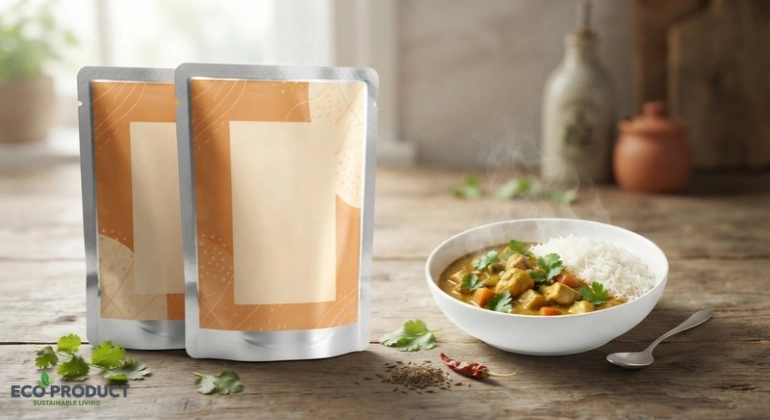
Think about the last time you heated a ready-made curry, a packet of rice or a soldier’s field ration without opening a can. Chances are the food came in a flat, foil-looking bag that survived months on a shelf without refrigeration. That bag is one of the quiet success stories of modern food packaging, and it is called a retort pouch.
Retort pouches are flexible, multilayer food packages that can withstand high-temperature sterilization. They let brands deliver safe, shelf-stable meals without the weight and cost of metal cans or glass jars. For small food businesses, restaurants, sauce makers and ready-to-eat brands, understanding them can open the door to longer shelf life, easier shipping and happier customers.
In this guide, we explain what retort pouches are, how they work, what they are made of, how they compare with cans, and how to choose the right pouch for your food business.
A retort pouch is a sealed, laminated bag designed to hold food that is cooked and sterilized inside the package itself. The word “retort” refers to the pressurized heating chamber, known as a retort, in which the filled and sealed pouch is processed. This thermal step destroys harmful microorganisms, so the food inside can stay safe for a long time without refrigeration, as long as the pouch stays sealed and undamaged.
If you have ever asked “what is a retort pouch,” the simplest answer is this: it is the flexible cousin of the tin can. It does the same job of preserving cooked food, but it is lighter, flatter, easier to open and easier to heat.
The format was developed decades ago for military and expedition use, where weight and durability matter. Today it is everywhere, from instant meals and curries to pet food, baby purees, soups and sauces.
A retort pouch is not a single sheet of plastic. It is a laminate, which means several thin layers are bonded together, and each layer has a specific job. This is what makes multilayer laminated pouches so effective as barrier film packaging.
A common structure includes three kinds of layers:
Some pouches replace the foil with clear high-barrier films so that customers can see the food or so that the pouch can go into a microwave. Exact structures vary between manufacturers, so always ask your supplier for the material specification and food-contact compliance details before you place an order.
The process looks simple from the outside, but each step matters for food safety. Here is the general flow:
Because the food is sterilized after sealing, there is no chance for it to be re-contaminated before it reaches the customer. This is the key difference between a retort process and simply filling hot food into a bag.
Retort pouches matter because they solve several problems at once. Here is why more food businesses are adopting them.
Longer shelf life without refrigeration. A properly processed retort pouch can keep food safe and tasty for months, and in many cases much longer. This lets small brands sell beyond their local market without worrying about cold chains. Actual shelf life depends on the recipe, the process and the pouch, so it should always be confirmed through proper testing.
Lighter and cheaper to ship. Compared with metal cans or glass jars, a flat pouch weighs far less and takes up much less space. That means lower freight costs, which is especially valuable for e-commerce sellers. If you already ship online, our guide on e-commerce boxes in Pakistan pairs well with a flexible packaging strategy.
Faster heating and better taste. Thin pouches transfer heat quickly, so the food heats evenly and does not need to sit on a stove for long. Because the food is not exposed to prolonged heat as in some canning processes, many brands report that texture and flavor are better preserved.
Convenience for the customer. Easy tear notches, flat storage and simple heating make ready-to-eat food packaging very user friendly. A customer can drop the pouch in hot water or open it and pour it into a pan.
Strong branding surface. A pouch offers a large, smooth area for printing. With custom printed retort pouches, you can show your logo, ingredients, serving suggestions and QR codes clearly.
The retort pouch vs cans debate is common among food entrepreneurs. Cans are trusted and familiar, but pouches have clear advantages in many cases. This table gives a quick comparison.
| Factor | Retort Pouch | Metal Can |
|---|---|---|
| Weight | Very light | Heavy |
| Storage space | Flat, space saving | Bulky, round |
| Heating time | Fast | Slower |
| Opening | Easy tear | Can opener or pull tab |
| Shipping cost | Lower | Higher |
| Branding area | Large printable surface | Limited label area |
| Puncture resistance | Moderate, needs careful handling | High |
| Familiarity with buyers | Growing | Very high |
The honest takeaway is that neither is perfect. Cans are tougher and may suit rough handling or very long storage in warehouses. Pouches win on weight, convenience and cost for many modern products. If you are asking why retort pouches are better than cans, the answer usually comes down to logistics, convenience and the better eating experience.
The format works for a wide range of cooked foods, especially those with some moisture. Popular uses include:
For businesses selling curries and sauces, a retort format is particularly useful, because it removes the need for refrigeration and shortens preparation for the customer. If you are packing dry or semi-dry products like pickles, spices or snacks, a regular barrier stand-up pouch may be enough. In that case, our white stand-up pouch for pickle with window is a good example of a ready option, and our guide on stand-up pouches vs flat pouches can help you choose the right style.
Safety is the first question most buyers ask, and it deserves a clear answer. When made from food grade packaging materials and processed correctly, retort pouches are designed for safe food contact and high-heat sterilization. Reputable manufacturers produce them with materials that meet food-safety standards, and many are described as BPA-free packaging.
However, safety does not come from the pouch alone. It also depends on:
For food safety packaging, always request certificates and test reports from your supplier, and have your process validated by a qualified food technologist, particularly if you are selling low-acid foods like meat, rice or vegetables. This is an area where cutting corners is simply not worth the risk.
Retort pouches are designed for high temperature food packaging, and many are built to handle typical sterilization conditions of around 121°C (250°F) under pressure. Some lower-grade “boil-in” pouches only handle boiling water temperatures, so the two should not be confused.
For this reason, it is important to ask your supplier exactly which temperature and time ratings the pouch is built for, and to match that to your sterilization process. Never assume that every foil pouch can survive a retort cycle.
Customers often ask whether they can heat the pouch at home. In many cases they can drop a sealed retort pouch into hot or boiling water for a few minutes. Pouches that contain aluminum foil layers should never go in a microwave, because metal can spark and damage the oven.
If you want a microwave-friendly option, look for microwave-safe pouches that use clear, non-foil high-barrier films, and print clear heating instructions on the pack. Microwave-safe and retort-capable are not the same thing, so confirm both features with your manufacturer.
Shelf life depends on the food, the recipe, the processing method and the pouch barrier. Many retort-packed foods are designed to stay stable at room temperature for several months to a couple of years, but there is no single number that applies to everything.
To set an accurate “best before” date, brands usually run shelf-life studies and microbiological tests. This is the safe and professional way to declare shelf life on your label, and it builds trust with customers and regulators alike. Once opened, the food should be treated like any freshly cooked meal and stored or consumed accordingly.
This is the area where honesty matters most. Because retort pouches are made from multiple bonded layers, they are harder to recycle than single-material packaging, and recycling options depend on local infrastructure. That is a real limitation, and it is better to acknowledge it than to hide it.
On the positive side, retort pouches use much less material than cans or jars, weigh less in transport and help reduce food waste by extending shelf life. Food waste is a major environmental issue, so a package that keeps food safe for longer has genuine value.
If sustainability is important to your brand, a smart approach is to combine retort pouches for the foods that truly need them with recyclable or compostable options for dry goods. You can explore this mindset further in our articles on sustainable packaging solutions in Pakistan and eco-friendly packaging products.
Among the available styles, the 3 sided seal retort pouch is one of the most common. It is sealed on three sides, with the filling opening sealed after filling, which gives it a simple, flat shape. This format is cost-effective, easy to stack and ideal for single-serve meals, sauces and ready-to-eat portions.
Features that customers appreciate include tear notch pouch designs for easy opening and a smooth surface for printing. If you want to see a practical example of this format, you can view our 3 sided seal retort pouch and check its available details before choosing the right size for your product.
Choosing the right pouch is less about price and more about fit. Use these questions as a checklist.
What is your food? Low-acid foods like meat, rice and vegetables need proper sterilization and a strong barrier. High-acid foods may need different processing. Match the pouch to the product, not the other way around.
What temperature and process will you use? Confirm that the pouch is rated for your sterilization method and that your supplier can provide specifications.
How will customers use it? If it is a single serving, a flat pouch works well. If the customer will reuse or reseal it, a stand-up pouch with a zipper may be better. You can compare styles in our guide to stand-up pouches vs flat pouches, and browse the aluminium foil stand-up pouch for strong barrier protection.
Do you want visibility? Clear windows help customers see the food, while full foil or opaque designs protect against light. Our natural and transparent pouches category shows several see-through options.
How strong should the branding be? Think about print quality, color, ingredient information and a barcode area. Plan these details before ordering a large batch.
Is the supplier reliable? Look at consistency, seal quality, clear communication and the ability to provide documentation. This matters more than saving a small amount per piece.
Many people believe retort packaging is only for large factories, but that is no longer true. Small home-based brands, cloud kitchens and regional food producers can use pouches to expand their reach, especially when they sell online.
In Pakistan’s growing packaged food market, customers are increasingly looking for convenient, long-lasting, ready-to-eat meals. A small brand that sells curries, halwa, sauces or ready-to-heat gravies can reach customers in other cities without refrigeration, as long as the product is processed safely.
A sensible way to begin is to start small. Test your recipe, validate your process with a food technologist, order a trial batch of pouches and gather customer feedback before scaling up. You can browse our full range of packaging products in the shop and our kraft stand-up pouches collection for non-retort products like snacks, spices and dry foods.
Once your recipe and process are ready, buying in bulk lowers cost per pouch and ensures consistency from batch to batch. Before ordering wholesale retort pouches, check the following:
Ask for samples first, run a small test and only then place a larger order. For related packaging needs, such as foil trays or other food-safe containers, you can also look at our aluminium foil tray.
A retort pouch is used to package cooked food that must be sterilized in the pouch so it stays safe at room temperature. Common examples include curries, sauces, soups, ready-to-eat rice, baby food and pet food.
Food is filled into a multilayer laminated pouch and heat sealed. The sealed pouch is then heated under pressure in a retort chamber, which destroys harmful microorganisms. The barrier layers protect the food from oxygen, moisture and light afterward.
Yes, when they are made from food-grade materials and processed correctly. Safety also depends on proper sterilization, hygienic filling and undamaged seals, so always buy from a supplier who can provide food-contact documentation.
It depends on the type. Pouches with aluminum foil should not be microwaved. Pouches made with clear, non-foil barrier films can be microwave safe, but you should check the manufacturer’s heating instructions.
Shelf life varies by food, recipe and processing. Many products are designed to last for months or longer at room temperature, but the accurate figure should come from shelf-life testing for your specific product.
Pouches are lighter, cheaper to ship, faster to heat and easier to open, while cans are tougher and more familiar to some buyers. The better choice depends on your product, budget and distribution needs.
Because they are made from multiple bonded layers, retort pouches are harder to recycle than single-material packaging, and recycling options depend on local facilities. Their light weight and ability to reduce food waste are their main environmental advantages.
Retort pouches may look like simple bags, but they represent a smart blend of food science and packaging design. They keep cooked food safe without refrigeration, cut shipping weight, improve convenience for customers and give your brand a large space to tell its story.
If you are planning to launch or upgrade a ready-to-eat food product, start by understanding your recipe, your sterilization process and your target customer. Choose a pouch with the right materials and barrier, test small batches, and work with a supplier who values quality and honesty. Done well, a retort pouch does more than hold food. It protects your reputation every time a customer opens it.
Explore our 3 sided seal retort pouch, browse the full range of pouches and packaging in our shop, and contact the EcoProduct.pk team to discuss your size, quantity and branding requirements. Let us help you package your food with confidence.

Author at Eco Product — passionate about sustainable living and eco-friendly products.

Subscribe our newsletter & get notification about information discount.
Subscribe to get special offers, free giveaways, and once-in-a-lifetime deals.