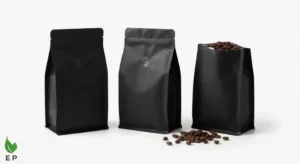
Choosing between standup pouches vs flat pouches can affect far more than the appearance of your packaging. The right pouch can influence product freshness, storage space, shipping costs, filling efficiency and how easily customers notice your brand on a crowded shelf. Standup pouches offer a display-ready structure and strong visual impact, while traditional flat pouches provide compact, lightweight and often cost-effective packaging.
So, which format deserves a place in your packaging strategy?
The answer depends on your product, sales channel, required barrier protection and customer expectations. This detailed standup pouch comparison explains the difference between standup pouches and flat pouches so you can select packaging that protects your product without paying for unnecessary features.
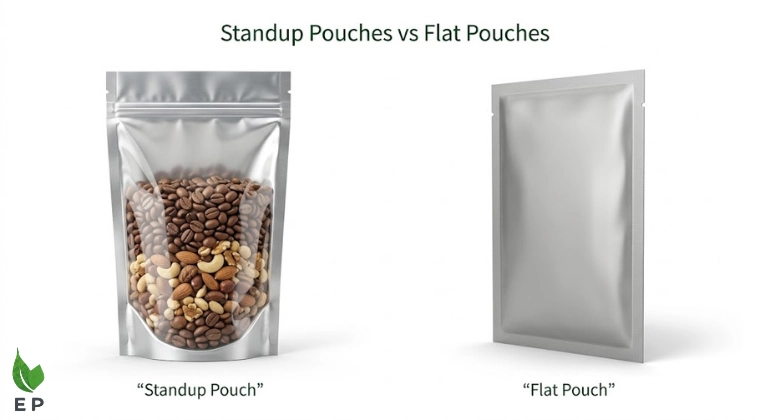
A standup pouch is a flexible package designed with a gusset at the base. When the pouch is filled, this bottom gusset expands and creates a stable base, allowing the pack to stand upright.
This shelf-ready design makes stand up pouch packaging popular for:
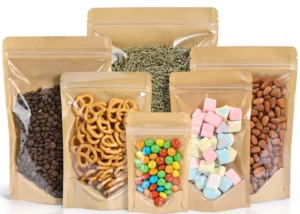
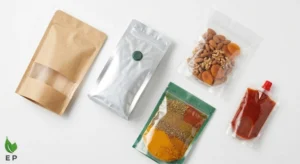
Standup pouches can include a zipper closure, tear notch, hang hole, transparent window, degassing valve or spout closure. These packaging design options make the format suitable for both single-use and resealable products.
Materials may include polyethylene, polypropylene, PET film, kraft paper and aluminum foil. Different layers can be combined to improve oxygen barrier, moisture barrier, puncture resistance and print quality.
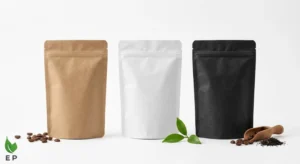
Businesses considering a natural retail appearance can explore EcoProduct.pk’s collection of kraft standup pouches. For a more detailed introduction to this format, read the guide to kraft standup pouch packaging in Pakistan.
An empty standup pouch lies relatively flat. During the filling process, its lower gusset opens as the product enters. The expanded base helps distribute the contents and supports the package in an upright position.
The final stability depends on:
A badly matched pouch may lean or fall even when it has a gusset. Testing the pouch with the real product is therefore essential.
A traditional flat pouch is a flexible package without an expandable bottom gusset. It usually consists of two sheets sealed around the edges or one folded sheet with multiple seals. It remains flat when empty and generally cannot stand independently when filled.
Common designs include:
Flat pouch packaging is frequently used for spices, samples, condiments, medical products, powders, masks, small accessories and other lightweight goods.
A flat pouch may be heat sealed for tamper evidence or fitted with a resealable zipper. Some formats include a hang hole so retailers can display them on hooks rather than placing them upright on shelves.
For products requiring a strong sealed format, EcoProduct.pk offers a three-sided seal retort pouch made for applications where secure heat sealing and barrier performance matter.
A flat pouch is not the same as a flat-bottom pouch.
A traditional flat pouch lies flat and does not have a standing base. A flat-bottom pouch has a structured base and often side gussets, so it can stand upright. It is closer to a box-style flexible package than a conventional lay-flat pouch.
For example, these products are flat-bottom designs rather than traditional flat pouches:
This distinction matters when requesting prices or production samples. Saying “flat pouch” when you need a “flat-bottom pouch” can result in the wrong structure, dimensions and quotation.
The following pouch packaging comparison highlights the most important practical differences.
| Feature | Standup Pouch | Traditional Flat Pouch |
|---|---|---|
| Shelf display | Stands independently | Lies flat or hangs from a hook |
| Structure | Includes a bottom gusset | Usually has no base gusset |
| Shelf appeal | Strong front-facing visibility | More limited without hanging display |
| Empty storage | Compact, but gusset adds material | Extremely compact |
| Filled storage | Uses vertical shelf space efficiently | Easy to stack in suitable cases |
| Typical cost | Often higher per unit | Often lower per unit |
| Capacity | Suitable for small to larger quantities | Best for slim or smaller portions |
| Closures | Zipper, spout, valve or heat seal | Heat seal, zipper or tear notch |
| Filling | Base must open correctly | Often simpler for small portions |
| Common uses | Coffee, snacks, pet food and powders | Samples, spices, sachets and accessories |
| Brand visibility | Large display-facing print area | Good print area, but may not face shoppers |
| Material use | Usually more than a simple flat pouch | Usually less for equivalent dimensions |
Neither pouch is automatically better. The best flexible packaging option is the one that meets the product’s technical needs while fitting the company’s budget, filling process and sales environment.
Standup pouches combine the low weight of flexible packaging with the merchandising benefits of a package that remains upright.
A pouch that stands independently can keep its front panel facing customers. This creates stronger shelf appeal and more consistent visibility for logos, product details and custom printing.
For small businesses competing with established brands, this presentation can make a meaningful difference. Packaging becomes a compact display board rather than just a protective wrapper.
A product window can also help customers see the contents. For natural foods, spices and dry products, a brown kraft standup pouch with a window can combine product visibility with a warm kraft-style appearance.
Many custom stand up pouches include a resealable zipper. Consumers can open the pack, use part of the product and close it again.
Resealable pouch packaging is particularly valuable for:
A zipper improves convenience, but it should not replace the original heat seal where tamper evidence and freshness are required. The producer can heat seal the pouch above the zipper, and the customer opens it using the tear notch.
Standup pouches can be engineered as laminated packaging pouches with protection against oxygen, moisture, light and aroma loss.
For light-sensitive or aroma-sensitive goods, an aluminum foil standup pouch may offer a more appropriate barrier than a basic clear pouch. Products that benefit from partial visibility can use aluminum clear standup pouches.
The correct structure depends on the product rather than appearance alone. Coffee, for example, may need greater oxygen and aroma protection than craft supplies.
Standup packaging can support:
Liquid and semi-liquid products may benefit from a plain aluminum standup spout pouch. Coffee roasters can consider a black coffee pouch with a valve where degassing functionality is appropriate.
Flexible packaging pouches are generally lightweight and can require less transportation space than equivalent rigid jars, tins or bottles. Empty pouches also arrive flat, reducing warehouse volume before filling.
However, shipping efficiency should be calculated using the full system:
A lightweight pouch is useful, but transportation efficiency depends on more than package weight.
A balanced decision requires looking beyond visual appeal.
In practice, the format performs best when shelf presence and consumer convenience justify the added construction.
Flat pouches may look simpler, but that simplicity can be a commercial advantage.
A basic flat pouch often requires less material and simpler manufacturing than a gusseted pouch. This can reduce the flat pouch packaging cost, particularly for large production runs.
It may be appropriate for:
Unused flat pouches occupy very little storage space. Businesses can keep significant quantities in a relatively small area, which is useful where warehouse space is expensive or limited.
Traditional flat pouches can also be packed efficiently into cartons when the product shape allows orderly stacking.
A flat pouch often supports a straightforward filling process. Small operations may fill pre-made pouches and close them with suitable heat-sealing equipment.
The actual process depends on the product. Fine powders, liquids and hot-fill products may require specialized controls, even if the package appears simple.
A hang hole can turn a flat pouch into effective retail product packaging. Instead of standing on a shelf, it can be displayed vertically on a peg or merchandising strip.
This is helpful for:
Standup capability provides little value when a packet is too small or light to remain stable. A flat format is often the smarter choice for sachets, condiments, samples and other compact servings.
Flat pouches are cost-effective, but their limitations should be considered before ordering them in bulk.
A flat pouch is not an inferior version of a standup pouch. It is a purpose-built option for situations where compactness, economy and simple handling matter more than upright display.
A basic flat pouch is generally less expensive than a comparable standup pouch. However, unit price alone does not reveal the complete cost.
The real stand up pouch vs flat pouch cost should also include:
A cheaper pouch that causes seal failures is expensive in disguise. Equally, paying for a valve, zipper or premium laminate that the product does not need creates avoidable cost.
Durability comes primarily from material structure, seal quality and manufacturing—not merely from whether a pouch stands.
A high-quality flat pouch can outperform a poorly specified standup pouch. Evaluate the following factors:
Products with sharp edges, such as dried pasta, hard pet treats or certain hardware items, require films that resist punctures. Material thickness is relevant, but layer composition and flexibility matter too.
The pouch should remain sealed during filling, transport and normal handling. Seal strength can be affected by:
A pouch may need to control oxygen, moisture, light or aroma transfer. Barrier pouch packaging can help preserve product freshness and support the intended product shelf life.
Filled samples should be tested under realistic handling conditions. A package that performs well when empty may behave differently after it contains a dense or heavy product.
For sensitive dry goods, a kraft paper pouch with aluminum lamination can be considered where both visual presentation and barrier performance are important.
Storage has two separate meanings: storing unused packaging and storing the filled product.
Both formats are space-saving packaging options compared with many rigid containers. Flat pouches usually occupy the least space because they do not have a gusseted structure.
Standup pouches use vertical shelf space and can be arranged in retail rows. Traditional flat pouches are better suited to stacking, hanging or placement inside cartons.
For e-commerce, evaluate how the filled pouch fits inside the shipping box. Excess air around the pack can increase dimensional shipping costs. Too little protection can increase damage.
The most efficient choice depends on your entire packaging system—not only the pouch.
Product characteristics should lead the decision.
| Product Type | Recommended Starting Point | Reason |
|---|---|---|
| Coffee beans | Standup pouch with valve | Shelf display, resealing and gas release |
| Ground spices | Flat or small standup pouch | Depends on portion size and display |
| Nuts and dried fruit | Standup zipper pouch | Repeated use and shelf visibility |
| Single-use condiment | Flat sachet | Low cost and compact portion |
| Cookies and bakery goods | Standup or flat-bottom pouch | Capacity and display stability |
| Pet treats | Standup zipper pouch | Convenience and larger capacity |
| Cosmetic sample | Flat pouch | Small volume and easy distribution |
| Liquid refill | Spout standup pouch | Controlled dispensing |
| Retort product | Validated retort pouch | Processing and seal requirements |
| Small accessories | Flat pouch with hang hole | Efficient hanging display |
These are starting recommendations rather than universal rules. Food-grade packaging pouches must be selected according to the product, expected shelf life, filling conditions and applicable safety requirements.
Neither format is automatically sustainable. Environmental performance depends on material use, recyclability, product protection, manufacturing, transportation and disposal infrastructure.
A simple flat pouch normally uses less material than a gusseted standup pouch of similar panel dimensions. Both can use substantially less packaging by weight than certain rigid alternatives, depending on the application.
Some flexible pouches use mono-material polyethylene or polypropylene structures designed for recycling. However, whether they are recyclable in practice depends on local collection and processing facilities.
Multi-layer structures containing PET film, polyethylene, kraft paper and aluminum foil may deliver excellent barrier protection but can be difficult to separate and recycle.
Packaging that extends product shelf life can prevent food waste. In some cases, a slightly heavier high-barrier pouch may produce a better overall result than a lightweight pack that allows the product to spoil.
Terms such as “eco-friendly,” “green,” “biodegradable” and “recyclable” should be supported by evidence. Kraft paper on the outside does not necessarily make the complete pouch recyclable or biodegradable, especially when it includes plastic or aluminum lamination.
Businesses building a responsible packaging strategy can review this guide to sustainable packaging solutions in Pakistan and assess options against locally available waste-management systems.
Choosing the right packaging pouch becomes easier when the decision follows a structured process.
Record the product’s:
Ask whether the pouch will be:
Standup packaging usually wins when shelf visibility matters. Flat pouches often win when the pack will hang, lie inside a box or contain a single serving.
Choose features because the product needs them—not because the options look impressive.
Possible features include:
Every feature can affect price, production and material use.
Determine whether the product requires an oxygen barrier, moisture barrier, light barrier or aroma protection. Request material specifications rather than relying only on words such as “premium” or “food grade.”
Fill samples with the actual product and assess:
A sample test is cheaper than discovering a structural problem after a bulk order.
Include packaging, labour, storage, transport, equipment and potential product losses. The cheapest unit is not always the most economical packaging system.
EcoProduct.pk offers a broad online packaging and eco-product shop where businesses can compare pouch styles and related supplies.
Choose a standup pouch when:
Choose a flat pouch when:
Consider a flat-bottom pouch when:
The choice between a stand up pouch or flat pouch should therefore be based on function first and appearance second.
In the debate over flat pouches vs stand up pouches, there is no universal winner. Standup pouches are usually the stronger choice for shelf-ready packaging, resealable products and brands that depend on front-facing presentation. Flat pouches are often better for single portions, samples, hanging displays and cost-sensitive applications.
Before placing an order, compare barrier protection, package dimensions, filling requirements, sealing equipment, product shelf life and local disposal options. Most importantly, test filled samples under realistic storage and transportation conditions.
Thoughtful packaging protects the product, supports the brand and avoids unnecessary waste. That is what makes it the right choice—not the label attached to the pouch.
Ready to upgrade your product packaging?
Explore EcoProduct.pk’s range of kraft standup pouches and natural transparent pouch options. Compare sizes, materials, windows, zippers, valves and gusset styles before selecting the format that fits your product.
Choose packaging that protects freshness, improves presentation and makes every delivery feel professional.
A standup pouch has an expandable bottom gusset that allows it to remain upright when filled. A traditional flat pouch has no standing base and normally lies flat or hangs from a retail hook.
Standup pouches are often more expensive because they use a gusseted structure and may include zippers, windows, valves or spouts. Final cost depends on size, material, barrier layers, printing and order quantity.
Standup zipper pouches are often suitable for coffee, snacks, nuts and pet treats. Flat pouches are useful for spices, samples and single portions. The material must be appropriate for the food, filling process and required shelf life.
They can be highly durable when made with an appropriate material structure and strong seals. Durability depends on film composition, material thickness, puncture resistance, seal quality and product weight.
Unused flat pouches generally occupy less warehouse space than gusseted pouches. Filled storage efficiency depends on product shape, carton design and whether the packs will be stacked or hung.
No. A traditional flat pouch lies flat and cannot usually stand independently. A flat-bottom pouch has a structured base—often with side gussets—and is designed to stand upright.
Some mono-material pouches may be recyclable where suitable collection facilities exist. Multi-material laminates containing plastic, paper and aluminum can be difficult to recycle. Packaging claims should be checked against the exact material structure and local facilities.
Choose size according to product volume, weight and density rather than weight alone. Test the real product in samples to check headspace, seal clearance, zipper access and shelf stability.

Subscribe our newsletter & get notification about information discount.
Subscribe to get special offers, free giveaways, and once-in-a-lifetime deals.