Plastic-free razors are one of the simplest swaps you can make if you want a lower-waste bathroom. Most of us throw away a disposable razor every few weeks without thinking about it. Over a few years, that adds up to a pile of plastic handles, cartridges and packaging that will outlive us all. The good news is that shaving without plastic is easier, cheaper and more satisfying than most people expect.
This guide walks you through everything you need to know before buying. You’ll learn what plastic-free razors are, which types exist, how to choose between them, how to use them safely, and how to dispose of blades responsibly. If you’re already exploring greener habits, you may also like our guide to a zero waste bathroom, where a razor is just one of many easy upgrades.
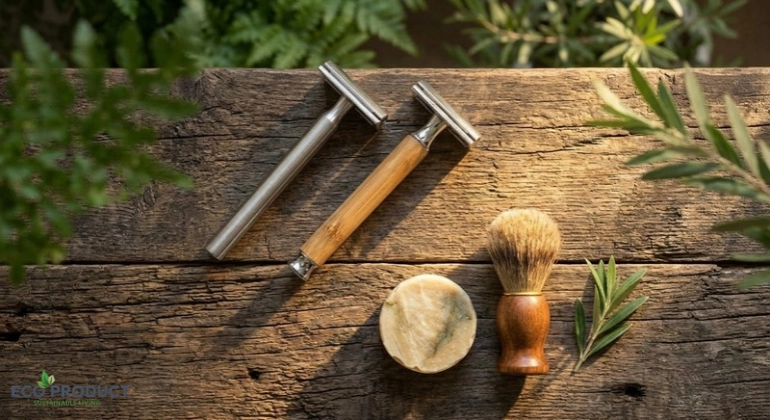
A plastic-free razor is a reusable shaving tool built from materials like stainless steel, brass, bamboo or wood instead of molded plastic. The handle is made to last for years, sometimes decades. The only part you replace is the thin metal blade, which is usually sold in small paper or cardboard packs.
The most common example is the metal safety razor, also called a double-edge razor. Another popular option is a bamboo razor, which pairs a natural bamboo handle with a replaceable blade head. Both are reusable razors designed to cut plastic out of your shaving routine while still giving you a close, comfortable shave.
If you’re new to the idea of swapping plastic for natural materials, it helps to understand why bamboo is considered one of the most sustainable materials on earth. It grows fast, needs little water and breaks down far more easily than plastic.
Disposable razors are cheap at the till, but they carry a hidden cost. Each one is a mix of plastic, rubber grip and metal blades fused together, which makes it almost impossible to recycle. Most end up in landfill, where plastic can take hundreds of years to break down.
There’s also the issue of repeat buying. A cartridge razor encourages you to replace the whole head every few shaves, and those cartridges are famously expensive. When you add up years of refills, a “cheap” razor often becomes one of the costlier items in your bathroom routine.
Switching to plastic-free razors tackles both problems at once. You reduce plastic waste, shrink your carbon footprint a little, and move away from a throwaway habit. For more ideas along these lines, our post on 9 easy ways to reduce your plastic waste is a good next read.
Not every eco-friendly razor works the same way. Here are the main types you’ll come across when comparing options.
This is the classic. A heavy handle, usually stainless steel, brass or chrome-plated metal, holds a single double-edged blade between two plates. It’s sturdy, long-lasting and widely considered the gold standard of zero waste shaving. The blades are cheap and recyclable as scrap metal when handled safely.
A bamboo razor uses a lightweight bamboo handle with a replaceable blade head. It’s lighter than a metal razor, easy to hold and a popular first step for people who feel nervous about traditional safety razors. If you want to see one up close, take a look at this plastic-free bamboo razor.
A straight razor is a single folding blade with no plastic at all. It’s beautiful and incredibly durable, but it has a steep learning curve and isn’t recommended for beginners.
| Razor Type | Best For | Learning Curve | Long-Term Cost | Plastic Content |
|---|---|---|---|---|
| Metal safety razor | Daily shavers, all skin types | Medium | Very low | None |
| Bamboo razor | Beginners, light shavers, travel | Easy | Low | Minimal to none |
| Straight razor | Experienced shavers | High | Low | None |
Choosing the best plastic-free razor comes down to a few practical details. Spending a few minutes on these will save you from irritation and regret later.
A heavier razor lets gravity do the work, so you don’t have to press down. Lighter razors can feel easier to handle but may tempt beginners to apply too much pressure. Aim for a razor that feels steady in your hand.
Stainless steel resists rust and handles bathroom humidity well. Brass handles feel premium and heavy, but chrome-plated versions can wear over time if they’re not dried properly. Bamboo handles are naturally lightweight, though they need to be kept dry to last.
This is the detail most beginners overlook. The razor head determines how much blade is exposed, which changes how close and how harsh the shave feels. We’ll cover this properly in the next section.
Longer handles give you more control on legs and larger areas, while shorter ones suit facial shaving and travel. If you’re shopping for a plastic-free razor for women, a longer handle often feels more comfortable for legs and underarms. A plastic-free razor for men often comes with a shorter, heavier handle better suited to the face and neck.
A great razor is useless if you can’t find affordable blades. Check that replacement blades are easy to buy locally before you commit, and ask whether the packaging is cardboard or paper rather than plastic.
The blade angle and exposure on a razor head decide how aggressive it feels. A mild razor exposes very little blade and gives a gentle, forgiving shave. An aggressive one exposes more blade, cuts closer and faster, but is easier to mishandle.
| Feature | Mild Razor | Aggressive Razor |
|---|---|---|
| Blade exposure | Low | High |
| Shave closeness | Moderate | Very close |
| Risk of nicks | Lower | Higher |
| Best for | Beginners, sensitive skin | Thick, coarse hair, experienced users |
If you have sensitive skin or you’re just starting out, a mild razor is the safest choice. You can always move to a more aggressive head later once your technique improves. Many people are surprised to find that a mild razor still gives a close shave, because the blade itself is much sharper than a typical cartridge.
A razor is only part of the picture. A good plastic-free shaving kit makes the shave smoother and keeps the rest of your routine low-waste too.
Start with a shaving soap or shaving cream bar, which replaces aerosol cans and plastic tubes. A natural shaving brush helps lift hair and build a rich lather, and it’s a lovely ritual once you get used to it. After shaving, a simple balm or plain moisturizer in a reusable container finishes the job.
To keep everything tidy, a self-draining bamboo soap dish stops your shaving soap from turning mushy between uses. If you want more help setting up a greener bathroom shelf, our post on how to make your bathroom sustainable gives practical, budget-friendly ideas.
Many people worry that a safety razor will be dangerous. In reality, it’s quite forgiving once you learn a few habits. The key idea is simple: let the razor do the work.
Start by softening your hair with warm water or after a warm shower. Build a thick lather with your soap and brush, and apply it evenly. Hold the razor at roughly a 30-degree angle to your skin and shave with the grain, which means in the direction your hair grows, using light, short strokes.
Don’t press down. The weight of the razor head provides all the pressure you need, and extra force is the most common reason beginners get nicked. Rinse the blade often so that hair and soap don’t clog the head. If you want a closer finish, re-lather and make a second pass across the grain, never against it at first.
After shaving, rinse with cool water, pat your skin dry and apply a gentle moisturizer. Always dry your razor before storing it, as this protects the finish and prevents rust.
Common beginner mistakes:
Switching doesn’t need to be dramatic. Give yourself a couple of weeks to adjust, and expect your first few shaves to feel slower than you’re used to. That’s normal. Your technique and speed improve quickly.
Start on an easy area, such as your legs or cheeks, before tackling your neck or underarms. Choose a mild razor, pick a decent shaving soap, and take your time. By the third or fourth shave, most people find the process relaxing rather than stressful, and the result is often smoother and less irritating than they got from cartridges.
Blades are cheap, so there’s no reason to push them too far. As a general guide, most people get around three to seven shaves from a single blade, depending on hair thickness, skin type and how carefully they rinse and dry it. You’ll know it’s time to change when the razor starts to tug, feels scratchy or causes more irritation than usual.
A dull blade is actually more likely to cause cuts and razor burn than a fresh one, so swapping it on time is a safety habit, not just a comfort choice. Changing the blade takes under a minute once you’ve done it a couple of times.
This is the part many beginners ask about, and it deserves care. Used blades are sharp, so never toss them loose into your bin, where they could hurt someone handling the rubbish.
The safest approach is to collect old blades in a small, sturdy metal container with a lid, such as a tin with a slot cut in the top. Once it’s full, seal it firmly and dispose of it according to your local waste rules. In some places, sealed tins of blades can be sent to metal recycling, but this varies, so check what’s available in your area before assuming.
Never put loose blades in household recycling, and keep your blade tin out of reach of children and pets. If you’re looking for a sturdy container, our tin box collection includes options that can be repurposed for exactly this kind of use.
Yes, when used correctly. A safety razor is called “safe” because the blade is partly shielded by the razor head, which limits how much cuts into the skin. Most nicks happen because of rushed technique, too much pressure or a dull blade, not because the tool itself is dangerous.
People with very sensitive skin should start with a mild razor, a good lather and light strokes. If you notice persistent irritation, try changing your blade more often or adjusting your angle before blaming the razor. Skin conditions or ongoing problems are worth raising with a doctor or dermatologist.
Upfront prices vary widely, depending on material, brand and finish. A basic bamboo razor tends to be the most affordable entry point, while a quality metal safety razor costs more initially but lasts far longer. Prices also differ by country and by shop, so it’s worth comparing current listings before buying.
The real saving shows up over time. Replacement safety razor blades are typically much cheaper per shave than branded cartridges, and a good handle can last for years. So the question “are plastic-free razors cheaper in the long run?” usually has a clear answer: yes, for most people who shave regularly.
Cartridge razors are convenient, but they’re expensive to refill and nearly impossible to recycle. Plastic-free razors ask a little more of you at the start, mainly learning the technique, but reward you with lower running costs, less waste and often a better shave.
On sustainability, the difference is stark. A single metal razor can replace hundreds of disposable razors over its lifetime, and the only thing you throw away is a thin blade. That’s a big reduction in plastic waste, and it also trims packaging, since blades usually arrive in cardboard or paper wrappers rather than plastic blister packs.
In most cases, yes. Metal razors last far longer than plastic ones, so fewer items are manufactured and thrown away. Producing metal does carry its own environmental cost, but because a metal razor can last decades, that impact is spread over a very long time.
Bamboo razors add another layer, since bamboo is renewable and biodegradable when untreated. The blade, of course, is still metal, so responsible blade disposal remains important either way. The honest answer is that no razor is perfectly impact-free, but plastic-free razors are clearly a better choice than disposables for anyone who wants to reduce waste. Our guide to the best bamboo products in Pakistan for a sustainable lifestyle shows how small swaps like this add up.
This is where you need to be careful. Airline and airport rules differ from country to country, and they can change. In many places, loose razor blades are not allowed in carry-on luggage, although they may be fine in checked bags. Some airports do allow a safety razor handle without a blade in hand luggage.
Always check the rules of your airline and airport before you fly, and pack blades in a protected case in your checked baggage if that’s what the rules require. For short trips, a lightweight bamboo razor is often easier to pack, and an organic cotton mesh bag is a plastic-free way to keep your kit organized.
Rather than naming a single winner, it’s more useful to match the razor to the person.
For beginners: a mild safety razor or a bamboo razor with a replaceable blade head is the gentlest place to start.
For sensitive skin: choose a mild head, use a rich lather, and replace blades often. Avoid aggressive heads until your skin adjusts.
For women: a longer handle and a mild head usually feel most comfortable for legs and underarms. Many women find that safety razors cause less irritation than cartridges once they’ve learned the angle.
For men: a heavier, shorter handle gives control on the face and neck, and an adjustable or medium-aggression head suits thicker beard hair.
For travel and light use: a compact bamboo razor is easy to carry and simple to use. You can browse more eco-friendly personal care products to build a full plastic-free routine.
When you’re ready to buy, look for a seller who describes materials clearly, lists the razor’s weight and finish, and makes replacement blades easy to find. Be wary of vague “eco-friendly” labels with no detail about what the product is actually made from.
If you’re in Pakistan, EcoProduct.pk stocks sustainable everyday essentials, including a plastic-free bamboo razor. You can learn more about what makes EcoProduct.pk a trusted eco-friendly store before you order, and our wider guide to eco-friendly products in Pakistan shows what else is available.
For most people, absolutely. Plastic-free razors cost less over time, produce far less waste and often deliver a better, smoother shave once you’ve got the hang of them. The learning curve is short, the tools are durable, and the habit feels good to keep.
You don’t have to overhaul your whole routine in one day. Start with one razor, one soap and one blade tin, and build from there. If you want more inspiration for gradual change, read our easy zero waste swaps for Pakistan and our sustainable living guide.
Take the first step toward a cleaner, greener shave today. Explore our plastic-free bamboo razor or browse the full eco-friendly collection and start building a bathroom you can feel good about.
1. What is a plastic-free razor?
A plastic-free razor is a reusable razor made from materials like stainless steel, brass or bamboo, with a replaceable metal blade, so you avoid throwing away plastic handles and cartridges.
2. Are plastic-free razors worth it?
Yes. They usually cost less over time, create far less waste and can give a closer, more comfortable shave once you learn the technique.
3. Are safety razors better than disposable razors?
For most people, yes. They produce less waste, blades are cheaper per shave, and the sharp single blade often causes less irritation than multi-blade cartridges.
4. How long do safety razor blades last?
Most blades last roughly three to seven shaves, depending on hair type, skin and how well you rinse and dry the razor.
5. Can razor blades be recycled?
In some areas, sealed metal containers of used blades can go to scrap metal recycling, but rules vary, so check locally. Never put loose blades into household recycling.
6. Can you take a safety razor in carry-on luggage?
Rules vary by country and airline. Loose blades are often not allowed in carry-on bags, so check your airline’s policy and pack blades in checked luggage if required.
7. What is the best plastic-free razor for sensitive skin?
A mild safety razor or a bamboo razor with a gentle head, paired with a rich shaving lather and fresh blades, is usually the best choice.

Author at Eco Product — passionate about sustainable living and eco-friendly products.

Subscribe our newsletter & get notification about information discount.
Subscribe to get special offers, free giveaways, and once-in-a-lifetime deals.