If you have ever opened a cookie packet after two days and found it soft, or reached for your favorite tea and smelled nothing but dampness, you already know how quickly food loses its charm. Choosing the right tin boxes for food storage is one of the simplest ways to fix that problem. A well-made tin keeps out moisture, light and odors, and it looks good on your counter while doing it.
In Pakistan, where summer heat and monsoon humidity can ruin dry foods in days, a sturdy container is not a luxury. It is a kitchen essential. In this guide, we will walk through what tin boxes are used for, which foods suit them best, how to keep them rust-free, and how to choose the right one for your home or small business.
Tin boxes are lidded metal containers made from tinplate, which is thin steel coated with a layer of tin. That coating protects the metal underneath and makes it suitable for contact with food when it is finished with a food-safe lining or lacquer. Because the metal is rigid and the lid fits snugly, these containers have been used for generations to store biscuits, tea, coffee, sweets and spices.
Today, tin containers for food serve three main purposes. At home, they work as pantry storage for dry goods. In bakeries, cafés and gift shops, they act as tin box packaging for food that looks premium on the shelf. And for gifting, they double as keepsakes, since the recipient can reuse the tin long after the treats are gone.
The real strength of a tin is that it does several jobs at once. It protects, it organizes and it presents. Few other metal containers offer that combination at a reasonable price.
Before we look at specific foods, it helps to understand why tin performs so well. The benefits go beyond appearance.
The most common reason people switch to airtight tin boxes is freshness. When the lid sits tightly against the rim, less air moves in and out. That slows down staleness in biscuits, stops crisp snacks from going soft and helps preserve the aroma of tea and coffee. Not every tin is perfectly airtight, so look for lids with a snug fit, and consider a small silicone or paper liner if you want extra protection.
Unlike clear glass, metal blocks light completely. Light can degrade the flavor and color of tea, spices and dried herbs over time. A tin also acts as a moisture proof barrier when closed properly, which matters a great deal in humid cities during the rainy season.
Plastic containers can warp, stain and crack. A quality tin handles drops, stacking and daily opening far better. These durable containers can stay in service for years, which makes them cost-effective compared with cheaper containers you replace every few months.
A tin is a true reusable container. Once the original food is finished, you can refill it with something else, repurpose it for stationery or sewing supplies, or recycle the metal at the end of its life. We will return to the sustainability angle shortly.
Not every food needs the same kind of protection, so it is worth matching the food to the container. Here is a practical look at the most popular uses.
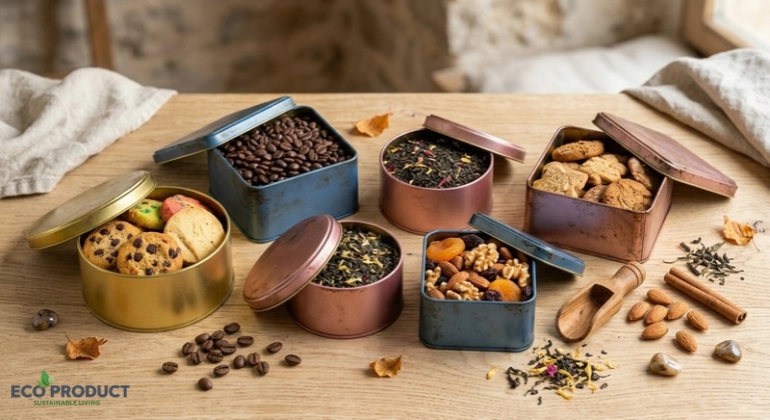
Yes, you can absolutely store cookies in a tin box, and it is probably the most classic use. Tin boxes for cookies keep crisp biscuits crisp and protect delicate shortbread from being crushed. For soft cookies, add a sheet of parchment paper between layers so they do not stick, and keep the tin away from direct sunlight. Bakery owners often choose tins for packing cookie gift sets because the box protects the product during delivery and looks professional.
A traditional tea caddy is a tin for a good reason. Tea absorbs smells easily and loses flavor when exposed to air, light and humidity. Tin boxes for tea storage block light and keep the leaves in a stable environment. Store each variety in its own tin if possible, so green tea does not pick up the scent of masala chai.
Is a tin box good for storing tea and coffee? Generally, yes, with one caution for coffee. Freshly roasted beans release gases, so they need a little room to breathe in the first few days after roasting. Once that settles, tin boxes for coffee storage are excellent for keeping ground coffee or beans away from light and moisture. If you buy coffee in valve pouches, you can keep the pouch inside the tin for double protection. Cafés that sell retail coffee often pair a coffee pouch with a one-way valve and a decorative tin for gifting.
Almonds, walnuts, cashews, raisins and dates are rich in natural oils, which means they can turn stale or rancid when exposed to heat and air. Tin boxes for dry fruits keep them cool, dark and sealed. Similarly, tin boxes for snacks such as roasted chickpeas, trail mix, namak paray and crackers keep everything crunchy for longer. During Ramadan and Eid, these tins are a favorite for serving guests and gifting too.
Whole spices and ground masalas lose their punch when exposed to light and moisture. Small tins make great spice storage containers. Label each lid, keep them in a cool cupboard away from the stove, and your cooking will taste noticeably better.
| Food Type | Why a Tin Works | Practical Tip |
|---|---|---|
| Cookies and biscuits | Keeps crispness and prevents crushing | Layer with parchment paper |
| Tea leaves | Blocks light and odors | Use one tin per flavor |
| Coffee (ground or beans) | Reduces light and moisture exposure | Let fresh beans degas first |
| Dry fruits and nuts | Slows staleness from air and heat | Store in a cool, dark place |
| Spices | Protects aroma and color | Keep away from the stove |
| Snacks and sweets | Maintains crunch, easy to serve | Add a liner for oily items |
This is one of the most searched questions, and it deserves a straight answer. Yes, tin boxes are safe for food storage when they are made for that purpose. The key phrase is food grade tin boxes.
Most food tins have an inner lining or food safe coating that prevents the food from touching bare metal. This coating also helps stop rust and protects the flavor of what you store. When shopping, look for tins that are described as food safe, and ask the supplier whether the lining is BPA free. If a tin is sold only for decoration, such as a vintage collectible or a craft tin, use it for non-food items or line it with food-safe paper or a food-grade bag.
For very oily, acidic or wet foods, such as pickles or curries, a tin is not the right choice. Tins are best for dry and low-moisture foods. Sticking to that rule keeps both the food and the container in good shape.
Both materials have a place in the kitchen, but they behave very differently over time. This comparison should help you decide.
| Feature | Tin Boxes | Plastic Containers |
|---|---|---|
| Light protection | Complete | Depends on color and thickness |
| Odor retention | Low, with a food-safe lining | Can absorb smells and stains |
| Durability | High, resists cracking | Can warp or crack with heat |
| Appearance | Premium, giftable | Mostly functional |
| Reusability | Excellent | Declines with wear |
| End-of-life | Recyclable metal | Often hard to recycle |
The main trade-off is that plastic is lightweight and transparent, so you can see what is inside, while tin is sturdier and kinder to flavors. Many households use both, but they find themselves reaching for tins when freshness and presentation matter most.
A tin can last for years with a little care. The golden rule is to keep it dry.
Wash the tin by hand using lukewarm water and a mild dish soap, then rinse well. Avoid steel wool or harsh scrubbers, because scratches in the lining can expose the metal and lead to rust. Most importantly, dry the tin completely with a soft cloth and let it air out with the lid off before you refill it. Even a little trapped moisture can cause spotting or a musty smell.
Do not put tins in the dishwasher or soak them for long periods. Heat and prolonged water exposure can damage both the lining and any printed design on the outside.
Rust usually starts at scratches, dents or damp corners. To prevent it, keep your tins in a dry cupboard rather than near the sink or a window where condensation forms. Wipe away any spills right away, especially from sugary or salty foods. If you notice a small rust spot on the outside, gently clean it, dry it and stop using that tin for direct food contact. A good rust resistant finish helps, but daily habits matter just as much as the coating.
People often ask how long food can stay fresh in a tin box. The honest answer is that it depends on the food, the quality of the seal and where you keep the tin. A tin extends shelf life by reducing exposure to air, light and humidity, but it does not stop the clock completely. Always follow the best-before date on the original packaging as your guide.
Here are a few habits that make a visible difference:
For humid weather, you can add a food-safe silica gel packet or a small piece of parchment under the lid. These simple steps support food preservation without any complicated equipment.
One reason tins remain so popular is that they look great. Decorative tin boxes for food turn ordinary treats into something worth gifting. A handful of homemade cookies, a selection of dry fruits or a set of premium teas feels far more special in a colored tin than in a plain bag.
For businesses, this is where gift packaging pays off. A tin with a clean finish builds trust, protects the product and encourages repeat purchases because customers keep and reuse the box. If you run a bakery, a tea shop or a sweets brand, you can explore a range of tin boxes in different shapes and finishes to match your branding.
Shape matters, too. Round tins are classic for cookies and tea, while square tins pack neatly on shelves and in shipping cartons. If you are unsure which one suits your product, our comparison of round vs square tin boxes breaks down the practical differences. Looking for something specific? Browse the round tin boxes or square tin boxes categories, or check out the elegant golden round tin box and the colorful blue square tin box and pink square tin box.
If you are planning to package at scale, our buyer’s guide to tin boxes for packaging covers sizes, finishes and what to ask suppliers.
Beyond storing food in the traditional sense, tins can bring order to the whole kitchen. This is where kitchen organization becomes both practical and pretty.
Use a set of matching tins on an open shelf for sugar, tea and coffee, which gives you a clean, consistent look. Keep a small tin near the stove for whole spices or tea bags. Stack square tins in a drawer for stackable storage of sachets, sweeteners and baking decorations. You can even label the lids with chalk markers or stickers so the whole family knows what is inside.
Outside the kitchen, empty tins are wonderful for packed school snacks, travel tea kits, sewing supplies or small gifts. Every time you reuse one, you avoid buying something new, which brings us to the sustainability benefits.
Compared with single-use plastic packaging, tins are a much more sustainable choice. They are built to last, they can be refilled many times and the metal can be recycled when they finally wear out. This makes them a strong example of eco-friendly storage, especially for households that want to cut down on disposable packaging.
Of course, no material is perfect, and the real environmental benefit comes from reuse. A tin you use for ten years does far more good than one you throw away after a month. If you are building a greener kitchen, tins fit naturally alongside other swaps, such as those in our guide to easy zero waste swaps in Pakistan and our broader sustainable living guide for Pakistan. For packaging that complements your tins, you might also like kraft stand-up pouches for refills.
When you are ready to buy, a few checks will help you avoid disappointment. These are the features that separate a great tin from an average one.
If you want a trusted place to start, you can explore the full ecoproduct.pk shop and compare options such as the square golden tin boxes for a premium look.
Tin boxes for food storage combine protection, style and sustainability in a way few containers can match. They keep cookies crisp, tea fragrant, coffee flavorful and dry fruits fresh, while making your pantry look organized and inviting. With a food-safe lining, a snug lid and simple care habits, a good tin can serve you for years.
Whether you are a home cook tidying your shelves or a small business owner creating beautiful gift packaging, tins are a smart investment that pays you back in freshness and presentation.
Explore our collection of premium tin boxes at ecoproduct.pk and find the perfect size and style for your kitchen, bakery or gift range. Order today and give your food the protection it deserves.
Tin boxes are used to store dry and low-moisture foods such as cookies, tea, coffee, dry fruits, spices and snacks. They protect food from light, moisture and odors, and they also work as attractive gift packaging.
Yes, provided you choose food-grade tin boxes with a food-safe lining or coating. Avoid using decorative-only tins for direct food contact unless you line them with food-safe paper or a food-grade bag.
Make sure the food is completely cool and dry, fill the tin close to the top, and close the lid firmly. Keep it in a cool, dry place away from direct sunlight and heat.
Yes. A tin is one of the best options for cookies. Place parchment paper between layers to prevent sticking and keep the tin sealed to maintain crispness.
Yes. Tin blocks light and helps keep out moisture and odors, which are the main enemies of tea and coffee freshness. For freshly roasted coffee, let the beans release gas for a few days before sealing them tightly.
Hand wash with lukewarm water and mild soap, avoid abrasive scrubbers, and dry the tin completely before refilling. Do not use a dishwasher or soak the tin for long periods.
Keep tins dry, store them away from sinks and humid areas, wipe up spills quickly and avoid scratching the lining. Replace or stop using a tin for food if rust appears on the inside.
It varies by food type and storage conditions. A tin helps extend freshness by limiting air, light and humidity, but you should still follow the best-before date on the original packaging.
Tin offers better light protection, durability and presentation, and it is easier to reuse and recycle. Plastic is lighter and transparent, so many households use both depending on the food.
You can buy tin boxes online from ecoproduct.pk, which offers round and square options in several finishes.

Author at Eco Product — passionate about sustainable living and eco-friendly products.

Subscribe our newsletter & get notification about information discount.
Subscribe to get special offers, free giveaways, and once-in-a-lifetime deals.