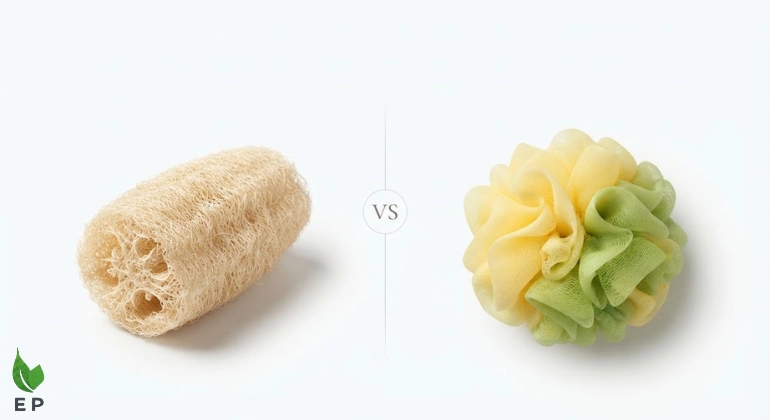
If you’ve ever stood in front of a bathroom shelf holding a plastic-wrapped sponge in one hand and a rustic, dried loofah in the other, you’ve already asked the real question: Natural Loofah vs Synthetic Sponge — which one actually deserves a permanent spot in your daily shower routine? It seems like a tiny decision, but it quietly affects everything from the texture of your skin to the bacteria multiplying in your bathroom corner. In this guide, we’ll walk through what each product is really made of, how they behave on your skin over time, and why so many people across Pakistan are gradually replacing plastic scrubbers with natural alternatives like the loofah.
By the end, you’ll have a clear, evidence-based answer to the question everyone’s asking: which is healthier, loofah or sponge?
A natural loofah isn’t a sea creature, despite what many people assume — it’s actually a dried luffa gourd, a vegetable that grows on a vine much like a cucumber or zucchini. Once the gourd matures and dries out completely, its outer skin is peeled away to reveal a fibrous, sponge-like interior. That’s your loofah. Because it comes entirely from a plant, it falls into the category of natural fiber sponge, plant-based sponge, and organic bath sponge — all terms you’ll see used interchangeably.
What makes this material special is its cellular structure. Those crisscrossing fibers create tiny channels that trap soap and lather while gently gripping onto dead skin as you scrub. It’s a completely mechanical, chemical-free way of exfoliating, which is one of the biggest reasons dermatologically-minded shoppers keep coming back to it. If you want to see this material in its purest form, ecoproduct.pk’s natural loofah is a great starting point, since it’s unprocessed and free from synthetic dyes or coatings.
On the other side of the shelf sits the synthetic sponge — usually built from nylon sponge fibers, polyester fiber, or a general plastic sponge blend classified as man-made fiber. These materials are manufactured in factories through a petroleum-based process, then dyed in bright colors and shaped into the puffball or rectangular sponges you’re used to seeing.
There’s nothing inherently wrong with synthetic material from a pure cleaning-power standpoint — it lathers well and holds soap. But because it’s essentially woven plastic, it behaves very differently once it gets wet and stays wet, which becomes relevant a little further down when we talk about hygiene.
When people compare loofah vs sponge for bathing, texture is usually the first thing they notice. A natural loofah has a coarse, almost mesh-like grip that catches on rough patches of skin — elbows, heels, knees — and physically lifts away dead skin cells with every pass. This is genuine mechanical exfoliating scrub action, not just a soap-lathering tool.
A synthetic sponge, by contrast, is softer and smoother. It’s excellent at creating a rich lather and gently cleansing the surface of the skin, but it doesn’t offer the same depth of exfoliation. If your main goal during a shower is deep cleansing plus buffing away flaky or rough skin, the loofah wins this round simply because of its fiber structure. If your priority is a light wash without much friction, the sponge holds its own. For a deeper look at proper technique, our skin exfoliation guide breaks down how to exfoliate without overdoing it.
Here’s where the conversation gets genuinely important. A synthetic sponge bacteria risk is well documented, and it comes down to one simple issue: moisture retention. Synthetic fibers are woven so tightly that water gets trapped deep inside the sponge and struggles to evaporate. In a warm, humid bathroom — which describes most bathrooms in Pakistan for a good chunk of the year — that trapped moisture becomes a breeding ground for bacteria growth, mold buildup, and even fungal growth within just a few days of regular use.
A natural loofah has an open, airy fiber network, which means it dries considerably faster after each use. Faster drying doesn’t make it bacteria-proof, but it dramatically slows down microbial contamination compared to a sponge that stays damp for hours. Still, both materials need real sponge sanitization habits — rinsing thoroughly, wringing out excess water, and hanging them somewhere with airflow rather than leaving them sitting in a wet soap dish.
Here’s a side-by-side look at how the two compare on hygiene and lifespan:
| Feature | Natural Loofah | Synthetic Sponge |
|---|---|---|
| Drying Time | Fast (open fiber structure) | Slow (traps moisture) |
| Bacteria & Mold Risk | Lower, but still needs care | Higher due to moisture retention |
| Average Lifespan | 3–4 weeks with proper drying | 2–4 weeks, but degrades faster when wet |
| Odor Buildup | Minimal if dried properly | Common if left damp |
| Biodegradable | Yes, fully compostable | No, sheds microplastics |
That table alone answers a lot of the hesitation people feel — hygiene isn’t just about how often you replace a scrubber, it’s about how quickly it can dry between uses.
The natural loofah benefits for skin go beyond just exfoliation. As those fibers sweep away dead skin cells, they also stimulate blood circulation right at the surface of the skin, which many people notice as a light, healthy flush right after a shower. Improved circulation can support skin texture over time, making the skin feel smoother and look more even-toned.
Because the material is 100% plant-based, there are no synthetic dyes, resins, or plastic coatings touching your skin — a real advantage for anyone managing skin allergies or general sensitivity. It also pairs beautifully with a body wash, since the fiber structure holds lather without diluting it too quickly, giving you more coverage per pump of product. If you’re curious about gentler picks specifically suited to reactive skin, our guide on natural loofahs for sensitive skin is worth a look.
The synthetic sponge side effects aren’t always immediate, but they add up. Because plastic-based sponges hold moisture so effectively, they can quietly become a source of skin irritation and even skin rash if used past their prime without being replaced. For anyone dealing with acne-prone skin, an unwashed synthetic sponge can actually spread bacteria across the face or back, contributing to breakouts rather than helping treat them.
There’s also an environmental side effect that touches your skin indirectly — as synthetic sponges break down with use, they shed tiny microplastic particles into your shower water. Over months and years, that’s a steady, invisible contribution to plastic waste in local water systems, something that never happens with a compostable, plant-based alternative.
Zooming out from personal skin health, the environmental gap between these two products is enormous. A natural loofah is a biodegradable material through and through — once you’re done with it, it breaks down in a compost pile within weeks, leaving nothing behind. A synthetic sponge, on the other hand, sits in a landfill for hundreds of years, contributing to long-term landfill waste and a much heavier carbon footprint from production to disposal.
This is exactly why the eco-friendly bathing movement has picked up so much momentum recently, especially among households trying to build a genuinely zero waste bathroom. Small swaps like this one add up quickly — if you’re interested in expanding beyond just your scrubber, our guides on making your bathroom more sustainable and zero-waste bathroom essentials are great next reads. And if plastic reduction is your bigger goal across the whole house, these nine easy plastic-waste swaps are a solid starting point.
Not every natural loofah is automatically gentle — that’s an important nuance. Some loofahs are quite coarse and, while great for rough elbows or heels, might feel too aggressive on facial skin or areas prone to irritation. This is why the best sponge for sensitive skin conversation isn’t just “natural wins, synthetic loses.” It’s about matching the right product to the right part of your body.
For daily body use, a softer, well-processed loofah like ecoproduct.pk’s bath loofah sponge pads offers a gentler experience while still delivering real exfoliation. For kitchen or tougher cleaning tasks, a denser option like the kitchen loofah pads is a better fit than reaching for a plastic scrubber that’ll eventually shed microplastics into your dishwater too.
Weighing everything together, which is healthier: loofah or sponge comes down to a fairly clear pattern. Synthetic sponges win on softness and upfront cost, and they’re perfectly fine for light, occasional use if you’re diligent about drying and replacing them often. But across almost every other category — hygiene, bacteria resistance, skin compatibility, and environmental footprint — the natural loofah comes out ahead.
The healthiest habit, regardless of which one you currently own, is simple: rinse thoroughly after every use, wring out excess water, hang it somewhere with airflow, and replace it every three to four weeks. That routine alone eliminates most of the risk either material carries.
A quick reference for choosing based on your specific need:
| Your Priority | Better Choice | Why |
|---|---|---|
| Deep exfoliation | Natural Loofah | Coarser fiber lifts dead skin effectively |
| Sensitive or acne-prone skin | Soft Natural Loofah | Chemical-free, gentler processed options |
| Eco-conscious lifestyle | Natural Loofah | Fully biodegradable, zero microplastics |
| Budget & softness | Synthetic Sponge | Cheaper, softer lather (needs frequent replacement) |
Whichever option you land on, these small habits make a real difference:
At the end of the day, the debate between natural loofah vs synthetic sponge isn’t just about a bathroom accessory — it’s a small decision that ripples out into your skin health, your household hygiene, and the planet’s growing plastic problem. A natural loofah dries faster, resists bacteria better, exfoliates more effectively, and disappears harmlessly into compost once you’re done with it. A synthetic sponge might save you a few rupees upfront, but it quietly costs more in replacement frequency, hygiene risk, and environmental impact.
If you’re ready to make the switch, explore ecoproduct.pk’s full range of natural loofahs and browse our complete eco-friendly product collection for more plastic-free swaps across your home. Your skin — and the planet — will notice the difference within the first week.
Is a natural loofah better than a synthetic sponge for skin? Yes, in most cases. A natural loofah exfoliates more effectively, dries faster, and doesn’t introduce synthetic dyes or microplastics to your skin, making it the healthier daily choice for most people.
How often should I replace my loofah or sponge? Both should be replaced every 3–4 weeks, or sooner if you notice an odor, discoloration, or slimy texture — all signs of bacterial buildup.
Do synthetic sponges really cause bacterial infections? They can contribute to skin irritation and breakouts if used past their prime, since their tight fiber structure retains moisture and encourages bacterial and mold growth faster than natural fibers.
Can people with sensitive skin use a natural loofah safely? Yes, as long as they choose a softer, well-processed loofah rather than a very coarse one, and avoid using it on broken or irritated skin.
Is a natural loofah fully biodegradable? Completely. Since it’s a dried plant fiber, it breaks down naturally in compost within weeks, unlike synthetic sponges which persist in landfills for centuries.
What’s the overall healthier option for daily bathing? For most skin types and eco-conscious households, the natural loofah is the healthier, more sustainable everyday choice.

Subscribe our newsletter & get notification about information discount.
Subscribe to get special offers, free giveaways, and once-in-a-lifetime deals.