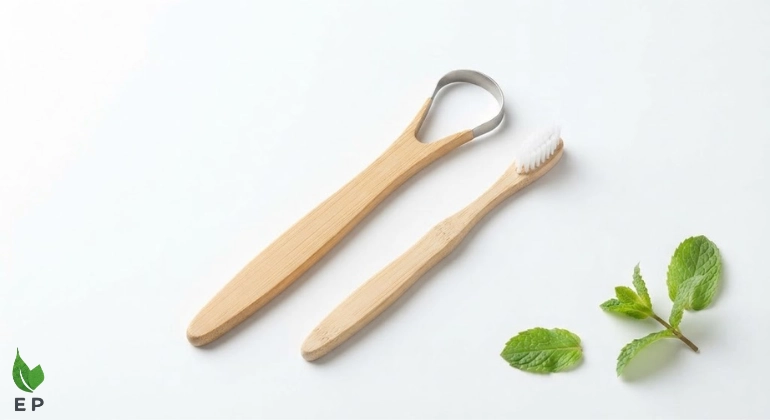
If your oral hygiene routine still ends at brushing and rinsing, you might be missing one of the simplest, most overlooked tools in dental care. The real tongue cleaner benefits go far beyond fresher breath — they touch on bacteria control, gum health, and even how food actually tastes to you. Most people spend two minutes brushing their teeth every morning but completely ignore the tongue, even though it hosts the majority of bacteria living inside the mouth. That one small gap in an otherwise decent routine is often the hidden reason behind persistent bad breath, a dull sense of taste, or a coated, fuzzy-looking tongue that never seems to go away no matter how well you brush.
This guide breaks down exactly why a tongue cleaner deserves a permanent spot next to your toothbrush, how it compares to alternatives like mouthwash and brushing, and how to use one correctly for the best results. By the end, you’ll understand not just the what, but the why — and you’ll probably wonder why you waited this long to add it to your daily oral routine.
A tongue cleaner — often called a tongue scraper — is a small, curved tool designed specifically to remove the thin layer of buildup that forms on the tongue’s surface every single day. This layer is made up of dead cells, food debris, and bacteria, and it’s commonly referred to as tongue coating. Unlike a toothbrush, which is built to clean hard enamel surfaces, a tongue cleaner is shaped to glide gently across the soft, textured surface of the tongue without causing irritation.
The tongue’s surface is covered in tiny grooves and papillae, which act almost like a carpet trapping bacteria and debris. Brushing alone rarely removes this coating effectively because bristles just don’t reach into those grooves the way a flat scraping edge does. That’s the core reason dental hygiene tools like tongue scrapers exist as a separate category rather than being replaced by a toothbrush.
Once you understand this, the appeal of adding a dedicated tool becomes obvious. It’s not about replacing brushing — it’s about completing a routine that’s otherwise leaving a huge surface area unattended.
The reason so many dentists recommend this small habit change comes down to a handful of very real, noticeable improvements.
The single biggest driver of chronic bad breath isn’t food — it’s bacteria feeding on debris trapped on the tongue’s surface. Oral bacteria reduction is one of the most immediate and satisfying tongue cleaner benefits, because it directly targets the source of odor rather than masking it temporarily like mints or sprays do. Regular scraping physically lifts this bacterial layer away instead of just pushing it around, which makes it a genuinely effective halitosis treatment rather than a short-term fix.
A thick tongue coating doesn’t just look unappealing — it dulls your ability to taste food properly. Taste receptors sit right on the tongue’s surface, and when they’re covered in buildup, flavors come through muted. Many people who start scraping daily report that food tastes noticeably sharper and more vibrant within just a week or two, simply because their taste buds are finally uncovered.
Bacteria don’t stay confined to the tongue. They migrate, multiply, and eventually contribute to plaque buildup near the gumline. By reducing the bacterial load in the mouth overall, tongue cleaning indirectly supports gum health and lowers the risk of irritation, inflammation, and long-term gum disease. It’s a small daily habit with a surprisingly wide-reaching impact on overall mouth hygiene benefits.
It’s a fair question — if you already brush your tongue with your toothbrush, do you really need a separate tool? The honest answer is yes, and the comparison below explains why.
| Feature | Toothbrush | Tongue Cleaner |
|---|---|---|
| Surface reach | Limited — bristles skim over grooves | Deep — flat edge scrapes into grooves |
| Bacteria removal | Partial, often pushes debris around | Significant, lifts coating away entirely |
| Gag reflex trigger | Common due to bristle texture | Less common with proper curved design |
| Best use | Teeth and gumline | Tongue surface exclusively |
As the table shows, a toothbrush vs tongue scraper debate isn’t really about choosing one over the other — it’s about recognizing that each tool solves a different problem. Using both together gives you a genuinely complete cleaning process rather than a partial one.
Once you’re convinced of the benefits, the next decision is material. Metal tongue scrapers, typically made from stainless steel or copper, tend to last for years, resist bacterial buildup on their own surface, and offer a firmer scraping action that many users find more effective on stubborn coating. Plastic versions are lighter, often cheaper, and gentler for beginners or people with sensitive tongues, but they wear out faster and can harbor bacteria in tiny surface scratches over time.
For anyone leaning toward a more sustainable and long-term choice, a bamboo-handled or metal tongue cleaner tends to strike the right balance between durability and eco-conscious living — which fits naturally alongside other daily dental care habits like switching to a bamboo toothbrush or charcoal dental floss.
Technique matters just as much as the tool itself. Using it incorrectly can trigger gagging or leave the job half-done, so it helps to follow a simple, repeatable process each morning.
For a more detailed, step-by-step visual walkthrough, our guide on how to use an eco-friendly tongue cleaner covers technique variations and common mistakes beginners make.
Timing plays a bigger role than most people assume. The ideal moment is first thing in the morning, before eating or drinking anything, because that’s when bacterial buildup from overnight is at its peak and hasn’t yet been disturbed by food or liquid. Scraping at this point removes the bulk of the coating before it gets a chance to spread further into the mouth throughout the day.
Some people also scrape again at night as part of their evening routine, particularly if they’ve eaten strongly flavored or sugary foods. Either way, consistency matters more than frequency — doing it once daily, every single day, produces far better results than doing it thoroughly only once a week.
Mouthwash is often treated as a quick fix for bad breath, but it works very differently from a tongue cleaner. Mouthwash temporarily masks odor and kills some surface bacteria through antiseptic action, but it doesn’t physically remove the coating sitting on the tongue. A tongue cleaner does the opposite — it physically lifts debris away, addressing the root cause rather than covering it up.
Used together, they complement each other well: scrape first to remove the bulk of the buildup, then rinse with mouthwash to reach areas the scraper can’t, like between teeth or along the gumline. Relying on mouthwash alone tends to produce short-lived freshness that fades within an hour or two, which is exactly why so many people feel like their bad breath keeps “coming back” no matter how much they rinse.
A tongue cleaner works best as one piece of a broader system rather than a standalone fix. Best oral hygiene practices generally follow a simple sequence: brushing, flossing, tongue scraping, and rinsing, done consistently morning and night. Skipping any one step tends to create a gap that the others can’t fully cover.
If you’re rebuilding your routine from scratch, it helps to look at the full picture rather than just isolated products. Our complete guide to an eco-friendly oral care routine walks through how tongue cleaning, flossing, and brushing fit together, while our piece on the hidden truth about traditional oral care products explains why many conventional options fall short compared to sustainable alternatives.
For families building healthier habits together, it’s also worth checking whether children’s routines need adjusting — our guide on kids’ bamboo toothbrushes covers safe, age-appropriate oral care tools, and the broader piece on why every family should switch to bamboo toothbrushes is a useful next read if you’re rethinking your household’s dental habits as a whole.
If you’re ready to actually add one to your routine, browsing a dedicated tongue cleaner is the simplest starting point, and pairing it with a bamboo toothbrush rounds out a genuinely sustainable oral care setup.
Small daily habits tend to produce the biggest long-term results, and tongue cleaning is a perfect example of that principle in action. From reducing bacteria and improving breath to sharpening taste and supporting gum health, the case for adding this simple tool to your morning routine is hard to ignore once you understand what it’s actually doing. It takes less than thirty seconds, requires no special skill, and fits effortlessly alongside brushing and flossing without disrupting your existing schedule.
Your mouth does a lot of work every day, and it deserves a routine that actually covers every surface — not just the teeth. Start tomorrow morning, stick with it for two weeks, and pay attention to how different your breath and taste feel. Most people don’t go back once they notice the difference.
Explore our full range of sustainable oral care tools in the shop and take the next step toward a cleaner, fresher daily routine today.
Is a tongue cleaner really necessary if I already brush my tongue? Toothbrush bristles skim over the tongue’s surface but rarely reach deep into its grooves. A dedicated scraper removes far more bacterial coating than brushing alone.
How often should I use a tongue cleaner? Once daily, ideally first thing in the morning, is enough for most people. Some choose to repeat it at night for extra freshness.
Can a tongue cleaner completely cure bad breath? It significantly reduces bacteria-related odor, but persistent bad breath tied to other causes like gum disease or digestive issues may need additional dental attention.
Is metal or plastic better for a tongue scraper? Metal versions are more durable and resist bacterial buildup better over time, while plastic is gentler for beginners but wears out faster.
Do I still need mouthwash if I use a tongue cleaner? Yes, they serve different purposes. Scraping removes physical coating, while mouthwash reaches areas like gum pockets that a scraper can’t clean.

Subscribe our newsletter & get notification about information discount.
Subscribe to get special offers, free giveaways, and once-in-a-lifetime deals.