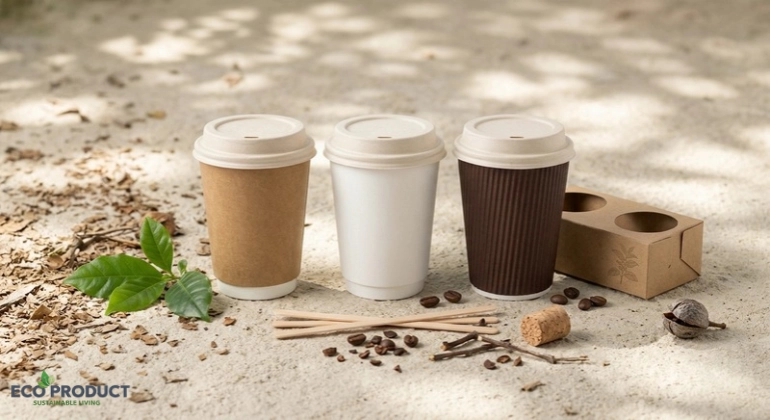
A coffee cup is the one product your customer holds for the longest. It sits in their hand on the commute, on their desk during a meeting and in their car cup holder. That makes it your most visible piece of branding, and also one of your biggest sources of waste. If you run a cafe in Pakistan and want to do something about both, eco friendly coffee cups are the most practical place to start.
This guide covers what these cups are made of, which types suit which cafes, how much they really cost and how to avoid the greenwashing traps. You will also find practical examples, two comparison tables and a FAQ with schema at the end.
A busy cafe can hand out hundreds of cups a day. Over a month, that becomes a mountain of single-use packaging, and most of it goes straight to landfill. Customers have noticed. Many people now judge a cafe by its cup as much as by its coffee, and a flimsy plastic-heavy cup tells a very different story from a sturdy kraft one.
There is also a business side. Rules on single-use plastic reduction are tightening in many parts of the world, and large corporate clients increasingly ask suppliers about their environmental practices. Cafes that switch early avoid rushed decisions later and gain a clear selling point today.
The good news is that this change is simple. You keep the same menu, the same staff and the same workflow. Only the cup in the customer’s hand changes.
The phrase “eco friendly” covers several different materials, so it helps to know what is actually in the cup.
Most eco cups start with paper board from renewable resources, ideally sourced from responsibly managed forests. Look for FSC certified paper if your supplier can document it. Paper alone cannot hold liquid, so the inside needs a thin barrier layer. Here the materials split into three main groups:
So are paper coffee cups eco friendly? Partly. A paper cup from renewable fibre is better than a plastic or foam cup in material terms, but the lining and the disposal route decide how green it really is. That is why a good supplier will always tell you exactly what the lining is.
These three words are used loosely, and mixing them up is the fastest way to be accused of greenwashing.
Biodegradable means a material can be broken down by microorganisms over time. There is usually no guaranteed timeframe, so the word alone proves very little. Compostable is more specific: the product breaks down within a set period under defined composting conditions and leaves no toxic residue. Many compostable cups, especially PLA-lined ones, need industrial composting rather than a backyard heap. Recyclable means the material can be collected and turned into new products, but only if a facility in your area actually accepts it.
So are biodegradable coffee cups really biodegradable? Often yes, but under the right conditions and with the right certification. In many regions, including Pakistan, dedicated cup recycling and industrial composting are still limited. That means the most honest approach is to choose cups made from renewable fibre, be clear with customers about what you know and avoid claims you cannot prove.
Wall design affects comfort, heat retention and your cost per cup, so it matters as much as the material.
Single wall cups are the lightest and cheapest. They work well for cold drinks, lukewarm drinks and quick takeaways, but hot coffee can make them uncomfortable to hold without a sleeve.
Double wall paper coffee cups have two layers with a small air gap. This gives better insulated coffee cups performance, so drinks stay hot longer and the outside stays comfortable. The extra layer also removes the need for a separate sleeve, which cuts waste further. For a full comparison, read our guide to double wall vs single wall coffee cups.
Ripple wall coffee cups use a corrugated outer layer. They grip well, feel premium and insulate nicely, which makes them a favourite for specialty cafes. You can see the range in our 8oz insulated ripple double wall paper cup and 12oz insulated ripple double wall paper cup.
So do double wall cups keep coffee hot longer? Yes. The air gap slows heat transfer, which is why they suit hot lattes, flat whites and cappuccinos so well.
| Cup Type | Best For | Insulation | Look and Feel | Relative Cost |
|---|---|---|---|---|
| Single wall paper | Quick takeaways, cold and warm drinks | Low | Simple | Lowest |
| Double wall (white or kraft) | Hot coffee, daily cafe use | High | Clean and sturdy | Medium |
| Ripple wall | Premium and specialty coffee | High | Textured, premium | Medium to high |
| Custom printed | Brand building, events, chains | Depends on base cup | Fully branded | Medium to high |
The table makes one thing clear. There is no single best cup, only the best cup for your menu and customers. A small neighbourhood cafe might do well with plain double wall cups, while a growing brand will gain more from custom printing.
A branded cup works like a small billboard that walks around your city. Every customer who carries it becomes free advertising, and every photo they post spreads your logo further.
Custom printing is also easier than many owners think. Screen printing on cups lets you add a logo, a short slogan or a simple pattern, and it works especially well on kraft cups where minimal designs look natural. Our 8oz customised coffee cup with screen printing and 12oz customised coffee cup with screen printing are good starting points, and you can browse the full customised coffee cup category.
One practical tip: keep the design simple. One or two colours on a kraft cup usually look more premium than a crowded multicolour print, and they also keep your printing cost under control.
Size affects portion cost, customer satisfaction and storage. A cup that is too large wastes money and material, and one that is too small frustrates customers.
For most cafes, 8oz suits espresso-based drinks like cortados, flat whites and small cappuccinos. 12oz is the everyday size for lattes, americanos and teas. Larger sizes tend to suit cold drinks, iced coffee and chains with big-format menus.
Start with two sizes, 8oz and 12oz, and expand only when sales data justifies it. Fewer sizes mean simpler stock, better bulk pricing and less waste from unused cups. For a deeper breakdown, see our guide to the right coffee cup size for a cafe.
Here is the practical answer to why cafes should switch to eco friendly coffee cups.
Cups made from renewable fibre, rather than fossil-based plastic or foam, support carbon footprint reduction and waste reduction. A cup will not make your cafe carbon neutral on its own, but it is a visible, measurable step you can report.
Every plastic or foam cup you replace is one less item of long-lasting landfill waste. Over a year, even a small cafe can replace thousands of them.
Renewable materials fit the idea of a circular economy far better than fossil-based products designed to be thrown away. They are also a stepping stone towards a zero waste cafe model.
Eco conscious customers read signals quickly. A natural kraft cup with a wooden stirrer tells them you care before they take a sip. That supports brand reputation and word of mouth without a big advertising budget.
Early adopters are rarely caught off guard when regulations change. You already have suppliers, pricing and customer communication in place.
So can eco friendly coffee cups improve brand image? Yes, as long as the rest of your experience matches the promise.
This is the most common objection, so let us deal with it directly.
Yes, eco cups usually cost a little more per piece than the cheapest plastic or foam options. But the real comparison includes more than the price tag. Bulk buying narrows the gap, so ordering disposable coffee cups wholesale is the smartest way to manage cost. Brand value and customer loyalty can justify a small price adjustment on drinks. Double wall cups also remove the need for sleeves, which saves a small cost per order.
| Cost Factor | Cheap Plastic or Foam | Eco Friendly Paper Cups |
|---|---|---|
| Price per cup | Lowest | Slightly higher |
| Bulk discount potential | Moderate | Strong |
| Sleeve required | Often | Not with double wall |
| Marketing value | None | High |
| Future compliance risk | Higher | Lower |
A useful trick is to calculate cost per order rather than per cup. The difference is often a small fraction of a rupee per customer, which is easy to absorb or cover with a small price adjustment.
These are the two questions every cafe owner asks before switching, and both are fair.
A well-made eco cup should not leak. Quality depends on the lining and construction, so always order samples first and test them with your actual drinks. Fill a cup with hot coffee, leave it for 30 minutes and check the seams and base. Try different lids as well, because a good lid matters as much as the cup.
As for hot drinks, paper cups from reputable suppliers are designed for hot beverages. PLA-lined cups can be sensitive to very high temperatures, so check the supplier’s specification before ordering. Double wall cups handle heat especially well because the air gap protects the customer’s hand.
A great cup becomes a great experience when the extras match it.
Lids and sleeves: Choose lids that fit snugly and are clearly labelled by size. If you use double wall cups, you can skip sleeves entirely.
Carriers: Delivery orders and office runs need sturdy carriers. Our kraft 2-cup coffee cup carrier and kraft 4-cup drink carrier are made from paper board, and you can see the whole range in our coffee cup carrier category.
Stirrers and cutlery: Replace plastic stirrers with disposable wooden coffee stirrers, and offer wooden forks and spoons for pastries from our birchwood cutlery range. For a full look at why wood works so well, read why birchwood cutlery is the best alternative to plastic.
Straws: For iced drinks, bamboo straws or reusable options are a good match. Our comparison of bamboo vs steel vs glass straws can help you choose.
Customers judge the whole experience, not just the cup. A paper cup paired with a plastic-heavy bag sends mixed signals, and that is exactly how greenwashing accusations begin.
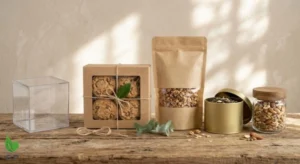
Start with the items that touch your customers most. Swap plastic carry bags for kraft paper bags, and pack desserts in bakery packaging. If you sell beans or snacks, kraft stand-up pouches look great on a shelf. For a wider plan, explore our sustainable packaging solutions and eco-friendly packaging products.
Consistency is what makes the story believable. When your cup, carrier, stirrer and bag all look and feel natural, the message is clear without a single word of explanation.
Disposal is the part many articles skip, and it is the part that decides whether your effort really helps.
How do you dispose of paper coffee cups? It depends on the cup. PE-lined cups usually need specialised recycling, which is not available everywhere. PLA-lined cups need industrial composting, which may also be limited in your area. Cups made with water-based coatings are easier to process, but only if a facility accepts them.
Since infrastructure varies, be honest with customers. Tell them what you know, ask them to bin cups properly and encourage reusable cups where possible. A small discount for customers who bring their own mug is one of the most effective waste reduction tools a cafe can use, and it fits neatly alongside the 10 easy zero waste swaps we recommend for everyday life.
The supplier matters as much as the cup. Inconsistent quality can undo all the goodwill you are trying to build.
If you are looking for a coffee cups for cafes in Pakistan supplier, working locally shortens delivery times and avoids import delays. You can learn more about why Ecoproduct.pk is Pakistan’s most trusted eco-friendly store and our mission to help Pakistan go green.
Start with your best-selling size and expand gradually. A phased switch is easier to manage and gives you real feedback before you commit to larger orders. If you want ideas for promoting the change, our post on eco-friendly cups and cutlery for restaurants and cafes has practical campaign inspiration.
Choosing eco friendly coffee cups is a practical, low-risk move that supports waste reduction, customer trust and future readiness at the same time. It will not solve every environmental problem, and it works best when you are honest about materials and disposal. But it shows customers that your values are visible in every cup you serve, and that is a powerful message for any cafe.
The real question is no longer whether cafes should move away from plastic and foam. It is how soon, and how well.
Browse our full coffee cup collection, explore custom printed cups or visit the shop to get started. Contact Ecoproduct.pk today for bulk pricing and samples, and take the first step towards a greener cafe.
Most eco friendly coffee cups are made from paper board sourced from renewable fibre. A thin lining, such as PLA from plant starch, PE or a water-based coating, makes them leak-resistant. The lining type affects how the cup can be recycled or composted.
Paper cups are better than plastic or foam in terms of material source, since they come from renewable fibre. However, the lining and disposal route determine the overall impact, so choose suppliers who clearly state what their cups are made of.
It depends on the lining and local facilities. PE-lined cups usually need specialised recycling, which is limited in many regions. Cups with water-based coatings can be easier to process where facilities exist.
Biodegradable cups can break down through microorganisms over an unspecified time. Compostable cups break down within a defined period under suitable composting conditions, leaving no toxic residue. Compostable is the more precise claim.
For hot drinks, yes. The air gap between layers keeps coffee warmer for longer and keeps the outside comfortable to hold, so no sleeve is needed. Single wall cups are cheaper and suit cold or lukewarm drinks.
Quality cups from reliable suppliers should not leak. Always order samples and test them with hot drinks and your chosen lids before placing a bulk order.
The unit price is usually slightly higher, but bulk buying narrows the gap. When you include brand value, sleeve savings and compliance readiness, the real difference is often small.
You can order wholesale quantities, including custom printed options, from Ecoproduct.pk, which supplies paper coffee cups, carriers, stirrers and packaging for cafes across Pakistan.

Author at Eco Product — passionate about sustainable living and eco-friendly products.

Subscribe our newsletter & get notification about information discount.
Subscribe to get special offers, free giveaways, and once-in-a-lifetime deals.