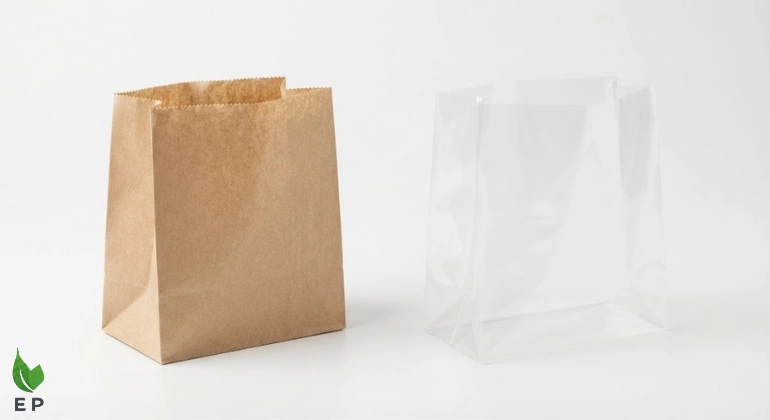
Every time you walk out of a store holding your groceries, you’re making a small environmental decision without even realizing it. The debate around kraft paper bags vs plastic bags has moved from casual conversation to a genuine global concern, as businesses and consumers alike search for packaging that doesn’t cost the planet. Pakistan is no exception — from local grocery stores to bakeries and e-commerce brands, everyone is asking the same question: which one actually deserves a place in a sustainable future?
In this guide, we’ll break down everything from decomposition time to carbon footprint, so you can make an informed choice — whether you’re a business owner selecting packaging or a shopper trying to make greener decisions.
Kraft paper is produced from wood pulp through a chemical process that retains the natural strength of wood fibers, which is why kraft bags are known for being sturdy despite being lightweight. Most kraft paper used in bags today comes from a mix of virgin and recycled paper bags, depending on the manufacturer’s sustainability commitment.
Key characteristics of kraft paper bags include:
If you’re curious what real kraft packaging looks like in action, EcoProduct.pk’s Kraft Paper Bags collection showcases options ranging from simple grocery bags to window-front designs used by bakeries and retail stores.
Plastic bags are manufactured primarily from petroleum-based products, typically polyethylene, a plastic polymer derived from crude oil or natural gas. This is where the environmental story starts to diverge significantly from paper.
Some defining traits of plastic bags:
While plastic bags are cheap to produce, their long-term environmental cost tells a very different story — one we’ll unpack in detail below.
This is the heart of the paper bags vs plastic bags environmental impact debate. Let’s compare them across the categories that matter most.
One of the most searched questions is: how long does plastic take to decompose? The answer is sobering.
| Material | Decomposition Time |
|---|---|
| Kraft paper bag | 2–6 months (compostable in most conditions) |
| Plastic bag | 20 to 1,000+ years (varies by type and environment) |
Kraft paper’s biodegradation period is dramatically shorter, and unlike plastic, it doesn’t fragment into microplastics that infiltrate soil and waterways.
Here’s where it gets nuanced. Producing kraft paper does consume more energy and water upfront due to pulp processing and tree harvesting. However, plastic production relies on fossil fuel extraction, which releases significant greenhouse gas emissions during manufacturing and again during degradation, as plastic slowly releases methane in landfills.
In short:
Both materials come with trade-offs:
This is where plastic’s damage becomes undeniable. Plastic bags are a leading contributor to:
Kraft paper, by contrast, decomposes into organic matter that enriches soil rather than poisoning it — making it a genuinely eco-friendly alternative.
If moisture resistance is a concern for your products, EcoProduct.pk’s Kraft Paper with Aluminum Lamination Pouch combines the eco-friendly base of kraft with a protective barrier — solving one of paper’s biggest limitations.
When you weigh biodegradability, pollution risk, and long-term ecological damage, kraft paper bags come out ahead as the more environmentally responsible choice — especially when reused or recycled.
That said, environmental responsibility isn’t just about the bag itself. It’s about:
For most everyday retail, grocery, and bakery use, kraft paper wins on the metrics that matter long-term: decomposition, pollution reduction, and consumer perception.
If you’re a business owner deciding on packaging, here’s a quick reality check:
| Factor | Kraft Paper Bags | Plastic Bags |
|---|---|---|
| Upfront cost | Slightly higher | Lower |
| Strength and load capacity | Good with reinforced kraft | Excellent |
| Storage lifespan | Long, if kept dry | Very long |
| Brand perception | Strong, eco-conscious | Increasingly negative |
| Regulatory risk | Low | Rising due to bans |
Many Pakistani retailers switching away from plastic are opting for options like the Brown Kraft Paper Bags with Clear Front Window, which combine visual appeal with sustainability — ideal for bakeries and boutique retail.
Retail packaging trends are shifting fast. Government bodies worldwide — including several provinces in Pakistan — have introduced a plastic bag ban or heavy restrictions on single-use plastic. This shift is driven by:
If you want a deeper look at how local businesses are adapting, our guide on Sustainable Packaging Solutions in Pakistan covers real market shifts happening right now.
Pakistani businesses — from cafés to e-commerce sellers — are increasingly prioritizing eco-friendly packaging bags for a few clear reasons:
For bakery and café owners specifically, kraft-based solutions like the White Paper Cake Bag and Black Paper Cake Bag offer both function and branding value.
E-commerce sellers looking for broader packaging alternatives can also explore Kraft Standup Pouches, which serve as a versatile, eco-conscious alternative to plastic pouches for food and retail products.
Before deciding, ask yourself:
For a broader shift beyond just bags, check out our 10 Easy Zero-Waste Swaps in Pakistan — a practical starting point for businesses and households alike.
Kraft paper bags are generally better for the environment because they biodegrade quickly, don’t release microplastics, and come from a renewable resource when responsibly sourced.
Yes. Kraft paper bags typically decompose within 2 to 6 months under normal environmental conditions, compared to plastic bags which can take hundreds of years.
Depending on the type and environmental exposure, plastic bags can take anywhere from 20 years to over 1,000 years to fully decompose.
Kraft paper bags have lower moisture resistance than plastic and slightly higher production costs, though laminated kraft options address the moisture issue effectively.
Plastic bags are made from petroleum-based products, take centuries to decompose, contribute to ocean pollution, and break down into harmful microplastics that damage ecosystems.
Yes, when considering full lifecycle impact — decomposition, pollution risk, and recyclability — paper bags are considered more eco-friendly than plastic, especially for single-use scenarios.
The kraft paper bags vs plastic bags debate isn’t just theoretical — it’s a decision playing out in stores, warehouses, and homes across Pakistan every single day. While plastic still holds an edge in raw durability and cost, kraft paper wins decisively when it comes to biodegradability, pollution reduction, and long-term environmental responsibility.
If you’re a business owner, retailer, or simply someone trying to shop more consciously, switching to kraft paper packaging is one of the simplest, most impactful changes you can make.
Ready to make the switch? Explore EcoProduct.pk’s full range of Kraft Paper Bags and sustainable packaging solutions, and take the first step toward packaging that protects your products and the planet.

Subscribe our newsletter & get notification about information discount.
Subscribe to get special offers, free giveaways, and once-in-a-lifetime deals.