A cafe’s cup is the one thing every customer touches, photographs and carries out the door. For years that cup has been the most wasteful part of the business. A busy cafe can go through hundreds of disposable cups in a single day, and most of them end up as landfill waste. That is why eco-friendly coffee cups have moved from a nice-to-have to a real business decision for cafe owners who care about their brand, their costs and the planet.
In this guide, I’ll walk you through what these cups are made of, how the different types compare, and what to look for when buying. I’ll also be honest about the limits of every option, because “green” labels can be confusing. Whether you run a small neighbourhood cafe or a growing chain, you will find practical advice you can use this week.
Customers have become much more observant. People notice when a cafe uses thick plastic lids and unlined foam cups, and they notice when it takes packaging seriously. Moving to sustainable coffee cups for cafes sends a clear message that you think about what happens after the last sip.
There is also a business case. Governments around the world are tightening rules on single-use plastic, and a single-use plastic ban can arrive faster than a small business expects. Cafes that switch early avoid last-minute scrambling, and they build a reputation that competitors will have to chase later.
Finally, there is the brand effect. A well-designed paper cup with your logo on it works as quiet advertising. When that cup also carries an environmental message, it gives customers a reason to talk about you. If you want to see how this fits into a bigger picture, our guide to sustainable packaging solutions in Pakistan explains how packaging choices ripple through a whole business.
A common question is what eco-friendly coffee cups are actually made of. The honest answer is that “eco-friendly” is a broad label covering several materials, and each one behaves differently.
Most are built from paper board sourced from managed forests, which is a renewable material. The challenge has always been the inside of the cup. Hot coffee would soak through plain paper, so cups need a barrier. Traditional cups use a thin plastic (polyethylene) layer, which makes them very hard to recycle. Greener alternatives replace that layer with PLA lined coffee cups, where PLA is a plant-based plastic made from cornstarch or similar crops, or with water-based barrier coatings.
Beyond paper, you will also come across bamboo fiber cups, which use fast-growing bamboo as a renewable base. If you’re curious about why this plant keeps showing up in green products, read why bamboo is the most sustainable material on earth.
The key takeaway is that the material list on the cup matters far more than the green leaf printed on the sleeve. Always ask your supplier what the lining is made of and how the cup should be disposed of.
This is where most cafe owners get tripped up, so let me keep it simple.
Biodegradable coffee cups will eventually break down through natural processes, but the word has no fixed time limit and no guarantee about what is left behind. It is a soft claim, and some products labelled this way take years to degrade.
Compostable coffee cups are stricter. They are designed to break down into non-toxic organic matter under specific composting conditions, and many PLA products need the higher heat of an industrial composting facility rather than a backyard heap. If a city has no such facility, a compostable cup may still end up in a landfill.
Recyclable coffee cups can be processed into new materials, but only if a recycling stream exists that accepts them. Standard plastic-lined paper cups are often rejected by mills because the lining is bonded to the paper.
So are compostable coffee cups really better for the environment? They can be, but only when they are collected and processed properly. That is why the most credible approach combines a better material with clear disposal guidance for your customers, which I cover later in this guide.
| Cup Type | Lining | End-of-Life Route | Best For |
|---|---|---|---|
| Standard paper cup | Polyethylene (plastic) | Rarely recycled | Not recommended |
| PLA lined cup | Plant-based PLA | Industrial composting | Cafes with a composting partner |
| Water-based coated cup | Aqueous barrier | Recycling (where available) | Cafes in cities with paper recycling |
| Double wall paper cup | Varies by product | Depends on lining | Hot drinks, no sleeve needed |
| Bamboo fiber cup | Natural fiber blend | Reusable or compostable | Dine-in and premium branding |
Use this table as a starting point. Specifications differ between suppliers, so always confirm the details of the exact product you are ordering.
Cafe owners often worry that going green means a worse drinking experience. In practice, performance depends on the cup’s construction rather than whether it is sustainable.
Single wall cups are light and economical, but they transfer heat quickly. That is why many cafes add a cardboard sleeve. Double wall cups trap a layer of air between two sheets of paper, which keeps hands comfortable and drinks warmer for longer. They also remove the need for a separate sleeve, which cuts extra waste. We break the trade-offs down in detail in double wall vs single wall coffee cups.
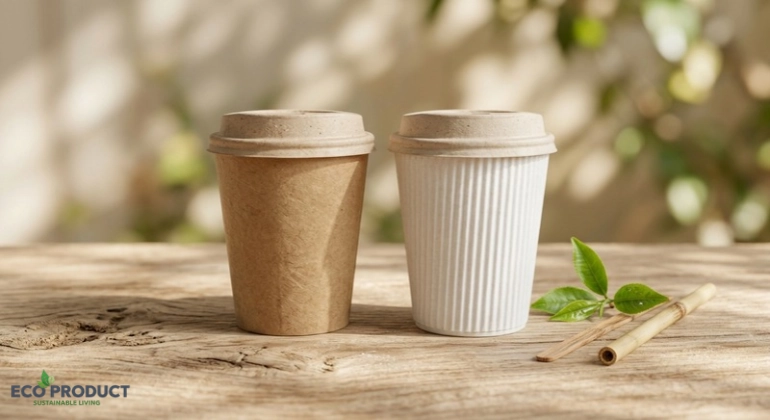
If you want to see the double wall style in practice, browse the 8oz insulated ripple double wall paper coffee cup or the larger 12oz insulated ripple double wall paper coffee cup. For a natural look, the 8oz double wall brown kraft coffee cup is a popular choice, and the 12oz white double wall coffee cup suits cafes that prefer a clean, minimal look.
Many cafes order the wrong cup sizes and end up with leftover stock or cups that make drinks look under-filled. Before you buy, map your menu to your cup sizes. Espresso-based drinks and small cappuccinos usually fit an 8oz cup, while lattes, flat whites and iced drinks often need 12oz or more.
Our practical guide on choosing the right coffee cup size for your cafe walks through this step by step. Ordering the right sizes also reduces waste, which is one of the simplest forms of waste reduction in cafes because every unused or mismatched cup is a cost with no return.
If you want a complete view of available styles, the coffee cup collection is a good place to compare options side by side.
A plain cup does its job, but a branded cup does two jobs at once. Custom printed eco-friendly coffee cups turn every takeaway order into a small billboard. Customers carry your logo through offices, streets and social media feeds without you spending extra on advertising.
When you design a printed cup, keep it simple. One or two colours and a clean logo usually look sharper than a busy pattern, and they cost less to print. A short line such as “Please dispose of me responsibly” adds a sustainability message without clutter.
If you’re ready to try it, take a look at the 12oz customized coffee cup with screen printing and the 8oz customized coffee cup with screen printing, or browse the full customized coffee cup category for more ideas.
Let’s talk numbers in general terms. Eco-friendly cups usually cost somewhat more per unit than the cheapest plastic-lined paper cups. The price depends on size, wall type, lining, printing and order quantity, so any single figure would be misleading.
What I can say is how to think about the cost. First, buying in volume lowers the per-cup price, which is why wholesale eco-friendly coffee cups and bulk compostable cups are the most economical route for busy cafes. Second, double wall cups can replace the cost of sleeves. Third, customers are often willing to support a cafe that takes sustainability seriously, which helps protect your margins and repeat visits.
When you request a quote, compare the total cost rather than the unit price alone. Include printing, lids, delivery and any minimum order requirement. A slightly higher cup price that reduces complaints about hot hands or leaking is usually the better deal.
The cup is only part of the experience. If you serve takeaway to groups, a kraft 4 cup drink carrier or kraft 2 cup coffee cup carrier prevents spills and keeps the whole order eco-friendly. You can see all options in the coffee cup carrier category.
Pair your cups with natural wooden stir sticks instead of plastic stirrers, and offer bamboo straws for cold drinks. If you’re comparing straw options, our guide to reusable straws: bamboo vs steel vs glass will help you decide. For pastries and takeaway snacks, kraft paper bags are a natural fit, and you can learn why in kraft paper bags vs plastic bags.
This is what green packaging for cafes looks like as a system. When the cup, lid, stirrer, carrier and bag all follow the same philosophy, the whole experience feels consistent and credible.
Disposable cups, even good ones, still use resources. The most sustainable cup is often the one that is never thrown away, so a serious zero waste cafe strategy includes reusable coffee cups for cafes alongside greener disposables.
You can encourage reuse in simple ways: offer a small discount to customers who bring their own cup, sell branded reusable cups, or use real ceramic for dine-in orders. These steps support the circular economy, where materials stay in use for as long as possible rather than being used once and discarded.
Disposables still have a place for takeaway, events and high-volume service. The goal is not perfection, but steady reduction. For more ideas you can share with your team and customers, see these 10 easy zero waste swaps.
Switching cups is only half the job. To make the change meaningful, think about disposal from the start.
Put clearly labelled bins near the exit and tell customers what goes where. If a composting service exists in your area, partner with it. If not, be honest with customers instead of overstating the benefits. Transparency builds trust, and it protects you from accusations of greenwashing.
Track your results as well. Count how many cups you use each month, how many customers bring their own, and how your waste volume changes. These small records help you improve, and they give you real stories to share in your marketing.
Events are another good opportunity. Our post on eco-friendly cups and cutlery for restaurants and cafes shows how seasonal campaigns can highlight your green efforts.
When you’re ready to buy, work through these checks:
A reliable supplier will welcome these questions. If you want to know who you’re dealing with, read why EcoProduct.pk is Pakistan’s most trusted eco-friendly store, or explore the full shop for cafe essentials.
Younger customers in particular choose cafes that reflect their values. When you use eco-friendly coffee cups and say so clearly, you give those customers a reason to pick you over the cafe next door.
Mention your switch on your menu board, your social media and your cup sleeves or printed designs. Share short behind-the-scenes posts about why you made the change. Keep your claims specific and honest, for example “our cups use plant-based lining,” instead of vague phrases like “100% green.”
Over time, this builds trust. And trust, more than any single campaign, is what turns first-time visitors into regulars who recommend you to friends.
They are usually made of paper board from managed forests with a plant-based (PLA) or water-based lining instead of regular plastic. Some are made from bamboo fiber or other renewable materials.
They can be, provided they reach a proper composting facility. In places without that infrastructure, their benefit is smaller, so clear disposal guidance matters.
Biodegradable cups break down naturally over an unspecified time, while compostable cups are designed to break down into organic matter under defined composting conditions.
Standard paper cups with a plastic lining are difficult to recycle. Cups with water-based coatings are easier to recycle where a suitable stream exists.
Switching reduces plastic waste, prepares you for tightening regulations and strengthens your brand with environmentally conscious customers.
Yes, especially double wall designs, which trap air between layers to keep drinks warm and hands comfortable.
Choosing eco-friendly coffee cups is one of the simplest and most visible ways a cafe can reduce its environmental footprint. The best results come from understanding the materials, being honest about disposal, matching cups to your menu and pairing them with a wider zero waste mindset. You don’t need to change everything overnight. Start with your most-used cup size, test it, learn from customer feedback and build from there.
Explore our eco-friendly coffee cup collection, request a custom printed design, or contact the EcoProduct.pk team for wholesale pricing built for your cafe. Your customers are already paying attention. Give them something worth sharing.

Author at Eco Product — passionate about sustainable living and eco-friendly products.

Subscribe our newsletter & get notification about information discount.
Subscribe to get special offers, free giveaways, and once-in-a-lifetime deals.