Walk into any modern Pakistani store today and you’ll notice something interesting — the shiny, sturdy tin box is back, and it’s not just for nostalgia. Tin packaging in Pakistan is experiencing a genuine revival, driven by shifting consumer habits, growing environmental awareness, and businesses looking for packaging that looks premium while actually protecting the planet. What once felt like an old-fashioned relic from your grandmother’s kitchen is now being reintroduced as one of the smartest, most sustainable packaging choices available. This comeback isn’t a coincidence — it’s a direct response to plastic fatigue, rising consumer expectations, and a packaging industry finally catching up with global eco-trends.
In this guide, we’ll unpack exactly why this shift is happening, what’s driving demand for tin cans packaging Pakistan-wide, and how local manufacturers and small businesses are adapting. Whether you’re a business owner exploring packaging options or simply curious about sustainable alternatives, this article breaks it all down in a clear, practical way.
Every packaging trend has a story, and tin’s comeback is rooted in something deeper than aesthetics. For decades, plastic dominated Pakistani markets because it was cheap, lightweight, and easy to mass-produce. But that convenience came with a cost — plastic waste piling up in landfills, clogging waterways, and contributing to a pollution crisis that Pakistan, like much of the world, is now scrambling to address.
As awareness around the environmental impact of plastic packaging grows, both consumers and businesses are actively searching for alternatives that don’t sacrifice durability or visual appeal. Tin fits that need perfectly. It’s recyclable almost indefinitely, doesn’t leach harmful chemicals into food, and carries a premium look that plastic simply can’t replicate. This is precisely why the rise of tin packaging is showing up not just in food products but in cosmetics, gifting, and specialty retail packaging across the country.
There’s also a practical business angle here. Retailers have realized that customers associate metal packaging with quality — a tin box just feels more valuable than a plastic pouch, even if the product inside is identical. That perception shift alone has fueled significant demand across multiple industries.
Pakistani consumers, especially younger and urban demographics, are becoming noticeably more conscious about sustainable packaging Pakistan-wide. Social media campaigns, government-backed plastic bans in provinces like Punjab and Sindh, and rising climate awareness have all contributed to a cultural shift. People aren’t just asking “does this work?” anymore — they’re asking “what happens to this after I’m done with it?”
Tin answers that question beautifully. Unlike plastic, which can take hundreds of years to decompose, tin containers are part of the circular economy Pakistan is slowly building — they get collected, melted down, and reformed into new products with minimal quality loss. That closed-loop potential is a huge selling point for eco-conscious buyers who want their purchases to align with their values.
Businesses are also responding to real consumer behavior packaging choices. Surveys and market feedback consistently show that customers are willing to pay slightly more for products packaged sustainably, especially in categories like specialty foods, skincare, and gifting. This has pushed many local brands to explore plastic packaging alternatives, and tin has emerged as one of the strongest contenders because it checks every box: durability, recyclability, and visual appeal.
If you’re curious how other sustainable materials stack up, our breakdown of kraft paper bags vs plastic bags explores a similar shift happening in a different packaging category — and the pattern is nearly identical.
The metal packaging industry Pakistan-wide has grown steadily, but it’s only recently gained serious momentum. Historically, tin manufacturing was limited to a handful of large-scale producers serving pharmaceutical and specific food sectors. Today, that landscape looks very different.
Local tin container manufacturing Pakistan operations have expanded significantly, partly because global supply chain disruptions in previous years pushed businesses to look inward for sourcing. Instead of importing metal packaging at high costs, many companies now work with domestic metal tin packaging suppliers, which has made tin more accessible and affordable for small and medium businesses — not just large corporations.
This growth also ties into broader packaging industry growth Pakistan trends. As e-commerce, bakery, and specialty retail sectors expand, demand for premium, protective packaging has followed. Tin boxes, in particular, have found a strong foothold in bakery packaging, gifting, and cosmetic industries where presentation matters just as much as protection.
If you’re exploring packaging options for your own business, our detailed tin boxes for packaging buyers guide walks through everything from material grades to sizing decisions, making it a solid next step after this article.
Understanding why tin is making such a strong comeback becomes much clearer once you look at the actual tin packaging benefits on offer. Rather than listing generic advantages, it helps to see exactly what businesses and consumers are gaining:
These aren’t just marketing points — they translate into real, measurable value. A bakery using tin containers, for example, sees fewer product returns due to spoilage, while a cosmetics brand benefits from packaging that customers actually want to keep and reuse.
One question we hear often is how tin actually stacks up against other common packaging materials. Here’s a simplified comparison to make the decision-making process easier:
| Feature | Tin Packaging | Plastic Packaging | Aluminum Packaging |
|---|---|---|---|
| Recyclability | Excellent, infinite cycles | Limited, quality degrades | Very good |
| Durability | High, resists dents/crush | Moderate, can crack | Moderate |
| Food Safety | Excellent (food-grade) | Varies by type | Excellent |
| Visual/Premium Appeal | High, retro & modern styles | Low to moderate | Moderate |
| Cost (Bulk Production) | Moderate | Low | Moderate to high |
When comparing aluminum vs tin packaging specifically, the choice often comes down to use case. Aluminum is lighter and slightly cheaper for large-scale beverage packaging, while tin tends to win out for premium retail, bakery, and gifting purposes where visual impact and rigidity matter more. If you’re weighing packaging shapes as well, our guide on round vs square tin boxes goes deeper into how form factor affects both function and branding.
Understanding the tin can manufacturing process helps explain why quality and cost vary so much between suppliers. It typically starts with tinplate steel — thin steel sheets coated with a fine layer of tin to prevent rusting and improve food safety. This tinplate steel packaging base is then cut, shaped, and formed into the desired container style, whether that’s a classic round tin, a square box, or a custom-shaped design for branding purposes.
After forming, containers go through printing and finishing stages, where designs, logos, and protective coatings are applied. This is where local manufacturers have gotten remarkably skilled — many Pakistani suppliers now offer custom printing at competitive rates, something that used to require importing from China or Europe just a few years ago.
The final stage involves quality checks for seal integrity, especially important for food preservation packaging where airtight closure directly affects shelf life. This entire process has become significantly more efficient locally, which is part of why local packaging manufacturers Pakistan-wide can now offer tin at prices that rival plastic alternatives for many product categories.
For businesses exploring their options, browsing our tin boxes category gives a practical sense of the range currently available, from round tin boxes to square tin boxes, each suited to different branding needs.
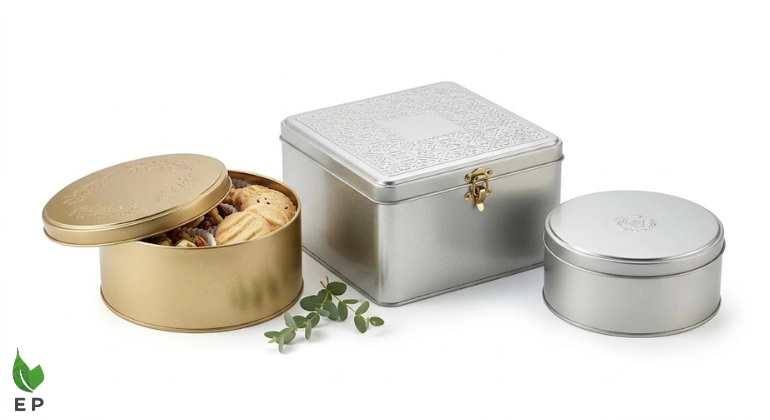
Tin’s versatility means it’s showing up in far more places than most people realize. In the bakery sector, tin boxes have become a popular choice for cookies, cakes, and gourmet gift sets — the rigid structure protects delicate items during transport while the metallic finish adds a premium unboxing experience. Products like our golden round tin box and square golden tin boxes are commonly used for exactly this purpose.
Cosmetics and skincare brands have also embraced tin heavily, particularly for balms, solid perfumes, and travel-sized products where a tight seal matters. The retro packaging design trend fits naturally here, since vintage-inspired tins photograph beautifully for social media marketing — something every small business owner in Pakistan understands the value of these days.
Beyond food and cosmetics, tin containers are increasingly used for gifting purposes during occasions like Eid, weddings, and corporate events. Options like the blue square tin box or pink square tin box offer color variety that suits different branding themes, making them a favorite among small business owners looking for cost-effective packaging materials that still feel special.
Small businesses in particular have benefited from this trend. Rather than needing large minimum order quantities, many suppliers now offer smaller batch options, making tin accessible even for home-based bakeries and boutique skincare brands exploring small business packaging solutions for the first time.
Looking forward, several factors suggest this comeback has real staying power rather than being a passing trend. Government policies around packaging industry regulations Pakistan-wide are gradually tightening restrictions on single-use plastics, which naturally pushes businesses toward alternatives like tin, glass, and kraft paper. As these regulations expand beyond just shopping bags to broader packaging categories, tin stands to benefit significantly.
Packaging industry statistics Pakistan researchers have compiled also point toward steady growth in metal packaging demand, particularly as import export tin packaging Pakistan trade relationships strengthen with countries that have well-established tin manufacturing infrastructure. This means better pricing, wider design options, and faster availability for local businesses over the next few years.
There’s also a strong innovation angle worth watching. Packaging design innovation is pushing tin beyond traditional cylindrical shapes into custom molds, unique textures, and even smart packaging features like built-in freshness indicators. Combined with growing metal recycling Pakistan infrastructure, the entire lifecycle of tin packaging is becoming more sustainable, from production through disposal and back into new products again.
As sustainable manufacturing practices become a competitive necessity rather than just a nice-to-have, expect more Pakistani brands — from established FMCG companies to ambitious startups — to adopt tin as their packaging material of choice. It’s a rare case where doing right by the environment and doing right by your brand image point in exactly the same direction.
The comeback of tin packaging in Pakistan isn’t just a nostalgic nod to the past — it’s a practical, forward-looking response to real problems: environmental damage from plastic, consumer demand for premium presentation, and businesses seeking durable, cost-effective packaging that actually protects their products. From bakeries and cosmetic brands to gifting businesses and beyond, tin has proven it can meet modern needs while staying true to sustainability goals that matter more with each passing year.
Whether you’re a business owner rethinking your packaging strategy or simply someone who appreciates the quiet elegance of a well-made tin box, this is a trend worth paying attention to. The materials we choose today shape the environment we leave behind tomorrow, and tin is proving to be a genuinely smart choice for Pakistan’s packaging future.
If you’re ready to explore tin packaging for your own products, browse our complete tin boxes collection or check out our full eco-friendly product range to find packaging solutions that match your brand’s values and budget.
Q1: Why is tin packaging becoming popular again in Pakistan? Tin packaging is regaining popularity because of rising environmental awareness, stricter plastic regulations, and consumer preference for durable, recyclable, and premium-looking packaging that plastic alternatives struggle to match.
Q2: Is tin packaging more expensive than plastic? Tin packaging costs can be slightly higher upfront compared to basic plastic, but improved local manufacturing has narrowed this gap significantly, and the added durability and reusability often make it more cost-effective long-term.
Q3: Can tin containers be used for food storage safely? Yes, food-grade tin containers made from tinplate steel are completely safe for food storage and are widely used for bakery items, dry goods, and gourmet products across Pakistan.
Q4: What industries in Pakistan use tin packaging the most? Bakery, cosmetics, gifting, and specialty food industries are the biggest users of tin packaging in Pakistan, valuing it for both protective qualities and premium presentation.
Q5: How does tin packaging compare to aluminum packaging? Tin tends to offer better rigidity and a more premium visual appeal, making it ideal for gifting and retail, while aluminum is often preferred for lightweight, large-scale beverage packaging.

Subscribe our newsletter & get notification about information discount.
Subscribe to get special offers, free giveaways, and once-in-a-lifetime deals.