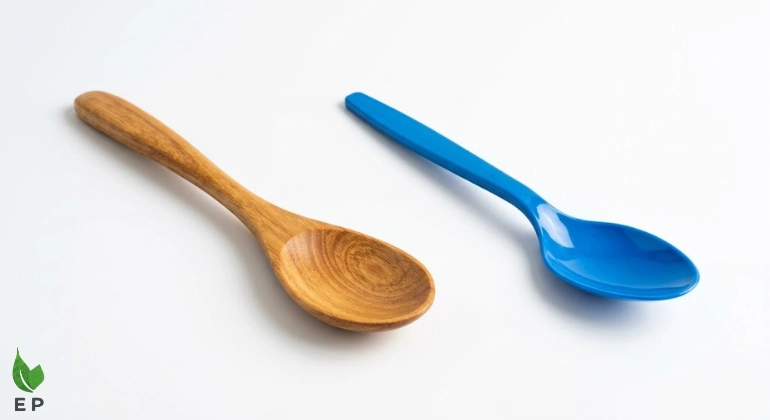
If you’ve ever stood in your kitchen drawer wondering whether to reach for the worn-out wooden spoon or the lightweight plastic one, you’ve unknowingly stepped into one of the most talked-about debates in sustainable living. The Wooden Spoon vs Plastic Spoon comparison isn’t just about which utensil stirs your curry better — it’s about durability, hygiene, cost, and most importantly, the mark each one leaves on our planet. As more Pakistani households shift toward conscious living, this simple kitchen tool has become a symbol of a much bigger choice: convenience today versus sustainability for tomorrow.
In this guide, we’ll break down everything from material science to real kitchen performance, so you can finally settle the debate for your own home.
Plastic waste has quietly become one of the defining crises of our generation. Every year, millions of tons of single-use plastic items — including spoons, forks, and stirrers — end up in landfills, rivers, and eventually the ocean. Pakistan alone generates a staggering amount of plastic waste annually, and kitchen utensils, though small, contribute more than most people realize.
This is exactly why the conversation around eco-friendly spoons has gained so much momentum. Consumers are no longer just asking “which spoon works better,” they’re asking “which spoon costs the environment less.” Government-led single-use plastic bans in various cities have pushed households and restaurants alike to rethink their everyday tools. If you’ve been following our zero-waste guide for Pakistan, you already know that small swaps — like choosing a wooden spoon over a plastic one — add up to a massive collective impact over time.
The good news? Making the switch doesn’t require sacrificing performance. In fact, once you understand the material differences, the choice becomes fairly obvious.
Wooden spoons have been a kitchen staple for centuries, long before plastic ever existed. There’s a reason grandmothers everywhere swore by them — they’re sturdy, heat-resistant, and gentle on cookware.
Wood is a renewable resource, meaning it comes from trees that can be replanted and regrown, unlike plastic, which is derived from non-renewable petroleum. When a wooden spoon eventually wears out, it doesn’t sit in a landfill for centuries — it breaks down naturally, returning to the earth as organic matter. This is what makes wooden cooking utensils a genuinely biodegradable and low-impact choice compared to their synthetic counterparts.
Beyond the environmental angle, wooden spoons are also naturally non-toxic. Unlike certain plastics that can leach chemicals when exposed to heat, food-grade wood remains stable even in hot pots and pans. That’s a meaningful hygiene advantage, especially for households that cook daily.
Practically speaking, wooden spoons are gentle on non-stick pans, don’t conduct heat (so your hand stays cool while stirring), and won’t scratch delicate cookware surfaces. They’re ideal for slow-cooked curries, risottos, and baking batters where a plastic spoon might warp or melt slightly against a hot pan.
Here’s a quick look at what makes them a kitchen favorite:
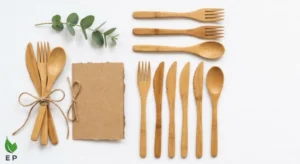
If you’re looking to build a complete eco-conscious kitchen, our birchwood wooden spoon is a great starting point, and pairing it with an eco-friendly wooden fork or birchwood wooden knife gives you a full sustainable cutlery set without compromising on function.
There’s no denying that plastic spoons are cheap, lightweight, and everywhere — from your kitchen drawer to the disposable ones tucked into your takeaway order. But that convenience comes with hidden costs that are easy to overlook in daily life.
Most plastic spoons are made from petroleum-based polymers, which means their production alone contributes to a larger carbon footprint than wood. Many low-quality plastic spoons also aren’t fully BPA-free, raising concerns about chemical exposure when used with hot food or liquids. Over time, plastic utensils can become brittle, discolored, or warped, especially with repeated dishwashing or exposure to heat — meaning they often need replacing far more frequently than a well-maintained wooden spoon.
This is where the real problem lies. A single-use plastic spoon can take anywhere between 200 to 500 years to decompose, and even then, it doesn’t fully disappear — it breaks into microplastics that contaminate soil and water systems. Given that billions of plastic utensils are discarded globally every year, the cumulative environmental burden is enormous.
For a deeper look at how everyday plastic choices affect the planet, our article on 9 easy ways to reduce your plastic waste breaks down practical swaps you can start today.
To make this decision easier, here’s a side-by-side look at how the two materials actually compare across the factors that matter most.
| Factor | Wooden Spoon | Plastic Spoon |
|---|---|---|
| Durability | Lasts years with proper care | Wears out or warps faster |
| Heat Resistance | Naturally heat-resistant | Can melt or warp near high heat |
| Hygiene & Safety | Non-toxic, food-grade | May leach chemicals if low quality |
| Environmental Impact | Biodegradable, renewable | Takes centuries to decompose |
| Cost Over Time | Higher upfront, cheaper long-term | Cheap upfront, frequent replacement |
| Sustainability Rating | High (compostable) | Low (contributes to plastic pollution) |
Looking at this table, it’s clear that plastic wins only on initial price and weight — everything else tilts firmly in favor of wood, especially when you factor in long-term durability and environmental cost.
Let’s talk numbers for a moment, because they tell a compelling story. Wooden utensils, when discarded, decompose naturally within a few months to a couple of years depending on conditions — returning to soil without leaving toxic residue behind. Plastic, on the other hand, follows a far grimmer timeline.
| Material | Approximate Decomposition Time |
|---|---|
| Wooden Spoon | 6 months – 2 years (fully biodegradable) |
| Plastic Spoon | 200 – 500+ years (breaks into microplastics) |
This single comparison explains why so many households, cafes, and even large-scale food businesses in Pakistan are shifting toward sustainable cookware and compostable spoons. It’s not just an environmental statement — it’s a practical response to a growing landfill crisis. If you’re curious how this same logic applies to other kitchen tools, our comparison on stainless steel cutlery vs plastic follows a very similar pattern.
Context matters a lot here, and the honest answer depends on what you’re using the spoon for.
For everyday cooking — stirring curries, mixing batter, tasting sauces — a wooden spoon is almost always the better choice. It won’t scratch your pans, doesn’t retain odors from strong spices the way plastic sometimes does, and simply lasts longer with basic care like occasional oiling.
Plastic spoons still have a place, particularly for single-use scenarios like serving at large events, packing takeaway meals, or situations where hygiene concerns make disposability appealing. Even here though, better alternatives exist. Products like our reusable bamboo cutlery set offer the same portability and convenience without the environmental guilt — something we’ve covered in detail in why you should carry a reusable bamboo cutlery set.
Even for smaller applications like stirring your morning coffee, wooden coffee stirrers are a simple, biodegradable swap that eliminates the need for plastic entirely.
Choosing between wood and plastic ultimately comes down to how you weigh convenience against long-term impact. If you’re building an eco-conscious kitchen, a few practical guidelines can help.
Our full Birchwood Cutlery collection covers everything from spoons and forks to knives, making it easy to build a plastic-free kitchen in one go. And if you want to explore beyond cutlery, browsing our complete eco-friendly shop is a great next step toward a more sustainable home.
Which is better, wooden or plastic spoon? Wooden spoons are generally better for the environment, durability, and cooking safety, while plastic spoons are only preferable for short-term, single-use convenience.
Are wooden spoons eco-friendly? Yes, wooden spoons are made from renewable materials and are fully biodegradable, making them one of the most eco-friendly kitchen utensils available.
Do plastic spoons harm the environment? Yes, plastic spoons take hundreds of years to decompose and often break down into microplastics that pollute soil and water systems.
How long do wooden spoons last? With proper care, such as occasional oiling and hand washing, a quality wooden spoon can last several years of regular use.
Are wooden spoons hygienic? Food-grade wooden spoons are naturally non-toxic and safe for cooking, as long as they’re cleaned properly and not left soaking in water for extended periods.
How long does a plastic spoon take to decompose? A typical plastic spoon can take anywhere from 200 to 500 years to fully decompose, depending on the type of plastic used.
When you place the Wooden Spoon vs Plastic Spoon comparison side by side, the answer becomes fairly clear. Wood offers durability, safety, and a genuinely lower environmental footprint, while plastic’s only real advantage is short-term convenience — an advantage that comes at a long-term cost to our planet.
Switching to wooden and biodegradable kitchen tools isn’t about perfection; it’s about consistent, small choices that add up over time. Every wooden spoon you choose over a plastic one is one less item destined for a landfill that will outlive several generations.
If you’re ready to make that switch today, explore our full range of eco-friendly kitchen essentials and take the first step toward a kitchen that’s kinder to the planet — one utensil at a time.

Subscribe our newsletter & get notification about information discount.
Subscribe to get special offers, free giveaways, and once-in-a-lifetime deals.