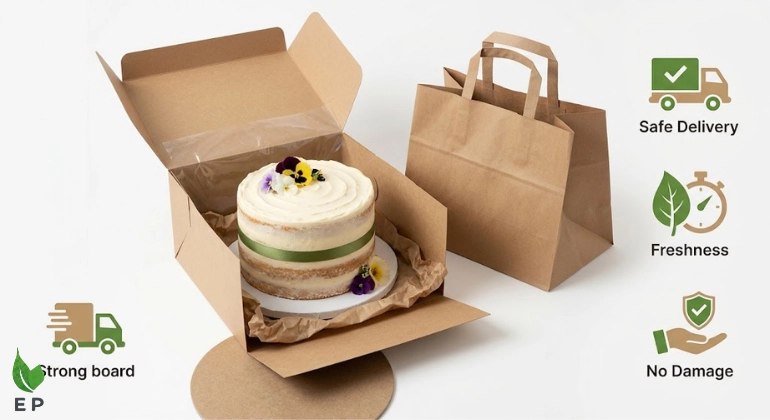
Learning how to package a cake for delivery without damage is one of the most important skills for bakeries, home bakers, cloud kitchens, and cake businesses. A cake may look perfect on the decorating table, but if it shifts, melts, tilts, or gets crushed during delivery, the customer experience can be ruined within seconds. Good cake packaging is not just about putting the cake inside a box; it is about structure, stability, temperature control, food safety, and careful handling from your kitchen to the customer’s door.
Whether you are delivering a birthday cake across the city, sending a customized cake through courier, or preparing bakery orders for customers, secure cake packaging makes a huge difference. The right cake delivery box, strong cake board, protective wrapping, and smart transport method can help you prevent cake damage during delivery and keep cake fresh during transport.
For businesses that sell cakes regularly, packaging also becomes part of your brand identity. A neat, strong, eco-conscious package tells customers that you care about quality from baking to delivery. If you are looking for reliable bakery packaging materials, you can explore Eco Product’s full range of bakery packaging designed for cakes, cupcakes, slices, and desserts.
A cake is one of the most delicate food products to deliver. Unlike dry snacks or sealed packaged goods, cakes are soft, layered, decorated, and temperature-sensitive. Even a small jerk during transport can cause frosting to touch the box, toppings to slide, or the whole cake to lean to one side. That is why cake packaging for delivery should be planned before the cake even leaves your kitchen.
When customers order a cake, they expect it to arrive exactly the way it looked in photos or at pickup. A damaged cake can lead to complaints, refunds, poor reviews, and loss of trust. On the other hand, when your cake reaches safely, it creates a premium customer experience and increases repeat orders.
Good packaging protects four main things: the cake structure, the frosting, the decorations, and the freshness. To deliver a cake safely, you need to stabilize cake before delivery, choose the right cake box size, use a strong cake board, and maintain cake temperature throughout the journey.
The best packaging also makes handling easier for riders and customers. A cake box that is too weak, too large, or difficult to carry increases the risk of accidents. That is why bakeries often pair sturdy boxes with cake bags, boards, drums, and sealing materials to create a complete delivery-safe system.
The first step in safe cake transportation is selecting the right cake box for delivery. The box should be strong enough to protect the cake from outside pressure and properly sized so the cake does not move inside. A loose box is one of the biggest reasons cakes get damaged because the cake can slide, hit the sides, and disturb the frosting or decorations.
A good cake delivery box should have a firm base, proper height, clean food-safe material, and enough space around the cake without being oversized. If the cake has tall toppers, flowers, fondant decorations, or layered frosting, always choose a box with extra height. For regular bakery cakes, a standard sturdy cake box works well, but for premium or heavy cakes, stronger packaging is recommended.
Eco Product offers practical cake boxes that are suitable for bakeries, home bakers, and dessert businesses. These boxes help create a clean, professional presentation while supporting safer cake delivery.
When choosing a cake box, think about the full journey. Will the cake travel by bike, car, courier, or rider bag? Will the weather be hot? Is the cake tall, heavy, or decorated with delicate toppings? The answers help you choose better packaging.
| Cake Type | Recommended Packaging | Delivery Tip |
|---|---|---|
| Small sponge cake | Standard cake box + cake board | Keep flat and avoid stacking |
| Heavy buttercream cake | Strong cake box + thick drum board | Chill before delivery |
| Tall decorated cake | Tall cake box + secure base | Leave extra height for toppers |
| Cake slices | Individual slice boxes | Pack separately to avoid smearing |
| Cupcakes | Cupcake boxes with inserts | Prevent movement inside box |
This simple table can help bakeries select packaging according to cake type instead of using the same box for every order.
If the box is the outer protection, the cake board is the foundation. You should never deliver a cake without a strong base. A weak base bends when lifted, which can crack frosting, damage layers, or cause the cake to slide. To package delicate cake safely, always place it on a cake board that is slightly larger than the cake.
For regular cakes, a high-quality board works well. For heavier cakes, fondant cakes, or multi-layer cakes, a thicker cake drum is better. A drum board gives extra strength and keeps the cake stable during movement. It also makes lifting and handling much safer.
Eco Product has multiple cake board options including white cake boards, golden cake boards, and silver cake boards for professional cake presentation. For heavier cakes, you can consider golden cake drum boards, black cake drum boards, or silver cake drum boards.
A cake board should not only look good; it must support weight evenly. If your cake weighs more than normal, always size up the board and choose a thicker material. This reduces the risk of bending during lifting.
One of the most common delivery problems is cake movement. Even if your box is strong, the cake can still slide if the base is not secured. Learning how to prevent cake from moving in box is essential for every bakery.
The cake should sit firmly on the board, and the board should sit firmly inside the box. If there is too much empty space inside the box, the cake board can move during turns, bumps, or sudden braking. This is especially risky when delivering by motorcycle.
A practical method is to use a small amount of buttercream or edible-safe adhesive under the cake to attach it to the board. Then place the cake board inside a box that closely fits the board size. If needed, you can use food-safe support around the board edges so it does not slide.
For businesses that deliver regularly, using a non-slip mat inside the delivery bag or vehicle floor is also very helpful. The goal is simple: the cake should remain flat, centered, and stable from pickup to drop-off.
Selective tips to reduce cake movement:
These small steps can prevent cake damage during delivery and protect frosting and decorations.
Temperature control is one of the most overlooked cake delivery packaging tips. Cakes with buttercream, whipped cream, cream cheese frosting, chocolate ganache, or fresh fruit toppings can soften quickly in warm weather. If the cake is too soft before delivery, even perfect packaging may not save it from damage.
Before packing, allow the cake to chill properly in the refrigerator. A chilled cake is firmer, easier to handle, and less likely to shift. This does not mean the cake should be frozen solid; it simply needs enough cooling to stabilize the frosting and layers.
In hot cities or summer months, temperature control becomes even more important. To deliver cake without melting, keep the cake refrigerated until the rider arrives. Avoid leaving packed cakes near ovens, windows, or warm counters. If the journey is long, use insulated packaging for cake or temperature-controlled delivery.
For premium or delicate cakes, discuss delivery timing with the customer. Early morning or evening delivery may be safer than afternoon delivery in extreme heat. This helps maintain cake temperature and keep cake fresh during transport.
Cake decorations are often the most fragile part of the order. Flowers, fondant toppers, chocolate pieces, macarons, fruit, sprinkles, and piped borders can move or break if the box touches them. That is why box height matters as much as box width.
When packaging cakes for customers, always check the distance between the top of the cake and the box lid. The lid should not press against toppers or frosting. If decorations are very tall, use a taller box or pack certain toppers separately for the customer to place later.
For cakes with delicate side decorations, make sure the cake does not touch the box walls. A cake that fits too tightly can lose frosting when removed. At the same time, a box that is too large may allow movement. The best solution is a balanced fit with stable board placement.
Acrylic packaging can also be useful for premium display and protection. For selected dessert presentations, Eco Product’s clear straight acrylic box with lid can offer an attractive and protective option, especially when visual presentation matters.
Customers today notice packaging more than ever. They prefer clean, safe, and responsible packaging, especially for food. Using food-safe packaging materials is not optional; it is a basic requirement for professional cake delivery.
Food-safe packaging protects the cake from dust, moisture, contamination, and unwanted contact. It also improves trust. If your bakery uses poor-quality materials, customers may question the hygiene and quality of your products.
Eco-conscious packaging is also becoming a strong brand advantage. Bakeries can reduce unnecessary plastic and choose paper-based, reusable, recyclable, or lower-impact packaging wherever possible. Eco Product focuses on sustainable packaging options for businesses that want practical and responsible choices. You can also read their guide on sustainable packaging solutions in Pakistan for broader packaging ideas.
For cake delivery, the most useful packaging materials include cake boxes, cake boards, cake bags, sealing tape, protective wraps, and sturdy outer boxes for long-distance shipping. If you are sending cakes as part of courier packaging, you may also need extra cushioning materials such as bubble wrap roll and clear packaging tape.
A cake box protects the cake, but a cake bag makes handling easier. Riders and customers often struggle to carry cake boxes, especially larger sizes. A strong cake bag reduces the chance of tilting or accidental dropping.
Cake bags are useful for local bakery deliveries, customer pickups, and event orders. They also improve presentation because the customer receives the cake in a neat, branded-looking format. If your bakery sells cakes regularly, using paper cake bags can make the overall experience more professional.
Eco Product offers both black paper cake bags and white paper cake bags that can be helpful for packaging cakes for customers. These bags make carrying easier while supporting a cleaner takeaway experience.
However, remember that a bag is not a replacement for a strong box. The cake must still be properly secured inside the box. The bag only adds convenience and helps keep cake upright while transporting.
The best way to transport a cake is to keep it flat, stable, cool, and separate from other items. Never place a cake on a car seat because seats are usually angled. This can cause the cake to slide or lean. The safest place is usually the flat floor of the car or a level surface in the delivery vehicle.
If delivering by bike, the cake should be placed inside a stable delivery box or carrier that keeps it level. Sudden movement during cake delivery is a major cause of damage, so riders should drive slowly, avoid sharp turns, and brake gently.
If possible, use a dedicated delivery bag with a firm base. Do not place hot food with cakes because heat can melt frosting. Also avoid putting heavy packages near the cake box because they can push into the sides.
For local deliveries, plan the route before leaving. The shortest route is not always the safest. A slightly longer route with smoother roads may be better for delicate cakes. This is especially important when you need to transport a cake without ruining it.
Shipping a cake is more challenging than local delivery because you cannot control every movement after dispatch. If you want to know how to pack a cake for shipping, remember that the cake needs extra protection, firmer structure, and temperature planning.
Not every cake is suitable for courier delivery. Soft cream cakes, tall fresh cream cakes, and heavily decorated cakes are risky. Dense cakes, fondant-covered cakes, loaf cakes, brownies, dry cakes, and certain mini cakes are easier to ship.
For cake courier packaging, use a strong cake board, secure inner cake box, cushioning around the box, and a strong outer carton. Eco Product’s 3ply and 5ply standard ecommerce boxes can be useful as outer packaging when extra protection is needed.
If the cake must stay cool, use insulated packaging and gel packs. Make sure the cake is wrapped properly so condensation does not damage the texture. Always label the package as fragile and “keep upright,” but do not depend only on labels. The packaging itself should be strong enough to handle movement.
If you want to ship a cake without damage, test your packaging before offering courier delivery to customers. Send a sample cake locally or perform a movement test to check if the cake shifts inside.
Different cakes need different packaging approaches. A small sponge cake does not require the same support as a three-layer fondant cake. Similarly, cupcakes and cake slices need individual protection to avoid frosting smears.
For standard birthday cakes, use a firm cake board and a close-fitting cake box. For tall cakes, focus on height clearance and base stability. For fondant cakes, temperature control is important because humidity can affect the surface. For cream cakes, chilling is essential before delivery.
Cake slices should be packed separately, especially when sold in cafes, bakeries, or takeaway counters. Eco Product’s cake slice boxes are suitable for presenting and protecting individual portions. For cupcakes, single cupcake boxes help prevent tipping and frosting damage.
| Product | Main Risk | Best Packaging Approach |
|---|---|---|
| Birthday cake | Sliding or frosting damage | Cake box + strong board |
| Tall cake | Tipping over | Tall box + chilled cake + firm base |
| Fondant cake | Cracks or humidity issues | Drum board + careful temperature control |
| Cream cake | Melting | Chill before delivery + insulated bag |
| Cupcakes | Topping damage | Cupcake box with secure fit |
| Cake slices | Smearing | Individual slice boxes |
Choosing packaging by cake type helps improve consistency and reduces delivery complaints.
Hot weather is one of the biggest enemies of cake delivery. Buttercream can soften, whipped cream can collapse, chocolate can melt, and decorations can shift. To keep cake safe during delivery in warm conditions, cooling and timing are critical.
Start by chilling the cake properly. Then pack it only when the rider is ready. Avoid packing too early because the cake may sit at room temperature for too long. If delivery time is more than 30–45 minutes, consider insulated packaging.
Avoid direct sunlight during transport. If delivering by car, keep the air conditioner on and place the cake on a flat floor. If using a bike delivery service, use an insulated delivery bag and avoid peak afternoon heat where possible.
Also educate customers. If the cake is delivered for an event later in the day, ask the customer to refrigerate it immediately. Clear storage instructions can prevent post-delivery damage and help maintain freshness.
A smooth packaging workflow helps bakeries avoid last-minute mistakes. Instead of packing randomly, create a standard process for every cake order. This improves speed, consistency, and quality control.
Start by checking the cake design and delivery distance. Then select the board, box, and support materials. Chill the cake, place it on the board, secure it inside the box, seal cake box properly, and add handling instructions if needed.
Before handing the cake to the rider, inspect the package from all sides. Make sure the box lid is not touching decorations, the base is flat, and the cake is centered. If the cake is heavy, lift it from the bottom, not from the sides.
A simple bakery delivery checklist:
This checklist can reduce mistakes and help deliver cake safely every time.
Tiered cakes need more planning than single-layer cakes. If you are delivering wedding cakes, engagement cakes, or multi-tier event cakes, you must add support for tiered cakes. Without proper internal support, the weight of upper tiers can crush the lower tiers or cause leaning during transport.
Use dowels, central rods, thick cake drums, and strong separators where needed. For large tiered cakes, transporting tiers separately and assembling at the venue is often safer. This reduces pressure during movement and gives you better control over final presentation.
If a tiered cake must be delivered fully assembled, the route, vehicle, temperature, and handling should be carefully planned. The cake should be placed on a completely flat surface and supported from the base. Avoid sudden movement, sharp turns, and rough roads.
Professional bakers often charge separate delivery fees for tiered cakes because the risk and care level are higher. This is reasonable and should be explained clearly to customers.
Eco-friendly packaging is not just a trend; it is becoming a customer expectation. Many buyers now prefer businesses that reduce plastic waste and use better packaging choices. For bakeries, switching to sustainable packaging can improve brand image while still protecting products.
Paper cake boxes, paper cake bags, recyclable boards, and responsible packaging materials can support a more eco-conscious bakery experience. The key is to balance sustainability with strength. Cake packaging must protect the product first, but it can still be cleaner and more responsible.
Eco Product offers multiple packaging solutions for food businesses, from bakery packaging to paper bags and boxes. If you are building an eco-conscious bakery brand, you may also find their article on eco-friendly packaging products in Pakistan useful.
Customers appreciate packaging that looks good, feels clean, and does not create unnecessary waste. When your cake arrives safely in attractive packaging, it creates a memorable unboxing moment.
Many cake delivery problems happen because of small, avoidable mistakes. A cake may be beautifully made, but if it is packed in the wrong box or handled carelessly, damage becomes likely.
One common mistake is using a thin board for a heavy cake. Another is choosing a box that is too large, causing the cake to slide. Some bakers also forget to chill the cake before delivery, especially when orders are rushed.
Another mistake is placing the cake on a car seat or holding it in someone’s lap. This may seem convenient, but it increases the risk of tilting. Cakes should always be transported in a flat position.
Avoid these mistakes:
By avoiding these issues, you can package delicate cake safely and improve customer satisfaction.
Now let’s bring everything together into a practical process. This step-by-step method is suitable for home bakers, professional bakeries, and small cake businesses.
First, complete your cake decoration and inspect the structure. Make sure layers are stable, frosting is smooth, and decorations are attached properly. Then chill the cake until the frosting becomes firm enough for handling.
Next, place the cake on a strong cake board or drum. The board should be slightly larger than the cake and thick enough to support the weight. Add a small amount of frosting under the cake if needed to secure it to the board.
After that, choose the right cake box size. The box should fit the board closely but should not touch the cake sides or decorations. Carefully place the cake inside the box and check that it remains centered.
Seal the box properly with tape or locking tabs. Do not over-seal it in a way that makes opening difficult, but make sure the lid stays closed during transport. If needed, place the cake box inside a cake bag for easier carrying.
Finally, transport the cake in a flat position. Keep it cool, avoid sudden movements, and deliver it as quickly and safely as possible. Once delivered, advise the customer to refrigerate the cake if it will not be served soon.
This is the safest and most practical method for anyone wondering how to deliver a cake safely.
If you run a bakery, packaging is part of your service quality. Customers do not only buy cake; they buy confidence. They want to know their order will arrive fresh, beautiful, and event-ready.
You can turn safe packaging into a selling point by showing your packaging process on social media. Share behind-the-scenes clips of how you secure cake inside delivery box, use a strong cake board, and pack orders carefully. This builds trust and shows professionalism.
You can also create packaging standards for different cake sizes. For example, small cakes use regular boxes and boards, while premium cakes use drum boards and special handling. This makes your operations more organized.
For bakeries that need multiple packaging items in one place, Eco Product’s shop page can help you browse packaging, bakery, and eco-friendly product options.
Before the cake leaves your bakery, take one last look. A 30-second final check can save you from costly delivery problems.
Your cake is ready for delivery if it is chilled, stable, centered, boxed correctly, sealed, and placed on a flat surface. The rider should know that the cake must stay upright and should not be tilted. The customer should also know how to store the cake after receiving it.
This final step creates a professional delivery system and helps prevent cake damage during delivery.
Packaging a cake safely is a combination of the right materials, careful preparation, and smart transport. If you want to master how to package a cake for delivery without damage, focus on four essentials: a strong cake board, the correct cake box, proper temperature control, and stable transportation.
A beautiful cake deserves packaging that protects its shape, freshness, frosting, and decorations. Whether you are a home baker delivering your first order or a bakery handling daily deliveries, secure cake packaging helps you build trust, reduce complaints, and create a better customer experience.
If you need reliable packaging for your bakery, explore Eco Product’s bakery packaging collection and choose the right cake boxes, cake boards, cake bags, and protective packaging materials for safer deliveries.
Ready to deliver cakes with more confidence? Visit Eco Product today and upgrade your bakery packaging with practical, professional, and eco-conscious solutions.
The best way is to chill the cake first, place it on a strong cake board or drum, secure it inside a properly sized cake box, seal the box, and transport it on a flat surface. This helps prevent sliding, melting, and frosting damage.
Use a cake box that closely fits the cake board, place the cake on a firm board, and secure the cake to the board with a small amount of frosting. You can also use non-slip support under the box during transport.
Yes, most decorated cakes should be chilled before delivery. A chilled cake is firmer, easier to handle, and less likely to melt or shift during transport.
Yes, but only certain cakes are suitable for courier shipping. Dense cakes, fondant cakes, brownies, loaf cakes, and dry cakes are safer than soft cream cakes. Use strong inner and outer packaging with cushioning.
For heavy cakes, use a thick cake drum board instead of a thin board. Cake drums provide better support and reduce the risk of bending or cracking during delivery.
Keep the cake refrigerated before delivery, use insulated packaging if needed, avoid direct sunlight, and transport it in an air-conditioned vehicle when possible.
A cake bag is not always necessary, but it makes carrying easier and reduces handling mistakes. It is especially useful for customer pickups and local bakery deliveries.

Subscribe our newsletter & get notification about information discount.
Subscribe to get special offers, free giveaways, and once-in-a-lifetime deals.