When it comes to packaging a cake, the box you choose does far more than just hold the dessert together — it shapes the entire customer experience before the first bite is even taken. The Acrylic Cake Box vs Cardboard Cake Box debate has become one of the most common questions bakery owners, home bakers, and packaging suppliers ask, and for good reason. Both materials serve the same basic purpose, yet they behave very differently in terms of durability, cost, visual appeal, and environmental impact. In this guide, we’ll walk through every angle of this comparison so you can confidently pick the option that fits your bakery’s needs, budget, and brand image.
Every cake box tells a story before the customer even opens it. A well-chosen box protects the cake during transport, keeps moisture and dust out, and often becomes part of the unboxing experience that customers love to photograph and share online.
Bakers today generally choose between two dominant materials — acrylic and cardboard. Acrylic cake packaging is prized for its glass-like clarity and modern aesthetic, while cardboard cake packaging remains the traditional, budget-friendly workhorse of the bakery world. The right choice depends on factors like the type of cake, delivery distance, pricing strategy, and how much emphasis you place on presentation. If you’re just starting to explore packaging options, our complete bakery cake box guide is a great place to build foundational knowledge before diving deeper into material-specific decisions.
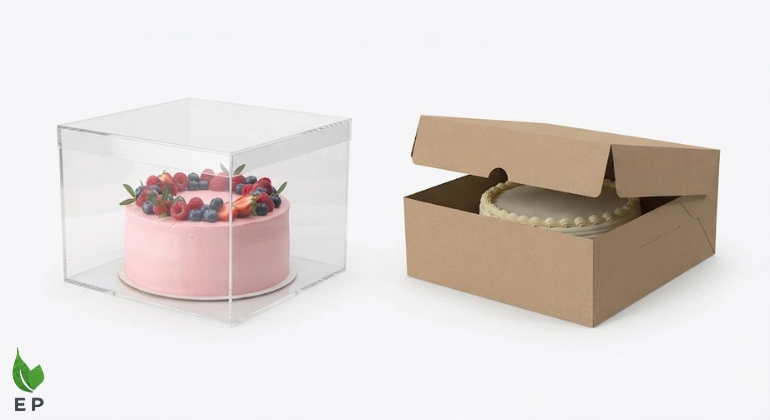
An acrylic cake box is made from a clear, rigid plastic material known for its glass-like transparency and sturdy structure. It’s become increasingly popular among premium bakeries, cake studios, and dessert boutiques that want their products to look elegant and Instagram-ready straight out of the box.
Unlike traditional packaging, a clear acrylic cake box lets customers see the cake without opening the lid, which builds anticipation and trust in the product’s presentation. Many high-end bakeries now use custom cake boxes made from acrylic specifically because they photograph beautifully under studio lighting and retail store displays.
Acrylic packaging brings several distinct advantages to the table, and understanding these helps clarify why so many premium brands are shifting toward it.
If you’re curious about how acrylic performs against other plastic-based options, our detailed breakdown on acrylic vs plastic boxes explains the nuances between different rigid packaging types available in the Pakistani market.
A cardboard cake box is the classic, widely recognized packaging solution most people associate with bakeries, home-based cake businesses, and grocery store dessert counters. It’s typically made from paperboard or corrugated material, folded into a box structure that’s lightweight yet functional.
Cardboard cake packaging has been the industry standard for decades because it’s inexpensive to produce, easy to customize with printing, and simple to fold flat for storage before use. For bakers managing tight margins or high order volumes, cardboard remains a dependable and practical choice.
Cardboard’s appeal lies in its versatility and accessibility, making it a staple across nearly every bakery segment.
For bakers who deliver cakes regularly, pairing the right cardboard box with proper internal support is essential. Our guide on packaging a cake for delivery without damage covers practical techniques to prevent shifting and smudging during transit.
Choosing between these two materials becomes much easier once you see them side by side. Below is a structured comparison covering the factors that matter most to bakery owners and cake sellers.
| Factor | Acrylic Cake Box | Cardboard Cake Box |
|---|---|---|
| Durability | Highly durable, resists crushing | Moderate, can dent under pressure |
| Visibility | Fully transparent display | Requires window cutouts for visibility |
| Cost | Higher upfront cost | Budget-friendly and economical |
| Sustainability | Reusable but slower to biodegrade | Biodegradable and easily recyclable |
| Best Use Case | Premium cakes, weddings, gifting | Daily orders, bulk sales, casual bakeries |
This table highlights that neither option is universally “better” — it genuinely depends on your business goals. A wedding cake box demands the polish that acrylic delivers, while a neighborhood bakery selling dozens of cupcakes daily benefits far more from cardboard’s affordability.
Durability often becomes the deciding factor when cakes need to travel long distances or survive rough handling during delivery. Acrylic cake boxes hold a clear advantage here because the rigid plastic structure resists bending, cracking, and crushing far better than paper-based alternatives. Even when stacked or jostled during transport, an acrylic box tends to maintain its shape and protect the cake inside.
Cardboard, on the other hand, performs reasonably well under normal conditions but can weaken when exposed to moisture or excessive weight. A cardboard cake box left in humid weather or stacked beneath heavier items may soften at the corners, increasing the risk of collapse. That said, reinforced cardboard cake packaging with double-wall construction can significantly close this durability gap for bakeries that need extra protection without switching materials entirely.
For bakers who frequently ship delicate multi-tier cakes, understanding the relationship between packaging strength and support structures — like the difference explained in our cake board comparison guide — can make a noticeable difference in reducing transit damage.
Sustainability has become a major purchasing factor for modern consumers, and this is where the comparison gets genuinely interesting. Cardboard cake boxes generally win the sustainability conversation because they’re made from renewable materials, break down naturally, and are widely accepted in recycling programs across most cities.
Acrylic, while not inherently eco-friendly in the traditional sense, offsets some of its environmental footprint through reusability. Since acrylic boxes are sturdy enough to be reused multiple times for storage, gifting, or display purposes, they don’t necessarily end up as single-use waste the way many cardboard boxes do after one use. Essentially, cardboard wins on biodegradability, while acrylic wins on extended lifecycle value.
Many eco-conscious bakeries are now finding a middle ground by using cardboard for everyday orders and reserving acrylic packaging for premium or special-occasion products, balancing sustainability goals with brand presentation needs.
Price sensitivity plays a huge role in packaging decisions, especially for bakeries operating on high order volumes with tight margins. Cardboard cake boxes are significantly cheaper to produce and purchase in bulk, making them the practical default for everyday bakery operations, casual orders, and cost-conscious small businesses.
Acrylic cake boxes, by contrast, come with a noticeably higher price tag due to the manufacturing process and material cost involved. This price difference isn’t necessarily a downside, though — many premium and wedding cake vendors intentionally absorb this cost because the visual impact and perceived value justify charging higher prices for their finished product.
In practice, bakeries that serve a mixed customer base often stock both options: cardboard for regular walk-in orders and acrylic for custom or luxury cake requests. This hybrid approach lets you control costs while still meeting the expectations of high-end clientele.
If there’s one area where acrylic truly shines, it’s presentation. A clear acrylic cake box transforms a simple dessert into a display-worthy centerpiece the moment it’s placed on a table or shelf. This transparency eliminates the need for the customer to open the box just to admire the design, which is particularly valuable for cakes with intricate decorations, fondant work, or delicate toppers that shouldn’t be disturbed before serving.
Cardboard boxes, while less visually dramatic, aren’t without their charm. Custom printing, embossed logos, ribbon detailing, and window cutouts allow bakeries to create a distinctive unboxing experience that still feels premium, just through a different design language. Many boutique bakeries successfully use branded cardboard packaging to build recognition and loyalty without ever needing acrylic at all.
Ultimately, the visual strategy comes down to your brand identity. If your cakes are the star of the show and you want zero visual barriers, acrylic wins. If your brand story is told through creative printing and packaging design, cardboard offers more creative freedom at a lower cost.
Understanding where each material genuinely excels helps eliminate the guesswork from your packaging strategy. Acrylic cake boxes are best suited for weddings, engagement celebrations, corporate gifting, and any occasion where the cake itself is meant to be admired before it’s cut. Bakeries offering custom cake boxes for high-value orders frequently rely on acrylic to reinforce a premium brand image, and browsing our acrylic box collection reveals just how versatile these options have become for different cake sizes and shapes.
Cardboard cake packaging, meanwhile, dominates the everyday bakery scene — think birthday cakes, cupcakes, bulk catering orders, and casual pickup or delivery services. Its affordability and ease of branding make it the go-to choice for bakeries handling high order volumes without sacrificing presentation entirely.
Some bakeries even combine both approaches depending on order type, and if you’re managing a diverse product range, exploring our full bakery packaging collection can help you identify the right combination for your specific menu.
Making the final decision comes down to weighing a handful of practical questions against your business priorities. Start by asking what kind of cakes you sell most often — delicate, decorated cakes benefit more from acrylic’s protective clarity, while simpler designs do perfectly well in cardboard.
Next, consider your delivery radius and handling conditions. If your cakes travel long distances or pass through multiple hands before reaching the customer, the added rigidity of acrylic reduces damage risk considerably. For local, short-distance deliveries, a sturdy cardboard box with proper internal supports usually gets the job done just as effectively.
Finally, factor in your pricing strategy and target customer base. Premium pricing models pair naturally with acrylic packaging, while volume-based, budget-friendly models align better with cardboard. If you’re still narrowing down your options, our guide on choosing the right acrylic box for bakery products walks through additional sizing and shape considerations that can influence your final decision. You can also explore ready-to-use options like our clear acrylic box with lid or browse the full cake boxes collection to compare styles side by side before placing a bulk order.
Which is better, acrylic or cardboard cake box? Neither material is universally better — acrylic excels in durability and presentation for premium cakes, while cardboard offers affordability and eco-friendliness for everyday bakery needs.
Is an acrylic cake box reusable? Yes, acrylic cake boxes are highly reusable due to their rigid structure, making them popular for storage, gifting, and display purposes long after the cake has been served.
What are the advantages of cardboard cake boxes? Cardboard cake boxes are lightweight, cost-effective, biodegradable, and easy to customize with branding, making them ideal for high-volume bakery operations.
How does cardboard vs plastic cake box impact the environment? Cardboard generally biodegrades faster and is more widely recyclable, while acrylic offsets its environmental impact through long-term reusability rather than single-use disposal.
What is the best material for cake packaging overall? The best material depends on your specific needs — acrylic suits premium, display-focused cakes, while cardboard suits budget-conscious, high-volume bakery operations.
At the end of the day, the Acrylic Cake Box vs Cardboard Cake Box decision isn’t about finding a single “winner” — it’s about matching the packaging to your bakery’s unique goals. Acrylic delivers unmatched visual impact, durability, and a premium feel that justifies its higher price point for special occasions and high-end orders. Cardboard remains the reliable, budget-friendly, and eco-conscious choice that keeps everyday bakery operations running smoothly without compromising on customization or brand identity.
Many successful bakeries don’t choose one over the other permanently; instead, they strategically use both materials based on order type, customer expectations, and seasonal demand. Whichever direction you lean toward, investing in quality packaging pays off through better customer experience, fewer delivery mishaps, and a stronger overall brand impression.
Ready to upgrade your bakery’s packaging game? Explore our complete range of acrylic and cardboard cake boxes designed for Pakistani bakeries of every size, and give your cakes the presentation they truly deserve.

Subscribe our newsletter & get notification about information discount.
Subscribe to get special offers, free giveaways, and once-in-a-lifetime deals.