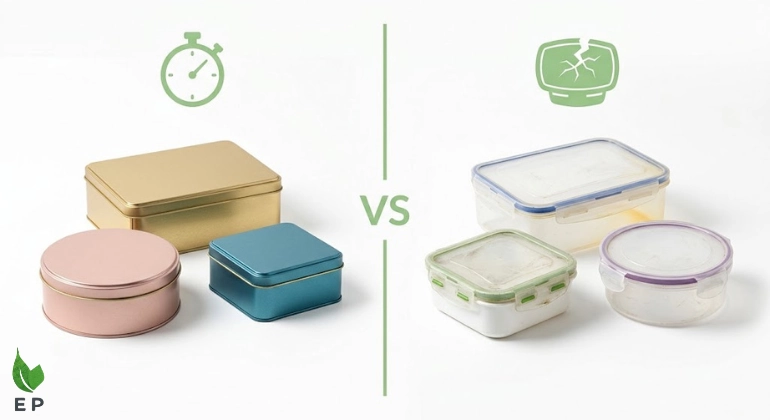
Open any kitchen cupboard in Pakistan and you’ll probably find the same cast of characters. There’s a faded plastic tub with a warped lid, another one stained orange from last winter’s curry, and maybe one old biscuit tin that has outlived everything else. That cupboard raises a fair question: in the tin boxes vs plastic containers debate, which one really lasts longer?
This guide compares tin boxes vs plastic containers durability from every angle that matters. We look at lifespan, rust, cracking, food safety, airtight performance and environmental impact. If you’ve ever wondered which lasts longer, tin or plastic containers, or whether a tin box vs plastic container choice affects how fresh your food stays, you’ll find a clear answer below.
Before comparing, it helps to know what each container is made of. “Tin box” and “plastic container” cover a lot of ground, and the details change the results.
Most tin storage boxes are made from tinplate. That is thin steel sheet coated with a very fine layer of tin. The steel gives strength, and the tin coating helps resist corrosion. Many food-safe tins also have an inner lacquer or lining that keeps the metal from touching the food directly.
You’ll see these metal tins as cookie tins, tea caddies, spice containers and gift tin boxes. They come in round and square shapes. If you’re deciding between shapes, our guide on round vs square tin boxes covers the trade-offs.
Plastic is a family of materials, not one thing. Three types dominate food storage:
A good food-grade plastic container from PP can last a long time. A cheap thin tub from a bazaar may not survive a season. That quality gap matters in this comparison.
This is the part most readers want answered. We’ll cover tin container lifespan first, then plastic container lifespan.
A well-made tin can last for decades. The steel body doesn’t soften, warp or absorb odors the way plastic does. Dropped on a tile floor, a tin might dent, but it rarely shatters. A dent is cosmetic. A cracked plastic lid usually means the container is finished.
The weak point of a tin is rust. If the protective coating is scratched deeply, or if the tin sits in a damp place, oxidation can begin at the exposed steel. In a humid city or a coastal kitchen, this matters more. A dry cupboard and a quick wipe-down after washing extend the life of a tin a great deal.
People often ask, “How long do plastic containers last?” The honest answer is that it depends on the grade and how you use it. Quality PP containers can serve for several years with gentle use. But plastic goes through slow material degradation. Over time you’ll notice:
Heat is the biggest enemy. Dishwashers, microwaves and hot cars all speed up the aging of plastic. Sunlight adds to it, since plastic has limited UV resistance unless it is specially treated.
In most everyday situations, yes. Tin containers usually outlast typical plastic ones, provided you keep them dry. A premium thick-walled PP container can come close in the kitchen, but it rarely matches a good tin over many years. Think of it this way: plastic tends to fail through slow wear, while tin tends to fail only if moisture gets in.
Here is how the two materials compare on specific durability factors.
Tin wins on scratch resistance. A steel surface with a printed or lacquered finish handles keys, cutlery and stacking far better than soft plastic, which scuffs easily. On impact resistance, plastic has an edge in one case. If you drop it, a plastic tub often bounces, while a tin may dent. But tin rarely breaks open, so the contents stay protected.
Tins handle heat well. You can store warm items, and the box won’t soften. (Never microwave a metal tin, though.) Plastic varies. PP tolerates moderate heat, but cheap plastic can warp in a hot kitchen or a car parked in the sun.
This is where plastic wins outright. Plastic never rusts. Rust resistance in tin depends on the coating, the storage environment and how well you dry it. If you live somewhere humid, choose tins with a quality finish and keep them away from sinks and steam.
Both materials can suffer in direct sun. Printed tin can fade over time, while plastic tends to yellow and turn brittle. A shelf or cupboard away from windows protects either one.
Lasting longer is only half the story. A container that survives for years but lets your biscuits go soft isn’t doing its job. Let’s look at shelf life of stored food and moisture protection.
This question comes up all the time. The honest answer is that some are, and some aren’t. A basic slip-on lid tin keeps out dust and light, and it gives decent protection for dry foods like tea, spices or cookies for short periods. For true airtight seal performance, you need a tin with a tight-fitting lid, and ideally an inner seal or gasket.
Airtight tin boxes are excellent against light. Light speeds up oxidation in fats, oils and many snacks, so an opaque metal container protects flavor well. That is a real advantage over clear plastic.
Airtight plastic containers with silicone gaskets and snap-lock lids are very good at blocking moisture. That is why they’re popular for flour, rice, cereals and leftovers. The weakness is the lid. Seals and clips wear out, and once a lid warps, air gets in.
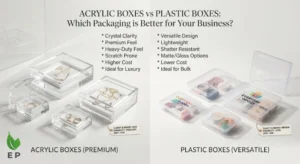
For dry, light-sensitive foods such as tea, coffee, biscuits and spices, a well-sealed tin tends to protect quality for longer because it blocks light and holds its shape. For wet foods and leftovers, a gasketed plastic or glass container is usually the better pick. So the better choice depends on what you’re storing. Our look at acrylic boxes vs plastic boxes goes further on clear packaging for bakery items.
Durability matters, but safety matters more. Here is how to think about food-grade materials in both categories.
Concerns about BPA led many brands to market BPA-free containers. That is a good start, but quality still varies. When plastic is overheated, scratched or very old, tiny particles and chemicals can transfer to food. This is the idea behind plastic leaching and the worry about microplastics. The risk is higher with hot, oily or acidic food stored in worn plastic.
To reduce risk, choose containers labeled food-grade, avoid heating food in old or scratched plastic, and replace containers that are cloudy, cracked or sticky.
For tin, the main point is the lining and finish. A food-safe tin is made with a coating that separates food from bare metal. Avoid using tins with chipped interiors or visible rust for direct food contact. For dry goods like cookies and tea, a tin with a clean interior is a very reliable option. For wet, salty or acidic foods, tins are not ideal.
For dry foods, a sound tin with an intact finish is a safe, stable choice with no chemical transfer concerns from heat aging. For hot or wet food, a high-quality food-grade container (PP, glass or stainless steel) is usually more practical. The safest container is whichever one is in good condition and suited to the food.
Anyone searching for eco-friendly storage containers wants to know the planet cost of each option. This is where tin packaging vs plastic packaging gets interesting.
Steel and tinplate are among the most widely recycled packaging materials in the world, and they can be recycled many times without losing their basic properties. Neither plastic nor tin is biodegradable in a short time frame, but metal can be turned into new products, while plastic is often downcycled or ends up in landfill. Plastic recycling rates are lower, and many plastic items are never collected.
Making a tin requires more energy up front than molding a plastic tub, so the initial carbon footprint can be higher. But the full product lifecycle tells a different story. A tin that lasts 15 years and is reused as a sewing kit, a gift box and a spice tin offsets its production impact many times over. A plastic tub replaced every two years creates repeat waste. Durability is itself a sustainability feature.
If you want to go deeper, read our guide to sustainable packaging solutions in Pakistan and these 9 easy ways to reduce your plastic waste.
Over a long lifespan, generally yes, especially when the tin is reused and finally recycled. This is why sustainable packaging brands and gifting businesses are moving toward recyclable packaging made of metal.
This packaging material comparison sums up the main points.
| Factor | Tin Boxes | Plastic Containers |
|---|---|---|
| Typical lifespan | Many years to decades with dry storage | Several years for quality PP, shorter for thin plastic |
| Rust / corrosion | Can rust if coating is damaged or kept damp | No rust |
| Cracking / warping | Rarely cracks, may dent | Can crack, warp or cloud over time |
| Scratch resistance | High | Low to medium |
| Light protection | Excellent (opaque) | Poor if clear, better if opaque |
| Airtight performance | Good with tight or gasketed lids | Very good with silicone seals |
| Best for | Dry foods, gifts, long-term storage | Leftovers, wet food, daily use |
| Recyclability | Highly recyclable | Varies by plastic type |
Tin takes the lead on lifespan, scratch resistance and sustainability. Plastic leads on moisture-proofing and wet-food use. Your choice depends on what you store and how long you want it to last.
Real kitchens make this clearer than theory. Here are a few everyday situations.
Storing homemade cookies for Eid or weddings. A decorative tin keeps cookies crisp, blocks light and doubles as a gift. This is where cookie tins shine, and a pretty box like our golden round tin box turns storage into presentation.
Packing a gift hamper. Gift tin boxes look premium and protect contents during travel. A blue square tin box or a pink square tin box can be reused long after the gift is gone, which makes the gift feel thoughtful rather than wasteful.
Storing daily leftovers. Plastic or glass with a gasketed lid is the practical pick. You need a tight seal, easy cleaning and stackability.
Selling homemade snacks or bakery items. Tins add perceived value and protect product quality. If you’re sourcing for a business, our tin boxes for packaging buyer’s guide explains what to check, from thickness to lid fit. Bakery sellers can also browse bakery packaging.
Pantry staples like tea, spices and dry fruit. Tins protect from light, hold their shape and work as long-term kitchen storage solutions.
Whichever you choose, care changes the lifespan more than most people expect. A little habit goes a long way.
For tin boxes, always dry them fully after washing, because trapped moisture is what starts rust. Store them in a cool, dry cupboard and avoid placing them near the stove or sink. If you spot a small scratch that exposes metal, avoid storing wet or acidic items in that tin. A clean cloth is usually better than abrasive scrubbing, which can wear down the finish.
For plastic containers, skip the dishwasher’s hottest cycle and don’t microwave old or scratched pieces. Rinse oily or tomato-based foods soon after use to prevent stains and smells. Check lids for warping, and retire any container that has gone cloudy or cracked.
Both types benefit from being kept away from direct sunlight. Smart stacking helps too. Reusing stackable containers keeps your cupboard organized and protects the lids from bending.
The best container is the one matched to the job. Use this simple guide.
| If you need… | Choose |
|---|---|
| Long-term dry food storage | Tin boxes |
| Gifting, hampers, presentation | Tin boxes |
| Leftovers and wet foods | Plastic (food-grade PP) or glass |
| Light-sensitive items (tea, coffee, spices) | Opaque tin |
| Lowest long-term waste | Tin, reused for years |
| Budget daily-use storage | Quality PP plastic |
A practical approach is mixing both. Use tins for pantry staples and gifting, and keep a few quality airtight plastic or glass containers for the fridge. That balances durability, freshness and cost.
For dry food, gifting and long-term use, tin boxes are generally better. They last longer, resist scratches and block light. Plastic is better for wet foods and quick, everyday storage.
Usually, yes. A well-made tin can last for many years if kept dry. Plastic tends to stain, warp or crack with age and heat.
Quality food-grade PP containers can last several years with gentle use. Thin, cheap plastic may last only a season or two, especially with heat and frequent washing.
They can if the protective coating is damaged or if they’re stored in damp places. Keeping them dry and replacing badly scratched ones prevents most rust problems.
Both are safe when they’re food-grade and in good condition. Tins with intact linings suit dry foods. Avoid old, scratched or overheated plastic, and avoid rusty tins.
Over a long lifespan, usually yes. Tinplate is widely recyclable and highly reusable, which reduces repeat waste compared with short-lived plastic.
Opaque, well-sealed tins protect dry foods well, since they block light and moisture. For wet foods, airtight plastic or glass with a gasket is better.
Yes. Heat, sunlight, dishwashers and age can cause warping, cloudiness and cracks, which weaken the seal.
Some are. Standard slip-on lids offer basic protection, while tins with tight lids or gaskets give a stronger airtight seal.
For dry goods, tin is usually the better long-term option because of its strength and light protection.
So, tin boxes vs plastic containers: which lasts longer? In most real-life cases, tin wins on durability, scratch resistance, light protection and long-term sustainability. Plastic wins on moisture-proofing for wet foods and on lower upfront cost. When it comes to tin boxes vs plastic containers durability, a well-made tin that stays dry can serve you for decades. Many plastic tubs wear out within a few years.
If you want storage that looks good, protects your food and cuts down on waste, tin is a smart long-term investment. Keep a few quality plastic or glass containers for wet food, and you’ll cover every need.
Browse our full range of premium tin boxes in round and square styles, perfect for cookies, tea, gifting and bakery packaging. You can also explore our square golden tin boxes for an elegant finish, or visit the EcoProduct.pk shop for more eco-friendly essentials. To keep making greener choices, read our 10 easy zero-waste swaps for Pakistan and our guide to eco-friendly products in Pakistan.

Subscribe our newsletter & get notification about information discount.
Subscribe to get special offers, free giveaways, and once-in-a-lifetime deals.