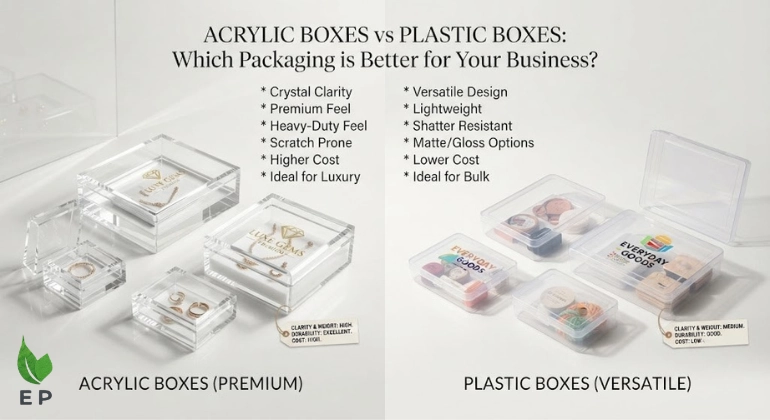
If you’ve been stuck comparing acrylic boxes vs plastic boxes for your product line, you’re not alone — this is one of the most common packaging dilemmas business owners face today. Both materials look similar at first glance, but they behave very differently once you factor in cost, durability, branding potential, and environmental impact. Choosing the wrong one can mean wasted budget, damaged products in transit, or a packaging look that just doesn’t match your brand’s premium image.
In this guide, we’ll break down everything you need to know — from manufacturing cost to sustainability — so you can confidently decide which packaging solution fits your business goals.
Acrylic boxes are made from PMMA (polymethyl methacrylate), a rigid, glass-like plastic known for its crystal-clear finish and premium feel. You’ll often see them used for high-end retail displays, gift packaging, and bakery items where visual appeal matters as much as protection.
Unlike ordinary plastic, acrylic has a glossy, glass-like transparency that instantly elevates how a product looks on a shelf. That’s why you’ll find clear straight acrylic boxes with lids and acrylic round trays widely used in bakeries, jewelry stores, and boutique retail spaces.
Plastic boxes, on the other hand, are typically made from materials like PET, PP, or PVC. They’re more flexible in terms of manufacturing, generally cheaper to produce in bulk, and come in a wider variety of shapes, thicknesses, and finishes.
Plastic packaging boxes dominate industries like e-commerce shipping, food takeaway, and everyday retail — basically anywhere cost-efficiency and mass production matter more than a luxury finish.
Here’s a quick side-by-side comparison to help you visualize the core differences before we dive deeper.
| Feature | Acrylic Boxes | Plastic Boxes |
|---|---|---|
| Appearance | Glass-like clarity, premium finish | Standard clarity, functional look |
| Cost | Higher manufacturing cost | More cost-effective at scale |
| Durability | Scratch-resistant, rigid | Flexible, impact-resistant |
| Best Use Case | Retail display, luxury packaging | Shipping, storage, bulk packaging |
| Eco-Friendliness | Recyclable but energy-intensive to produce | Varies (some biodegradable options exist) |
| Customization | Limited but premium finishes | Highly customizable, wide range |
This table alone answers a lot of the “which is better” question — but the right choice really depends on your specific business needs, which we’ll unpack below.
One of the biggest deciding factors for most businesses is budget — and rightfully so.
If you’re a startup testing the market, plastic packaging boxes often make more financial sense. But if your brand positioning is premium or luxury retail packaging, the higher acrylic packaging cost is usually justified by the perceived value it adds to your product.
When it comes to packaging durability comparison, both materials have their strengths:
So if durability means “looking good on a shelf for months,” acrylic wins. If it means “surviving a rough shipping journey,” plastic often has the edge.
This is where the conversation gets more nuanced. Neither acrylic nor traditional plastic is naturally biodegradable, but both have recyclable variants available today.
If sustainability is a core part of your brand identity, it’s worth exploring genuinely eco-friendly packaging options — including kraft-based and biodegradable alternatives that align better with sustainable packaging trends than either acrylic or standard plastic.
For businesses looking to move away from plastic entirely, options like kraft standup pouches or natural transparent pouches offer a middle ground between visibility and eco-consciousness.
If your priority is business branding through packaging, acrylic boxes for retail display are hard to beat. The glass-like clarity does the marketing work for you — customers can see the product clearly while still feeling like they’re holding something premium.
This is exactly why acrylic dominates categories like:
Products like the acrylic crystal bowl are a great example of how acrylic packaging bridges functionality with a genuinely elegant presentation.
If your business is more focused on plastic boxes for shipping and storage, then plastic is generally the more practical choice. It’s lighter, cheaper in bulk, and better suited to withstand the wear and tear of logistics.
For e-commerce businesses specifically, standard shipping solutions like 3ply and 5ply ecommerce boxes often work alongside plastic packaging boxes to create a complete, protective shipping solution — combining strength with cost efficiency.
Here’s a simple framework to help you decide:
There’s no universal “best” packaging material for business — it genuinely depends on what story you’re trying to tell with your product.
At the end of the day, the acrylic boxes vs plastic boxes decision comes down to priorities:
Many successful brands actually use both — acrylic for retail display and premium gifting, plastic for shipping and bulk storage. The key is matching the material to the moment your customer interacts with it.
Whether you’re leaning toward the elegance of acrylic or the practicality of plastic, having the right packaging partner makes all the difference. Browse our full range of custom packaging solutions — from retail-ready acrylic boxes to durable shipping materials — and find the perfect fit for your brand.
Which is better, acrylic or plastic packaging? It depends on your use case. Acrylic is better for premium retail display and branding, while plastic is more practical for shipping, storage, and budget-conscious bulk packaging.
Is acrylic packaging more expensive than plastic? Yes, acrylic packaging typically costs more due to material and manufacturing complexity, but it offers a more premium look that can justify the higher price for retail-focused brands.
Why choose acrylic boxes for business? Acrylic boxes offer a glass-like, premium appearance that enhances product presentation, making them ideal for bakeries, cosmetics, and luxury retail packaging.
What packaging is best for startups? For startups with limited budgets, plastic packaging boxes are usually more cost-effective while still offering decent durability and customization options.
What is the environmental impact of acrylic vs plastic? Both materials have environmental considerations. Acrylic is recyclable but energy-intensive to produce, while plastic has more established recycling infrastructure and growing biodegradable alternatives.

Subscribe our newsletter & get notification about information discount.
Subscribe to get special offers, free giveaways, and once-in-a-lifetime deals.