Most of us spend serious money on shampoos, serums and masks. We rarely think about the tool we use on our hair every single day. If you have ever wondered whether a double tooth bamboo comb is really better than the plastic one sitting in your drawer, you are asking the right question. The bamboo comb vs regular comb debate is about more than style or sustainability. It is about hair breakage, scalp health, static, and finding the best comb for hair type.
In this guide, we break down how each comb works and who it suits best. We cover the real double tooth comb benefits, and we are honest about their limits. You will also see a practical hair type guide, so you can choose with confidence instead of guessing.
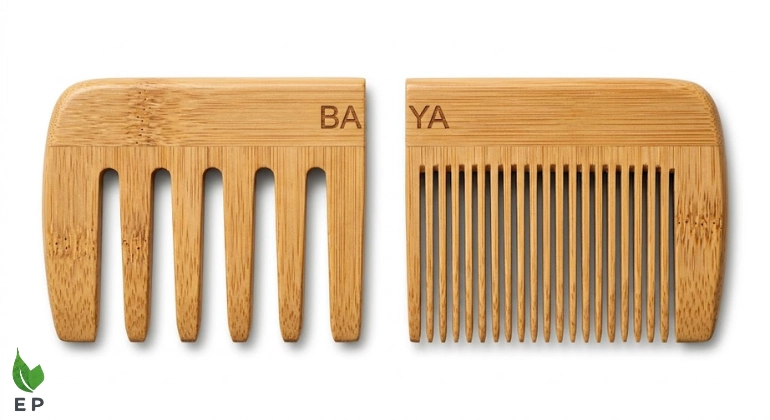
A double tooth bamboo comb is a natural hair comb made from bamboo. It has two sets of teeth on a single body. One side has wide, spaced teeth. The other side has finer, closer teeth. You get a wide tooth vs fine tooth comb in one tool.
The wide side is for detangling. It moves through knots without yanking the hair. The fine side is for finishing, parting and smoothing. Many people also use it to spread natural hair oil from the scalp toward the ends.
Bamboo itself is a fast-growing grass. It is naturally smooth and lightweight, and it does not generate much static. Good handmade bamboo combs are sanded and polished so the teeth have no rough edges. That polish is what gives you a smooth glide through your hair. If you want to know why this plant is so popular in eco products, our guide on why bamboo is the most sustainable material on earth explains it in detail.
If you want to see what a well-made one looks like, the bamboo wooden double tooth pocket comb is a compact example. It is small enough for a bag or pocket.
When people say regular comb, they usually mean a molded plastic comb. Some mean a metal or rubber one. Plastic combs are cheap, easy to find and available in every colour. That is their main strength.
The trade-offs show up over time. Plastic builds static charge easily, especially in dry weather. Cheap molded combs often have tiny seams along the teeth. These seams can catch strands and cause hair breakage. The plastic comb damage you notice as frizz, snagging or split ends often traces back to rough teeth and static.
Plastic combs also stay in the environment for centuries once thrown away. A biodegradable comb made from bamboo avoids that long-term problem.
Here is how the two compare on the points that matter most in daily use. Think of it as a quick reference before we get into the details.
| Feature | Double Tooth Bamboo Comb | Regular (Plastic) Comb |
|---|---|---|
| Static control | Low static, helps with frizz-free combing | Often creates static, especially in dry air |
| Tooth finish | Sanded and polished when well made | May have molding seams on cheap versions |
| Versatility | Wide and fine teeth in one tool | Usually one tooth spacing only |
| Scalp feel | Gentle, good for scalp massage | Can feel sharp if the teeth are rough |
| Eco impact | Biodegradable, renewable material | Petroleum-based, long-lasting waste |
| Durability | Lasts long with dry storage | Durable, but can crack or warp |
| Price | Slightly higher, better value over time | Very low upfront cost |
In short: the plastic comb wins on price and convenience. The bamboo comb wins on hair-friendliness, versatility and environmental impact. For most people with daily styling needs, the extra cost of bamboo pays for itself in better hair handling and longer life.
Marketing claims can get exaggerated, so here are the real benefits you can expect from a well-made double tooth comb.
First, it makes detangling easier. You start with the wide teeth to loosen knots at the ends. Then you work upward. You move on to the fine teeth only after the hair is free. This two-step habit puts less stress on each strand and helps you reduce hair breakage.
Second, it spreads sebum distribution more evenly. Your scalp makes natural oil that protects hair. Without brushing or combing, that oil stays near the roots. A smooth comb carries it down the lengths, which helps dull ends look healthier. This matters most for dry hair.
Third, it supports healthy scalp care. A gentle pass across the scalp feels like a mini massage. It may help blood circulation in the scalp, and that feels good. Keep expectations realistic, though. A comb will not reverse genetic hair loss. It simply treats your scalp and hair follicles kindly.
Fourth, it offers versatility. One tool handles parting, detangling and finishing. That makes it easy to build into a minimalist hair care routine.
For a deeper look at how bamboo tools compare with plastic ones for scalp and strand health, read our post on bamboo hair brush vs plastic hair health.
There is no single perfect comb for everyone. Your hair texture, hair porosity and scalp condition decide what works. Let’s go through the main hair types.
Fine, straight hair tangles less but breaks more easily. The hair cuticle on fine strands is delicate. You want smooth teeth and a light touch. Use the fine-tooth side for styling and the wide side for dry detangling. A bamboo comb helps here because it avoids the static that makes fine hair fly away. This is the classic case in the fine hair vs thick hair question. Fine hair benefits most from gentle, low-friction tools.
If you have heavy, dense hair, the double tooth comb for thick hair is a great fit. The wide side handles volume without dragging. Work in sections and start from the ends. Thick hair needs a strong comb with sturdy teeth, so check that the bamboo is dense and well finished. Flimsy teeth bend and snag.
For comb for curly hair, the rule is simple: go wide. Fine teeth pull curl patterns apart, create frizz and cause breakage. Use the wide-tooth side only, ideally on damp hair with a little conditioner. Start at the tips and move upward in small sections. Curly and coily hair is the most prone to tangles and knots, so patience matters more than speed. Skip the fine side except for parting.
For a comb for oily scalp, the goal is balance. Over-combing can spread oil too quickly from root to tip. Use the wide-tooth side lightly, and clean the comb often. Oil and product build up on any comb and then go straight back into your hair. Bamboo is easy to wipe clean with a soft, slightly damp cloth.
A comb for dry hair should help move natural oils downward and add no static. This is where an anti-static bamboo comb earns its place. Comb slowly from root to tip. That small oil transfer adds shine without any product. It will not replace conditioner, but it supports it.
A hair comb for hair fall should be gentle above all else. Hair loss during combing is often normal shedding, but rough tools make breakage worse. Choose wide, smooth teeth and avoid combing wet hair aggressively. If you have a sensitive scalp, check that the teeth tips are rounded and polished. If shedding is heavy or sudden, see a doctor or dermatologist. No comb can fix an underlying health cause.
This table sums up the advice above, so you can find your match in seconds.
| Hair Type | Best Tooth Side | Tip |
|---|---|---|
| Fine / straight | Fine side to finish, wide to detangle | Use light pressure to protect the cuticle |
| Thick | Wide side first | Work in sections from the ends |
| Curly / coily | Wide side only | Comb damp hair with conditioner |
| Oily scalp | Wide side, light strokes | Clean the comb often |
| Dry / frizzy | Wide, then fine | Comb slowly to spread natural oils |
| Hair fall / sensitive scalp | Wide, smooth teeth | Be gentle, never force knots |
The wide tooth vs fine tooth comb question comes up in almost every hair routine discussion. The answer depends on the job rather than the person.
Tooth spacing controls how much hair each tooth grabs. Wide spacing lets hair slide through, so it is best for wet hair, curls and big tangles. Fine spacing grabs more strands, so it is best for sleek styling, parting and smoothing flyaways on dry, already-detangled hair.
That is why the double design is so practical. You never need to carry two combs. You start wide and finish fine. In practice, that is what makes the double tooth bamboo comb a good all-rounder for most hair types.
Wet hair is more elastic and also weaker, so it needs care. When doing wet hair combing with a bamboo comb, use only the wide-tooth side. Add a little conditioner or leave-in cream first. Start from the ends and work upward.
One more thing about bamboo and water. Bamboo is a natural fiber, so it should not sit in water for long. A quick wet-hair detangle is fine. Just wipe the comb dry afterward and store it somewhere dry. This habit protects its durability.
You will see many posts saying that a bamboo comb for hair growth works wonders. Let’s be clear and fair. A comb does not make hair grow faster. Growth depends on genetics, nutrition, hormones, stress and scalp condition.
What a good comb can do is create better conditions. It reduces breakage, so you keep the length you already grow. It stimulates the scalp gently, and it helps distribute natural oils. In other words, it protects your hair rather than growing it. That distinction matters, and any honest hair advice should make it.
An eco-friendly hair comb is one of the easiest swaps you can make. Bamboo grows quickly without heavy pesticides or irrigation. When the comb finally wears out, it breaks down naturally. A plastic comb does not.
For anyone building a zero-waste lifestyle, it also fits easily next to other swaps. If you are replacing your toothbrush, loofah or razor, a comb is the next logical step. These guides can help you plan:
This is how sustainable hair care works in real life. You do not need to change everything at once. You replace one item whenever it wears out.
A bamboo comb is simple to maintain, but a few habits extend its life.
Remove loose hair after each use with your fingers or a small brush. Once a week, wipe the teeth with a slightly damp cloth and a drop of mild soap, then dry it right away. Never soak it, and never leave it on a damp bathroom shelf. A tiny amount of food-safe oil, such as coconut oil, now and then can keep the wood from drying out.
Store it in a dry spot. If it lives in your bag, use a small pouch. With this basic care, a well-made comb can serve you for years. That is better than replacing a cheap plastic comb every few months. If you like keeping your whole bathroom bamboo-based, browse our bamboo bathroom products guide for matching ideas.
Not all bamboo combs are equal. Before you buy, run through a short checklist:
Run your thumb along the teeth. If anything catches, it will catch your hair too.
If you are also looking at a brush, our bamboo hair brush pairs well with a comb for a full routine. You can also explore the wider range of eco-friendly products in our store.
Choose a double tooth bamboo comb if you want one tool for detangling and styling. It is also the better pick if you care about static, scalp comfort or the environment.
A regular comb is fine if you need a very cheap, temporary option. Just check the teeth carefully and avoid using it on wet or fragile hair.
For most people, and especially those with curly, dry, thick or fall-prone hair, bamboo is the smarter long-term choice. It is also an easy way to build hair grooming tools that match a sustainable routine. For more ideas on living greener, see our sustainable living guide for Pakistan.
For most hair types, yes. Bamboo creates less static, glides smoothly and is biodegradable. Plastic is cheaper, but cheap versions can have rough seams that snag hair.
It combines wide teeth for detangling with fine teeth for styling, parting and smoothing. You use both sides for different steps.
It cannot stop medical hair loss. It can reduce breakage caused by rough combing and static, so less hair snaps during daily grooming.
Yes, but use only the wide-tooth side and be gentle. Add conditioner first, start at the ends, and dry the comb afterward.
A wide-tooth comb. Use it on damp, conditioned hair to avoid frizz and breakage. Skip the fine side for combing curls.
Yes, with light strokes and regular cleaning. Clean the comb often so old oil and product do not go back into your hair.
The bamboo comb vs regular comb question has a clear answer for most people. A well-made double tooth bamboo comb is gentler, more versatile and far kinder to the planet. It will not grow your hair overnight. It will help you protect the hair you already have, and it makes your daily routine feel simpler and more mindful.
Start by matching your hair type to the right side of the comb, and keep it clean and dry. Small habits like these make a visible difference over a few weeks.
Ready to make the switch? Pick up the bamboo wooden double tooth pocket comb today. You can also browse the full EcoProduct.pk shop for more plastic-free essentials, and give your hair and your planet a better daily routine.

Subscribe our newsletter & get notification about information discount.
Subscribe to get special offers, free giveaways, and once-in-a-lifetime deals.