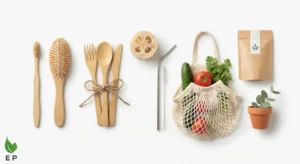
This Independence Day, patriotism doesn’t have to stop at flags and fireworks — it can extend all the way into your kitchen drawer. The 14 August Green Challenge is a simple idea with a powerful message: celebrate Pakistan’s freedom by giving your home freedom from plastic. Across the country, more families are looking for zero-waste swaps for Pakistani households that are practical, affordable, and genuinely easy to stick with — not just another eco-trend that fades by September.
Here’s the good news: you don’t need to overhaul your entire lifestyle overnight. A handful of thoughtful swaps — the kind you make once and benefit from for years — can dramatically cut the plastic waste leaving your home every week. In this guide, we’re walking through five practical, budget-friendly swaps that any household in Karachi, Lahore, Islamabad, or a small town in between can start this 14 August.
Independence Day has always been about renewal — a moment to reflect on where the nation stands and where it’s headed. Pairing that spirit with an Independence Day green initiative just makes sense, especially considering the scale of Pakistan’s plastic problem.
Consider this context:
A national Green Challenge timed around 14 August gives this issue the visibility it deserves. It reframes sustainability not as a foreign concept, but as something rooted in patriotism and sustainability — protecting the land, rivers, and cities that make up the Pakistan we’re celebrating.
If you’re new to this movement, our detailed guide on eco-sustainable products in Pakistan and the zero-waste lifestyle is a great starting point before you dive into the swaps below.
Before jumping into the swaps, let’s clear up a common misconception: zero-waste lifestyle tips don’t mean producing literally zero garbage. That’s nearly impossible for any household. Instead, zero-waste living is about:
This “reduce, reuse, recycle” framework is the backbone of sustainable living in Pakistan, and it applies just as well to a small apartment in Gulberg as it does to a joint family home in Peshawar. For a deeper dive into how this philosophy plays out day-to-day, check out our complete sustainable living guide for Pakistan.
Now, let’s get into the swaps themselves.
These five swaps were chosen because they hit the sweet spot of high impact, low effort, and genuine affordability. Each one targets a specific area of daily life where plastic quietly piles up.
Every trip to the sabzi mandi or grocery store in Pakistan tends to generate a small mountain of plastic bags — most of which get used once and tossed. This is arguably the easiest of all eco-friendly swaps Pakistan households can make.
Why it matters:
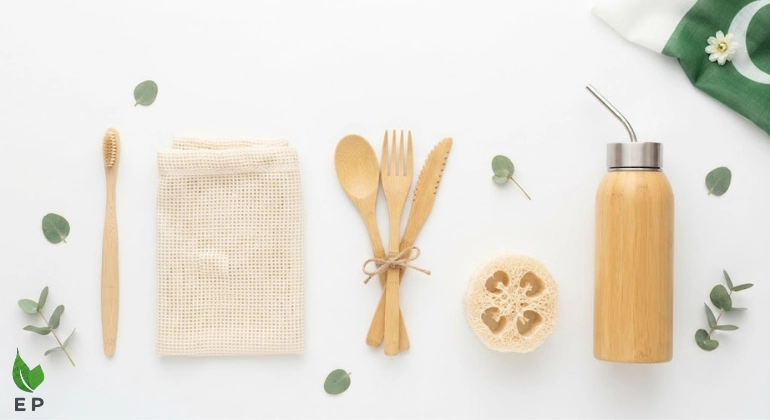
Keep two or three organic cotton mesh bags folded in your car or by the front door — that alone removes the “I forgot my bag” excuse. We’ve also written a dedicated piece on why the organic cotton mesh bag is the reusable shopping bag Pakistan needs right now, if you want the full breakdown.
Here’s a number that surprises most people: the average person disposes of 300+ plastic toothbrushes over their lifetime, and every single one of them will outlive them by centuries in a landfill. Multiply that across a family of five or six, and the plastic footprint from oral care alone is enormous.
Why bamboo wins:
For adults, our adult bamboo toothbrush is a simple one-for-one replacement, and for households with children, the kids bamboo toothbrush makes the swap fun rather than forced. Pair it with a bamboo toothbrush holder to keep your bathroom looking as clean as it feels.
Curious about the full comparison? Read bamboo toothbrush vs plastic toothbrush and why every Pakistani family should switch for the complete picture.
Weddings, office lunches, picnics, and even everyday dining often default to disposable plastic spoons and forks — a habit that’s easy to overlook but adds up fast in terms of household swaps worth making.
The case for switching:
Our reusable bamboo cutlery set is compact enough to carry in a bag or desk drawer, while the stainless steel cutlery set suits those who prefer a heavier, dishwasher-friendly option. If you want to explore the category further, our Birchwood cutlery collection has several affordable options.
For more context, see why carrying reusable bamboo cutlery everywhere just makes sense and our comparison of stainless steel vs plastic cutlery for a sustainable kitchen switch.
This is one of those zero-waste kitchen Pakistan swaps that people rarely think about — yet synthetic sponges and plastic scrubbers shed microplastics every single time you use them, sending tiny plastic fibers straight down your drain.
Why natural loofah is the better choice:
Try our natural loofah for kitchen use, or the kitchen loofah pads and dish scrub for a more scrub-friendly texture. For the bathroom, bath loofah sponge pads work beautifully as a body scrub too.
Want the science behind it? Read natural loofah vs synthetic sponge and how to replace a plastic scrubber with a natural loofah.
Single-use water bottles and plastic straws are two of the most visible symbols of single-use plastic alternatives gone wrong — used for minutes, but present in the environment for generations.
What to switch to instead:
For a full comparison of which material suits your lifestyle best, our guide on bamboo vs steel vs glass reusable straws in Pakistan breaks it all down.
Turning these swaps into an actual “challenge” makes them far more likely to stick — especially with kids in the house. Here’s a simple framework:
This approach turns an abstract idea like “reduce plastic waste at home” into a concrete, visible habit — which is exactly what makes green challenge ideas succeed long-term rather than fizzling out after a week.
If you want ten additional swap ideas beyond these five, our companion post on 10 easy zero-waste swaps for Pakistan is worth bookmarking.
It’s worth pausing to appreciate just how much these small changes add up to over time.
| Benefit | Impact |
|---|---|
| Financial savings | Reusable items replace repeat purchases, cutting monthly household spending |
| Reduced plastic waste | Fewer single-use items means less landfill and drain-clogging waste |
| Healthier home | Natural materials avoid the chemical leaching associated with certain plastics |
| Environmental impact | Lower carbon footprint reduction contributes to broader climate action Pakistan efforts |
| Set a household example | Kids grow up viewing sustainability as normal, not “extra work” |
These benefits are exactly why more households are searching for genuine sustainable household swaps rather than one-off eco gestures. For real accounts from Pakistani families who’ve made this transition, Pakistanis who switched to eco products share their real stories here.
A few honest tips from experience — because a challenge that’s too ambitious rarely survives past week one.
For bathroom-specific tips, our post on how to make your bathroom sustainable covers care routines in detail, and 9 easy ways to reduce your plastic waste offers more everyday habit shifts.
Independence Day celebrations come and go every year, but a genuine 14 August Green Challenge leaves something behind that actually lasts — a household that generates less waste, spends less on disposables, and models better habits for the next generation. None of the five swaps covered here require a lifestyle overhaul. A cotton mesh bag by the door. A bamboo toothbrush in the holder. A loofah instead of a synthetic sponge. Small, deliberate choices — repeated daily — are what real sustainability looks like.
This year, let your celebration of freedom include freedom from unnecessary plastic. Pick one swap today, commit to it for a month, and notice how naturally the rest follow.
Ready to start your own Green Challenge? Browse our full range of eco-friendly products for Pakistani homes and take the first step toward a plastic-free household this Independence Day.
The 14 August Green Challenge is a sustainability initiative encouraging Pakistani households to mark Independence Day by adopting eco-friendly habits, such as replacing single-use plastic items with reusable, biodegradable alternatives.
The easiest starting points include swapping plastic shopping bags for reusable cotton bags, plastic toothbrushes for bamboo toothbrushes, and plastic cutlery for reusable bamboo or steel cutlery — all low-cost, high-impact changes.
Yes. Bamboo is a fast-growing, renewable resource that biodegrades naturally, while plastic can take hundreds of years to break down and often ends up in landfills or waterways.
Start small — let each family member choose their own reusable item, track weekly plastic savings together, and treat it as a fun household challenge rather than a strict rule.
You can find a wide range of certified eco-friendly products, from bamboo toothbrushes to reusable bottles and cutlery, at EcoProduct.pk, Pakistan’s trusted destination for sustainable household essentials.

Subscribe our newsletter & get notification about information discount.
Subscribe to get special offers, free giveaways, and once-in-a-lifetime deals.