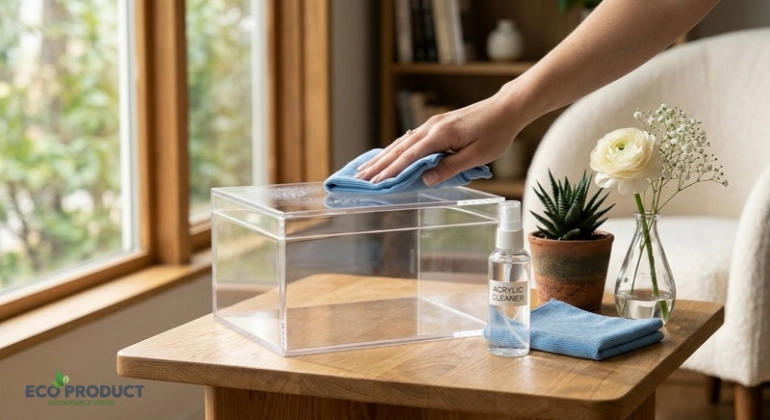
You bought a clear acrylic case to show off your collectibles, jewellery, bakery items or retail products. A few weeks later it looks dull, covered in fingerprints and fine dust. Many people grab the nearest glass cleaner, and that is usually where the damage starts. If you want to know how to clean acrylic display box surfaces without scratches, hazing or yellowing, the answer is gentle tools, the right cleaner and a few good habits.
This guide covers everything from the basic wash to scratch removal and long-term protection. Follow it and your acrylic display case will stay clear for years.
Acrylic (often sold as plexiglass) is lighter than glass, more impact-resistant and very clear. It is also softer. Glass can handle a rough cloth. Acrylic cannot. Dry paper towels, abrasive sponges and harsh chemicals can leave micro-scratches, and those scratches catch light and make the surface look cloudy.
Acrylic also builds up static electricity. Wiping it dry creates a charge that pulls dust back onto the surface almost immediately. That is why a case can look clean for ten minutes and dusty again by evening.
So good acrylic sheet care has three goals: remove dirt without scratching, neutralise static, and avoid chemicals that attack the material. Everything below follows from these.
Gather your supplies first. You will not need much, and none of it is expensive:
Avoid paper towels, kitchen sponges and old T-shirts. Their fibres are coarser than they look and can leave fine lines.
Never wipe a dusty acrylic surface straight away. Dust particles are tiny abrasives, and dragging them across the surface is the most common cause of fine scratches. Use a soft brush, a clean makeup brush or a blower to lift the dust. Doing this first can save your case a lot of wear.
If the box is empty and portable, take it to the sink and rinse it gently with lukewarm water. Cold water works too. Avoid hot water, because sudden temperature changes can stress the material. For larger cases that can’t be moved, dampen a microfiber cloth instead.
Mix a few drops of mild soap into a bowl of lukewarm water. Dip the microfiber cloth, squeeze it until it is just damp, and wipe in gentle, straight strokes. Skip hard circular scrubbing, which concentrates pressure and can create swirl marks. This mild soap and water method is the safest way to clean acrylic without scratching, and it works for most everyday dirt.
Leftover soap dries into a film, which is one of the main causes of that cloudy, “never quite clean” look. Wipe once more with a cloth dampened in clean water so nothing remains.
Use the second dry microfiber cloth right away. Blot or glide it over the surface rather than pressing hard. Letting acrylic air-dry leaves water spots, especially in areas with hard water. The wipe and dry method takes a minute and gives a clear finish.
This step separates a clean case from a case that stays clean. Spray a small amount of anti-static acrylic cleaner on your cloth, not directly on the box, and wipe lightly. It removes the static charge so dust does not settle straight back, which makes a real difference for a dust-free display.
Fingerprints are the most common complaint, especially on cases that customers or guests touch. Skin oils stick to acrylic and smear if you wipe them dry.
To get rid of them, wipe the area with a damp microfiber cloth and a drop of mild soap, then dry and finish with anti-static cleaner. For stubborn prints on retail displays, a purpose-made acrylic cleaner spray works faster than soap and water.
For how to remove dust from acrylic display box surfaces between deep cleans, use a clean, dry microfiber duster, but only after lifting loose particles with a blower or soft brush. A light mist of anti-static spray on the cloth helps too.
Here is a quick reference for common problems:
| 🔎 Problem | ✅ Best Fix | 🚫 Avoid |
|---|---|---|
| Fingerprints | Damp microfiber + mild soap | Paper towels, alcohol wipes |
| Dust | Soft brush, then anti-static cloth | Dry wiping on a dusty surface |
| Sticky residue | Soapy water, gentle rubbing | Scrapers, nail polish remover |
| Water spots | Quick dry with microfiber | Air-drying |
| Static cling | Anti-static cleaner | Repeated dry wiping |
This is one of the most searched questions, and the answer matters.
Windex and most glass cleaners are not safe for acrylic. Many contain ammonia, which can cause hazing and clouding, and over time can lead to tiny surface cracks called crazing. The damage often does not show on the first use, which is why people don’t notice what caused it. Glass cleaner damage is cumulative.
Vinegar is a grey area. Heavily diluted vinegar is sometimes used, but it is not worth the risk, particularly on a display case you care about. Stronger acids can dull the surface, and the smell lingers inside closed cases. A mild soap solution cleans just as well and carries no such risk.
Also stay away from:
If you are unsure whether a product is safe, check the label for “ammonia-free” and “safe for acrylic”, or stick to soap and water.
Even careful owners end up with a few scratches. How you treat them depends on how deep they are.
Use a dedicated acrylic or plastic polish. Apply a small amount to a clean microfiber cloth and rub the scratch in gentle, even strokes, following the direction of the mark. Wipe off the residue and buff with a fresh cloth. Many people find that this is enough for scratch removal on surface-level marks. It also restores shine and works well as a general acrylic polish after cleaning.
To polish an acrylic display box that looks dull but is not heavily scratched, polish the whole panel rather than only the scratched spot. Spot polishing can leave a patch that looks different from the surface around it.
If you can feel the scratch with a fingernail, polish alone will not remove it. In that case, the usual method is wet sanding with very fine waterproof sandpaper, working through progressively finer grits and finishing with polish. This takes patience, and done badly it makes things worse. If the case is valuable or the scratch is on a front panel, test on a hidden corner first or ask your supplier for advice. Sometimes replacing a single panel is the cheaper option.
Skip toothpaste, baking soda pastes and household “hacks” that rely on abrasion. They can create a hazy patch much larger than the original scratch.
Good quality acrylic is fairly resistant to yellowing, but several things can still discolour it:
For yellowing prevention, place your case away from windows or use UV-filtering window film. Keep it in a stable, moderate temperature. If you display valuable collectibles, such as signed memorabilia, models or documents, choose a case made with UV-protective acrylic. A case that already shows yellowing cannot always be reversed, so prevention matters much more than repair.
If your case has gone dull but isn’t badly damaged, a complete refresh usually works. Here is the routine:
Many owners are surprised by the result. A case that looked tired often looks nearly new after one proper refresh.
There is no single schedule, because it depends on where the case sits and how often it is handled. This table gives a practical starting point:
| 📍 Location / Use | 🧽 Light Dusting | 🫧 Deep Clean |
|---|---|---|
| Home shelf, rarely touched | Every 1–2 weeks | Every 1–2 months |
| Retail counter, handled often | Daily | Weekly |
| Bakery or food display | Daily | After every use |
| Dusty or high-traffic area | Every few days | Every 2–3 weeks |
Frequent light dusting protects the surface better than occasional heavy scrubbing. It stops dirt from building up and keeps dust from becoming an abrasive.
Cleaning is only half of acrylic display box maintenance. These habits are what actually keep a case clear for years:
Handle it carefully. Lift the box with clean hands. Avoid sliding it across rough surfaces, which scratches the base quickly. Place a soft felt pad or cloth underneath when moving it.
Store it properly. If you keep spare boxes, place a sheet of soft paper or protective film between them before stacking. Direct stacking is a quiet cause of scratches.
Keep the protective film on until needed. New acrylic often arrives with film on the surface. Leave it on during transport and storage, and remove it only when you display the case.
Mind the contents. Some materials can transfer oils or colour onto acrylic. If you display food or bakery items, use appropriate liners.
Avoid heat sources. Keep cases away from stoves, ovens, heaters and strong lighting that produces heat.
Use soft supports. Heavy items that rest on thin panels for long periods can stress and warp the acrylic.
These simple display case protection habits cost almost nothing, yet they prevent most of the damage people blame on the material itself.
Different uses bring different challenges, so adjust your routine to match.
Bakery and food displays. Cleanliness is a hygiene issue as much as an appearance one. Wash with mild soap, rinse carefully and dry fully before placing food inside. If you sell cakes, pastries or cookies, you may find our guide on how to choose the right acrylic box for bakery products useful, since the right box size and lid style also make cleaning easier.
Retail and shop counters. These suffer the most fingerprints. Keep a spray bottle of acrylic cleaner and a microfiber cloth near the counter and wipe at opening and closing time.
Collectible and memorabilia cases. Handle these gently, clean less often and use UV-protective acrylic if the case sits in a bright room. A collectible display case protects value, so avoid any experimental cleaning methods.
Curious about other practical uses? Our article on the top 10 uses of clear acrylic boxes in Pakistan shows how widely these boxes are used across homes and businesses.
Maintenance is easier when the box is made well. Thin, low-grade acrylic scratches easily and yellows faster, while good quality material resists marks and stays clear longer.
If you are still comparing materials, our guide on acrylic boxes vs plastic boxes explains why acrylic usually gives better clarity and durability. When you are ready to buy, browse our full acrylic box collection. The clear straight acrylic box with lid suits retail and gift display, and the acrylic round tray works well for serving and presentation.
For bakery and food presentation, you can also explore our bakery packaging range to match boxes, boards and bags in one order.
Dust it off with a soft brush, wash with a damp microfiber cloth and mild soapy water, rinse, dry with a second microfiber cloth, and finish with an anti-static acrylic cleaner.
No. Windex and most glass cleaners contain ammonia, which can cloud and crack acrylic over time. Use an ammonia-free, acrylic-safe cleaner instead.
Wipe with a damp microfiber cloth and a little mild soap, then dry with a clean cloth. An acrylic cleaner spray also works well for stubborn prints.
Light scratches can often be buffed out with acrylic or plastic polish. Deeper scratches may need careful wet sanding followed by polishing, or panel replacement.
Mostly because of prolonged UV exposure, heat, harsh chemicals or low-quality material. Keep the case out of direct sunlight and away from heat.
Dust it every week or two at home and deep clean monthly. Retail and bakery cases need daily light cleaning and weekly or more frequent deep cleaning.
It is better to avoid it. Diluted vinegar is sometimes used, but mild soap and water cleans just as well without the risk of dulling the surface.
Use an anti-static cleaner after cleaning, dust regularly with microfiber, and keep the case closed and away from fans or open windows.
Knowing how to clean acrylic display box surfaces properly comes down to a few simple rules. Use soft microfiber, mild soap and lukewarm water. Avoid ammonia, alcohol and abrasive tools. Finish with an anti-static cleaner, and build a short weekly routine instead of waiting until the case looks dirty. Add smart habits like keeping it out of direct sunlight and storing it with protective layers, and your acrylic display case will stay clear, glossy and professional for years.
Whether you need a case for collectibles, a retail counter or a bakery, quality matters from day one. 👉 Shop premium clear acrylic boxes at EcoProduct.pk and enjoy a display that is easier to clean, tougher and built to impress. Have a question about sizes or bulk orders? Visit our shop and get in touch today.

Author at Eco Product — passionate about sustainable living and eco-friendly products.

Subscribe our newsletter & get notification about information discount.
Subscribe to get special offers, free giveaways, and once-in-a-lifetime deals.