Every restaurant, café and catering company has the same quiet problem: a bin full of plastic forks, knives and spoons that were used for ten minutes and will last for centuries. If you are looking for a simple, high-impact change, eco cutlery for businesses is one of the fastest ways to cut single-use plastic, show customers you care, and move your sustainability targets from paper to practice.
This guide explains how eco cutlery works, which materials suit which businesses, how it compares with plastic on cost and compliance, and how to choose a supplier you can trust. You will also find practical examples, two comparison tables and a FAQ at the end.
Sustainability goals often feel huge. Net-zero targets, supply chain audits and ESG reports can overwhelm a small food business. Cutlery is different. It is visible, it is used by every customer, and the switch takes one purchasing decision.
Think about a busy café serving takeaway lunches. Each order might include a fork, a knife and a spoon. Multiply that by hundreds of orders a week and you have a steady stream of plastic leaving your business. Replacing it does not require new equipment, staff retraining or a menu change. That is why many owners treat plastic free cutlery as their first step before tackling bigger projects like packaging or energy use.
It also gives you a story to tell. Customers notice what is in their hands, and a wooden fork says more about your values than a line in a mission statement.
People often use “biodegradable” and “compostable” as if they mean the same thing. They do not, and the difference matters when you make claims to customers.
Biodegradable means a material can be broken down by microorganisms over time. The catch is that there is no guaranteed timeframe, and the term is loosely regulated in many places.
Compostable means the product breaks down into natural elements under specific composting conditions within a set period, leaving no toxic residue. Compostable items usually need the right environment, whether a home compost heap or an industrial facility.
So, is biodegradable cutlery better than plastic cutlery? In almost every case, yes, because it is made from renewable resources and does not persist in the environment like fossil-based plastic. But to make honest sustainability claims, choose products with clear material information and, where possible, recognised certification. Be careful with vague labels like “eco” or “green” when there is no material data behind them.
Eco cutlery is simply a broad term for disposable or reusable cutlery made from renewable, natural or plant-based materials instead of conventional plastic.
Not every material suits every kitchen. Here is a practical breakdown of the options you will meet when sourcing sustainable cutlery for restaurants and cafés.
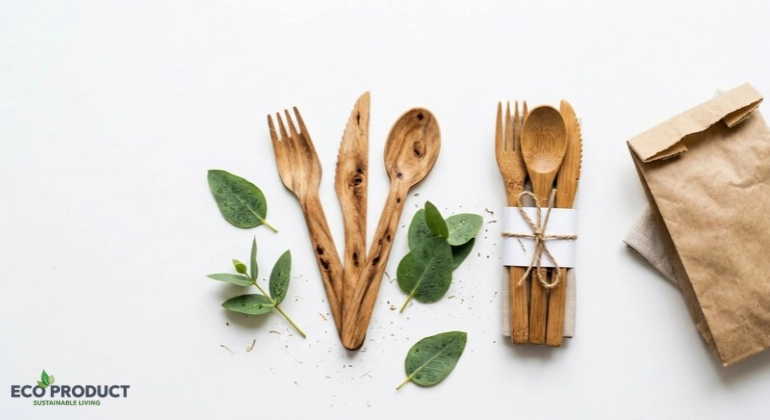
Birchwood is a favourite in foodservice. It is smooth, sturdy and has no strong taste or smell, so it does not affect the flavour of food. It handles hot meals well and feels more premium than plastic. If you want a ready-made option, explore our birchwood cutlery collection, including the birchwood wooden knife, wooden fork and birchwood wooden spoon. For a deeper look, read why birchwood cutlery is the best alternative to plastic.
Bamboo grows extremely fast and needs little water or pesticide, which makes it one of the most renewable materials available. It is light, strong and works as both disposable and reusable cutlery. If you want to understand the material better, see why bamboo is the most sustainable material on earth.
PLA (polylactic acid) is made from plant starches such as corn. CPLA is a heat-resistant version that holds up better with hot food. Both can look and feel similar to plastic, which some customers like. However, they typically need industrial composting facilities to break down properly, so check whether such facilities exist in your area before promoting them as compostable.
For dine-in service, staff canteens and corporate offices, reusable sets reduce waste the most over time. A stainless steel cutlery set or a reusable bamboo cutlery set can also be gifted to staff or customers as a branding item.
| Factor | Plastic Cutlery | Wooden / Bamboo Cutlery | PLA / CPLA Cutlery |
|---|---|---|---|
| Source material | Fossil fuels | Renewable wood or bamboo | Plant starch (e.g., corn) |
| End-of-life | Persists for centuries | Breaks down naturally | Needs industrial composting |
| Heat resistance | Moderate | Good | Good (CPLA) |
| Customer perception | Increasingly negative | Premium and natural | Neutral to positive |
| Regulation risk | High | Low | Low to medium |
| Unit cost | Lowest | Slightly higher | Medium to high |
The table shows the real trade-off. Plastic wins on unit price but loses on regulation risk, perception and environmental impact. For most businesses, wooden cutlery is the best balance.
Let us answer the main question: how does eco cutlery help businesses become more sustainable? It helps in five concrete ways.
Plastic cutlery starts as petroleum, and its production releases greenhouse gases. Plant-based and wood-based alternatives rely on renewable resources, so the production chain generally has a lower carbon footprint. It will not erase your emissions on its own, but it is a measurable step you can report.
Plastic cutlery is rarely recycled because of its small size and food contamination. Most of it ends up in landfill or the environment. Natural-material cutlery can break down far more readily, which supports your waste reduction and zero waste initiatives.
A circular economy keeps resources in use and returns them to nature safely. Renewable, compostable cutlery fits that model far better than a throwaway plastic product that can never return to the cycle.
Investors, partners and large corporate clients increasingly ask for environmental data. Replacing single-use plastic is an easy, trackable action you can include in your ESG reporting. Keep purchase records, quantities replaced and supplier material information. These make your claims verifiable.
Small switches build habits. Once your team sees the cutlery change work, it becomes easier to improve packaging, cups and takeaway bags. Our guide to 10 easy zero waste swaps in Pakistan shows how to build on that momentum.
How can you comply with single-use plastic regulations? The honest answer is that rules vary by country and city, and they change often. Many regions have introduced or are discussing restrictions on single-use plastic items, including cutlery, and food businesses are usually the first affected.
A practical approach:
Moving early also positions you as a leader instead of a follower. If regulation arrives, your supply chain and customers are already prepared.
Absolutely, and this is where sustainability becomes a business advantage, not just a cost.
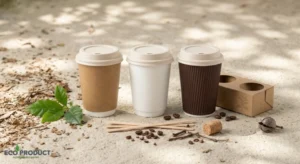
Eco-conscious customers pay attention to small details. A café that serves coffee in a double-wall paper cup with a wooden stirrer and a wooden fork signals care across the whole experience. Customers remember it, mention it and post about it, which supports your brand reputation without an advertising budget.
A real-world style example: imagine a small bakery café that replaces plastic forks with wooden ones and adds a small card at the counter explaining the change. Staff mention it casually when handing over orders. Within weeks, customers begin to comment on it, and some choose the café specifically because of it. The change cost little, yet it created a talking point.
For events, the effect is even stronger. See how bamboo cutlery sets for events help organisers show their values to every guest, or browse ideas like eco-friendly cups and cutlery for restaurants and cafés.
Cost is the biggest objection owners raise, so let us deal with it directly.
Yes, eco cutlery usually has a higher unit price than the cheapest plastic. But the real comparison includes more than the price tag:
| Cost Consideration | Plastic | Eco Cutlery |
|---|---|---|
| Price per piece | Very low | Slightly higher |
| Bulk discount potential | Moderate | Strong |
| Future compliance cost | Potentially high | Low |
| Marketing value | None | High |
| Customer loyalty impact | Neutral | Positive |
A helpful trick is to calculate the cost per order, not per fork. The difference is often a fraction of a rupee per customer, which is easy to absorb or offset with a small price adjustment.
A good eco cutlery supplier matters as much as the product itself. Quality that varies between batches can damage the experience you are trying to improve. Use this checklist when comparing options:
If you are sourcing in Pakistan, working with a local supplier shortens delivery times and avoids import delays. Learn more about why Ecoproduct.pk is Pakistan’s most trusted eco-friendly store and our mission to help Pakistan go green.
Different businesses have different needs. Here is a quick guide to the best eco friendly cutlery for cafés and catering.
Cafés: Choose wooden forks and spoons for pastries and desserts, and add disposable wooden coffee stirrers. Pair them with eco-friendly coffee cups for a consistent look.
Restaurants and takeaway: Birchwood cutlery handles hot rice, pasta and curries without bending. Add kraft paper bags for a fully plastic-free takeaway.
Catering and events: Choose sturdy wooden or bamboo sets in large quantities. For outdoor gatherings, a ready-made plan like this outdoor party kit with eco-friendly cutlery, cups and straws makes planning simple.
Bakeries: Small wooden spoons and forks work well for slices and cupcakes. If you also need packaging, see our bakery packaging range.
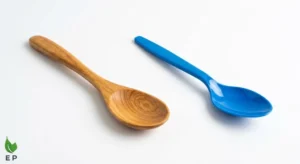
If you are comparing materials for spoons specifically, this wooden spoon vs plastic spoon comparison is a useful read.
Cutlery is the first step, but your customers see the whole package. Pairing it with sustainable packaging solutions creates a consistent, credible green identity. Options include kraft stand-up pouches for dry foods and snacks, paper bags for takeaway and recyclable boxes for delivery.
Consistency matters because half-measures can look like greenwashing. A wooden fork inside a plastic-heavy bag sends mixed signals. A coordinated range shows that your commitment is real.
Start with one category, such as forks and spoons, then expand. Gradual change is easier to manage and gives you data to refine your choices.
Switching to eco cutlery for businesses is a practical, low-risk move that supports waste reduction, regulatory readiness, ESG reporting and customer trust at the same time. It will not solve every environmental challenge, but it proves that your sustainability goals are more than words, and it gives customers something visible to appreciate.
The question is no longer whether food businesses should move away from plastic. It is how soon, and how well.
Explore our full shop or go straight to our birchwood cutlery range to get started. Contact Ecoproduct.pk today for bulk pricing and samples, and take the first step towards a plastic-free business.
Eco cutlery replaces fossil-based single-use plastic with renewable materials such as wood, bamboo or plant starch. This reduces plastic waste, supports lower-carbon supply chains and gives businesses measurable actions to include in sustainability and ESG reporting.
Restaurants benefit from lower regulatory risk, a stronger brand image and growing demand from eco-conscious customers. Switching early also avoids last-minute supply problems if single-use plastic rules tighten.
Biodegradable cutlery can be broken down by microorganisms over an unspecified time. Compostable cutlery breaks down within a defined period under suitable composting conditions, leaving no toxic residue. Compostable is the more precise and verifiable claim.
The unit price is usually slightly higher, but buying in bulk reduces the gap. When you consider brand value, compliance readiness and customer loyalty, the overall cost difference is often small.
Yes. Customers notice small details, and natural-material cutlery signals care and authenticity. Many businesses find it becomes a talking point that supports word-of-mouth and repeat visits.
Birchwood and bamboo cutlery are popular choices because they are sturdy, heat-tolerant and do not affect food taste. PLA or CPLA can also work where industrial composting is available.
You can order wholesale quantities from Ecoproduct.pk, which supplies wooden and bamboo cutlery, cups and packaging for restaurants, cafés and event organisers in Pakistan.
Start with cutlery, then replace straws, stirrers, cups and takeaway bags with natural alternatives. Track your usage, buy in bulk and communicate the change to customers.

Author at Eco Product — passionate about sustainable living and eco-friendly products.

Subscribe our newsletter & get notification about information discount.
Subscribe to get special offers, free giveaways, and once-in-a-lifetime deals.