A good bulk order starts long before the invoice. It starts with a few clear decisions about size, lid, quantity and branding. Custom acrylic packaging looks premium on a shelf, shows your product clearly and can be reused by the customer. It also costs real money when you order hundreds or thousands of pieces. A wrong size or a missed detail gets expensive fast.
This guide walks you through the whole process of ordering acrylic packaging in bulk. We cover what to decide first, what to ask a supplier, how to approve samples and artwork, and how to avoid the mistakes that cause delays. It is written for food sellers, gift brands, retailers and small businesses in Pakistan.
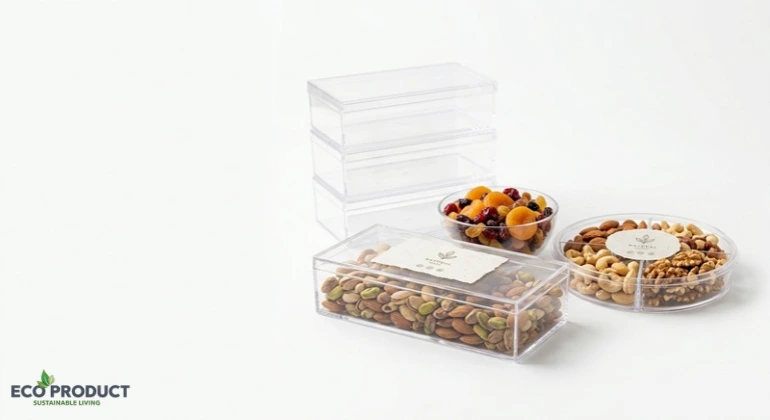
Custom acrylic packaging means rigid, clear containers made from acrylic, such as boxes, bowls and trays, chosen or adapted to fit your product and brand. The material is glass-like in look, so customers see what they are buying. Think dry fruit boxes, sweet and chocolate containers, serving trays and gift boxes.
“Custom” can mean different things. It might be a standard-size box with your sticker on the lid. It might be a specific capacity, lid style or colour combination. Or it might be a fully printed design. The more custom the order, the more lead time and planning it needs, so decide early which level you want.
For a wider picture of how acrylic is used, read our guide on the top 10 uses of clear acrylic boxes in Pakistan. If you are comparing materials, our acrylic boxes vs plastic boxes packaging guide covers the differences.
Bulk ordering makes sense when you have steady demand and a clear product. Typical buyers include:
If you are just testing a product, start with a small order first. Bulk pricing helps only when you are confident about the size, the design and the demand. A small pilot batch costs less than a large mistake.
Before you contact any supplier, write down the basics. The clearer you are, the faster and cheaper the process becomes.
List what you will pack, how much of it goes in one container and whether it is dry, oily, sticky or fragile. Dry fruits, for example, need a different box than a cream-based dessert. Also note whether the product will be eaten soon or stored for weeks, since that affects lid choice and sealing.
Acrylic packaging comes in several forms. Straight boxes with lids suit dry fruits and gifts. Round bowls suit nuts, sweets and snacks. Portion trays suit mixed assortments and serving. Our clear straight acrylic box with lid, acrylic round tray and round crystal bowl are good starting points to see the formats. You can browse the full acrylic box category to compare shapes and capacities.
Capacity is often listed in grams for dry foods, such as 250 g, 500 g or 1 kg. But weight and volume are not the same. Dense dates and light puffed snacks fill very different volumes at the same weight. The safest method is to test your real product in a sample box and see how it fills.
Size mistakes are the most common cause of reorders. The container should look full but not crammed, and the lid must close without pressure.
Take your product and place it in the container exactly as it will be sold. Check the height, because a lid that bulges looks cheap and may crack. Check the width too, since you may want space for a decorative layer or a dry-fruit mix. Then think about outer packaging: if you are shipping, the box needs to fit neatly into a carton.
If the product is bakery-related, our guide on how to choose the right acrylic box for bakery products gives extra tips on fit and presentation.
| Question to Ask | Why It Matters |
|---|---|
| How much product goes in one box? | Sets the capacity you need |
| Is the product dense or light? | Weight and volume differ |
| Will it be shipped or sold in store? | Affects strength and outer packing |
| Does the lid need to seal tightly? | Affects lid style and freshness |
| Is a gift layer or insert needed? | Adds height to the size |
Getting these answers on paper makes your supplier’s quote far more accurate.
Acrylic is transparent, so branding works a little differently than on a printed box. You can show off the product and still carry your identity.
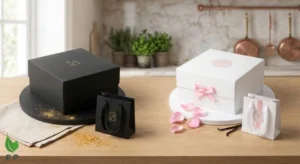
The simplest option is a sticker label on the lid or side. It is flexible, affordable and works well for small and mid-size orders. A step up is logo printing on the lid or body, which looks more polished at higher volumes. You can also add branded outer sleeves, ribbons, cards or a gift bag to carry the brand without changing the container.
Printing methods, colour limits and minimum quantities differ by supplier and product. Ask which methods are available for your chosen container before you design anything. For more branding ideas, see our guides on sustainable packaging solutions in Pakistan and eco-friendly packaging products.
Send artwork in the format your supplier requests, usually a vector file such as AI or PDF, plus your brand colours. Keep text readable and leave a safe margin from edges. Always request an artwork proof before approving production, since colours on screen rarely match colours in print.
This is the step many buyers skip, and it is the one that saves the most money.
A sample lets you check things a photo cannot show. You see the real size, the lid fit, the clarity of the material and the finish. You can test your actual product inside, close the lid, turn the box upside down and carry it around. You can also check how your label looks and how it sticks.
Run a short real-world test. Pack the sample with your product, leave it for a few days and look for scratches, fogging, smells or lid problems. If you plan to ship, test the pack inside your outer carton. Ask the supplier whether a sample is available and whether any sample cost is adjusted against a larger order.
These three terms drive most bulk-order decisions.
Minimum order quantity (MOQ) is the smallest quantity a supplier will produce or sell for a given item. It can differ for standard items and fully customised ones. Bulk pricing usually means the price per piece goes down as quantity goes up, but the exact tiers depend on the supplier and the product. Lead time is the time from approval to delivery. It depends on stock, customisation level and printing.
There are no universal numbers for any of these, so always ask for them in writing. A fair quote should list unit price, quantity, any printing or setup charges, packing details and delivery cost.
| Item to Confirm | What to Ask |
|---|---|
| MOQ | Is it different for standard vs custom items? |
| Unit price | Are there tiers for higher quantities? |
| Setup or printing charges | Are they one-time or per order? |
| Lead time | When does the clock start, at order or at approval? |
| Delivery | Who pays, and what is the delivery window? |
Treat price as one factor, not the only one. A slightly higher price from a supplier who delivers on time and communicates clearly often costs less than a cheap quote followed by delays.
Not all suppliers are equal, and a polished website does not prove quality. Look at the full picture.
Ask whether they can confirm the material type and its suitability for your use. If you are packing food, ask for written confirmation of food-contact suitability for the exact product, instead of assuming it. Check how they handle quality: do they inspect before dispatch, and what happens if a batch has defects? Check communication speed too, because a slow reply before the sale usually means a slow reply after it.
A short supplier checklist:
You can browse our range in the Eco Product shop and the bakery packaging category to see how products and categories are organised.
This is one of the most common questions, and the honest answer is: it depends on the exact product and grade. Acrylic containers made for food use exist, but you should never assume that every acrylic container is suitable for food contact.
Ask your supplier to confirm food-contact suitability for the specific item you plan to buy, and ask for supporting documentation if it is available. Wash new containers before first use, follow the supplier’s care instructions and avoid harsh chemicals or abrasive scrubbing, which can scratch the surface. Also check whether the container can handle hot items or temperature changes, since many acrylic products are best for dry or room-temperature foods.
If you cannot get clear confirmation, choose a different material or use an inner food-safe liner or wrap. For a broader look at material choices, see our acrylic boxes vs plastic boxes guide.
Acrylic containers are sturdy, so customers often reuse them for storage, jewellery, spices or desk items. That second life is a real benefit, because a box that is kept is a box that is not thrown away.
Be careful with environmental claims, though. Acrylic is a plastic-based material, so do not describe it as biodegradable, compostable or “eco-friendly” without proof from your supplier. A truthful message works better: “reusable, long-lasting packaging”. If sustainability is central to your brand, compare formats and read our guides on sustainable packaging solutions and eco-friendly transparent packaging pouches to see what suits your product.
Many dry fruit and gift sellers weigh acrylic against tin boxes. Both look premium, but they suit different goals.
| Feature | Acrylic Box | Tin Box |
|---|---|---|
| Product visibility | Full, see-through | Hidden unless it has a window |
| Look | Clean, modern, glass-like | Classic, decorative, gift-style |
| Light protection | Low | High |
| Best for | Showcasing colourful products | Gifting, long storage, keepsakes |
Acrylic wins when the product is the star. Tin wins when you want light protection and a keepsake feel. Read our tin boxes buyer’s guide and the comparison of round vs square tin boxes before deciding, or browse the tin box category. Many gift brands use both: an acrylic box for display and a tin for premium sets.
Acrylic is rigid but can scratch or crack under pressure. Plan protection before the order arrives, not after.
Ask how the supplier packs the order. Items should be separated or wrapped so surfaces do not rub together. When you ship filled boxes to customers, use a sturdy outer carton, fill empty space and add cushioning. Our 3-ply and 5-ply e-commerce boxes and the e-commerce boxes guide help you choose outer cartons. For cushioning, compare options in bubble wrap vs packing paper, and stock bubble wrap and clear packaging tape for sealing.
When the delivery arrives, inspect it on the spot. Count the quantity, check a few pieces from different cartons and photograph any damage. Report problems quickly, since many suppliers have time limits for claims.
Acrylic packaging sells heavily before Eid, Ramadan, weddings and winter gifting. These seasons strain supplier schedules, so order earlier than you think you need to.
As a simple rule, work backwards from your selling date. Allow time for sample approval, artwork changes, production, delivery and your own packing. Then add a buffer for delays. Late orders force rushed decisions, which are exactly when sizing and artwork mistakes slip through. Our article on 10 easy zero waste swaps in Pakistan is a useful read if you want to add a reusable-packaging message to a seasonal campaign.
Most problems come from a small set of repeat errors. This table matches each one to a fix.
| Mistake | What Happens | Better Practice |
|---|---|---|
| Skipping the sample | Wrong fit, poor finish | Always test a sample first |
| Guessing the size | Bulging lid or loose product | Test with the real product |
| Approving artwork on screen only | Colour surprises | Request a physical or digital proof |
| Ignoring lead time | Missed season | Order early with a buffer |
| Assuming food safety | Compliance and trust issues | Get written confirmation |
| Not inspecting on delivery | Missed claim window | Check and photograph on arrival |
Avoiding even two or three of these will make your order smoother and cheaper.
Run through this before you place the order:
Ordering custom acrylic packaging in bulk is mostly about preparation. Define your product, test the size, choose a simple branding method, approve a sample and proof, confirm MOQ, price and lead time in writing, and plan the packing and delivery. Done in that order, a bulk order goes from a risky guess to a repeatable process.
Start with a small pilot if you are new, learn from it and scale up with confidence. Good packaging protects your product and makes your brand look as good as the product inside.
Ready to start? Browse the acrylic box collection at Eco Product, compare formats and capacities, and choose the pieces that suit your product. Confirm specifications and quantities with the team before you place a bulk order.
It is rigid, clear packaging made from acrylic, such as boxes, bowls and trays, chosen or adapted to fit your product and brand, often with a logo or label.
Define your product and size, request a sample, approve artwork and a proof, confirm MOQ, price and lead time in writing, then plan delivery and inspection.
It varies by supplier and product, and it can differ for standard and customised items. Confirm the current MOQ with the team before you plan your order.
It depends on stock, customisation and printing. Ask for a written lead time and clarify whether it starts at order or at artwork approval.
Often yes. Options include stickers and printing, depending on the product and quantity. Confirm available methods and minimums with your supplier and approve a proof.
It depends on the exact product and grade. Ask your supplier to confirm food-contact suitability in writing for the specific item before using it for food.
It is used for dry fruits, nuts, sweets, chocolates, bakery items, gifts, serving trays and retail display, where product visibility matters.
Sizes and capacities vary by product, often listed in grams for dry foods. Check each product page and confirm the exact dimensions with the team.
Test your real product in a sample box. The lid should close without pressure, and the product should look full without being crammed.
Yes. A sample lets you check fit, finish, lid closure and label look before you commit to a large quantity.
Share the product type, quantity per box, preferred container, size or capacity, branding method, total order quantity and your delivery deadline.
Compare material confirmation, MOQ, unit price, lead time, sample policy, quality checks, communication and their policy on damaged items.
It depends on the product, size, quantity and customisation. Request a written quote listing unit price, setup charges and delivery cost.
Many customers reuse acrylic boxes for storage or display. Reusability depends on the product and how it is cared for, but sturdy acrylic often has a second life.
Eco Product lists acrylic boxes, bowls and trays in its acrylic category. Confirm availability, sizes and bulk terms with the team before ordering.

Author at Eco Product — passionate about sustainable living and eco-friendly products.

Subscribe our newsletter & get notification about information discount.
Subscribe to get special offers, free giveaways, and once-in-a-lifetime deals.