Think about how many plastic items you touched today. Your toothbrush, a straw, a cutlery set from a takeaway order, a cotton bud, a hairbrush. Most of them were used for minutes, yet each can outlive you by centuries. That is the heart of the plastic waste crisis, and it is why bamboo products reduce plastic pollution in a way that is simple, affordable and easy to start today.
The good news is that you don’t need a perfect zero-waste life to make a difference. Replacing a handful of daily-use items with bamboo alternatives to plastic can cut hundreds of single-use pieces from your household waste every year. This guide explains why bamboo works, which swaps matter most, where bamboo has limits, and how to start in Pakistan.
The world produces hundreds of millions of tonnes of plastic every year, and a large share is used once and thrown away. Much of it ends up in landfills, rivers and eventually the sea. Plastic doesn’t truly biodegrade. It breaks into smaller and smaller fragments called microplastics, which now turn up in soil, drinking water, marine life and even human bodies.
Pakistan faces this challenge too. Overflowing landfills, plastic-choked drains and litter along rivers and beaches are familiar sights. Because everyday personal and kitchen items are among the easiest plastics to replace, they are the best place to begin.
If you want practical starting points first, our guide on 9 easy ways to reduce your plastic waste is a helpful companion to this article.
Bamboo is technically a grass, not a tree, and it behaves like nothing else in the plant world. Here is why it earns its reputation as a sustainable material.
It grows remarkably fast. Some bamboo species grow close to a meter in a single day under ideal conditions, and most are ready for harvest within three to five years. Hardwood trees can take decades. This makes bamboo a genuinely renewable resource that can replace plastic without straining forests.
It regrows without replanting. When bamboo is harvested, the root system stays in place and sends up new shoots. That protects the soil from erosion and avoids the repeated replanting other crops need.
It needs little to thrive. Bamboo generally grows well without heavy pesticides or fertilizers, and it uses water efficiently compared to many commercial crops.
It stores carbon. As a fast-growing plant, bamboo absorbs carbon dioxide and releases oxygen, which supports a lower carbon footprint compared with petroleum-based plastics. Making plastic requires fossil fuels, while bamboo only requires sunshine and rain.
It is naturally strong and light. Bamboo fibers are tough, which is why the plant has been used for building, furniture and tools for thousands of years. For a deeper look at the science, read our article on why bamboo is the most sustainable material on earth.
This is one of the most common questions, and it deserves a straight answer.
Bamboo is a natural plant fiber, so it breaks down in the right conditions. An untreated or lightly treated bamboo handle can decompose in roughly a few months to a few years, depending on moisture, soil and temperature. Plastic items such as toothbrushes, straws and cutlery can persist for hundreds of years, and they never fully disappear. They only fragment.
| Item | Typical Material | Approximate Breakdown Time |
|---|---|---|
| Plastic toothbrush | Polypropylene + nylon | Hundreds of years |
| Plastic straw | Polypropylene | Around 200 years or more |
| Plastic cutlery | Polystyrene / PP | Hundreds of years |
| Bamboo handle or cutlery | Natural bamboo fiber | Months to a few years |
These are general estimates. Real-world timing varies with climate, coating and composting conditions.
One honest caveat: “biodegradable” doesn’t mean it will vanish in a plastic-lined bin. Bamboo breaks down best in compost or open soil, not in sealed landfill bags, where little breaks down at all. That is why proper disposal matters, and we cover it further below.
If you only make one swap, make it this one. Dentists recommend replacing a toothbrush every three months, which means a single person can throw away around four plastic toothbrushes a year. Across a family of five over a lifetime, that adds up to hundreds of brushes that never go away.
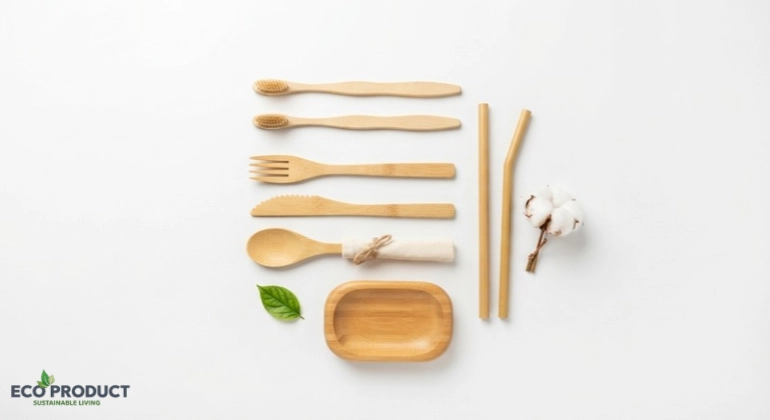
A bamboo toothbrush replaces the plastic handle with natural bamboo. The result brushes just as well, feels comfortable in the hand, and leaves far less long-lasting waste behind. Most bamboo toothbrushes still use nylon bristles, so the honest way to dispose of one is to snap off the bristle head, compost or recycle the handle, and throw away only the tiny bristle portion. Even so, you avoid most of the plastic compared with a conventional brush.
For a full side-by-side, see our detailed comparison of bamboo toothbrush vs plastic toothbrush and the follow-up guide on which is better for your family. You can also learn why bamboo toothbrushes are better than plastic.
Ready to switch? Browse the adult bamboo toothbrush or choose the soft, gentle kids bamboo toothbrush for little ones. Parents will also like our guide to a safe, soft and sustainable kids bamboo toothbrush.
Plastic forks, knives and spoons are some of the most wasteful items we use. They are handed over in seconds, used for one meal and discarded. Over a year, a regular office lunch-goer or student can throw away hundreds of them without noticing.
A reusable bamboo cutlery set fixes this with almost no effort. It is lightweight, travels easily in a bag, and doesn’t carry the metallic taste that some steel cutlery can. Keep one in your bag, car or desk drawer, and you can politely say no to plastic every time.
Our reusable bamboo cutlery set is designed for exactly this kind of daily use, and the article on why you should carry a reusable bamboo cutlery set everywhere explains how to make the habit stick.
For businesses, cafés and event planners, the impact multiplies. Read about the benefits of bamboo cutlery sets for events, or explore the natural birchwood cutlery alternative to plastic if you prefer disposable wood for large gatherings.
Plastic straws are small, but they are among the most commonly found items in beach cleanups, and they are too lightweight to be caught by most recycling systems. Their size also makes them easy for wildlife to mistake for food.
Bamboo straws are a practical alternative. They are reusable, smooth, easy to wash and free from the chemical flavors some plastics can leave behind. Wash them after each use, let them dry fully, and a good set will last for a long time.
Choosing between materials? Our comparison of bamboo straws vs stainless steel straws and the wider guide to the best reusable straws in Pakistan will help you decide. When you’re ready, shop the bamboo straws.
Your bathroom is likely the biggest plastic hotspot in your home. Razors, cotton buds, brushes, soap holders and sponges are all typically plastic, and nearly all of them are replaceable.
Plastic-stemmed cotton buds are among the most common items washed up on shorelines, because they are flushed down toilets and slip through water treatment filters. Bamboo-stemmed buds work the same way but are made from a natural material. Read the bamboo vs plastic cotton buds comparison and try the bamboo cotton buds.
Plastic hairbrushes shed tiny particles and last only a few years before cracking. A bamboo brush is gentler on the scalp and is more pleasant to hold. See how it compares in our guide to bamboo hair brush vs plastic hair brush, then explore the bamboo hair brush.
A self-draining bamboo soap dish keeps soap dry and replaces a plastic tray, while a plastic-free bamboo razor removes another disposable item from your routine. For more ideas, our eco-friendly bamboo bathroom products guide and top 10 eco-friendly products for a zero-waste bathroom walk you through the full list.
Single-use plastic bottles are another major source of waste. A double-wall bamboo water bottle with tea infuser turns one habit into a double win. You skip hundreds of bottles a year, and you can brew tea or infused water on the go. Pair it with an organic cotton mesh bag for shopping, and you’ve replaced two of the most common single-use plastics in one move.
The impact of small swaps is easier to see when you add them up. Here is a realistic example for one person over a year.
| Swap | Plastic Items Avoided per Year (approx.) |
|---|---|
| Bamboo toothbrush (changed quarterly) | 4 brushes |
| Reusable cutlery (2 takeaway meals a week) | 200+ pieces |
| Reusable straw (1 drink a day) | 300+ straws |
| Bamboo cotton buds (2 a day) | 700+ buds |
| Reusable bottle (1 a day) | 300+ bottles |
Figures are illustrative estimates based on typical usage. Your own numbers will vary, but they show how fast small habits compound. Multiply them by a family, an office or a café, and the reduction in single-use plastic becomes significant.
Quality bamboo products are both. Bamboo is naturally strong, and good products are smoothed and finished so there are no splinters. Items that touch your mouth or food should come from a trusted seller and use food-safe finishes.
To keep bamboo lasting longer:
Our guides on how to care for a bamboo toothbrush and how to keep a bamboo toothbrush clean cover easy habits that extend its life.
Bamboo only keeps its eco advantage if you dispose of it well. Here is the simple approach:
For the step-by-step method, read how to dispose of a bamboo toothbrush in 3 steps and our ideas for 6 eco-friendly ways to recycle a bamboo toothbrush.
Going plastic-free doesn’t need to be dramatic. The most successful people start small, then build. A simple plan looks like this:
Start with the bathroom. Swap your toothbrush, cotton buds and soap dish first. These are repeat purchases, so you replace them naturally as you run out.
Move to the kitchen and your bag. Add reusable cutlery, a straw and a water bottle, so you’re prepared whenever you eat or drink out.
Choose local and Pakistani options. Buying from a Pakistan-based store keeps shipping short and supports local green businesses. You can also read how Pakistanis switched to eco products to see real examples.
Build the habit with a challenge. Our 10 easy zero-waste swaps for Pakistan works well as a month-long starter plan, and the sustainable living guide for Pakistan gives you the bigger picture. For more on the local market, see bamboo products in Pakistan and a sustainable lifestyle.
When you buy bamboo products online in Pakistan, look for clear product descriptions, honest material details (such as bristle type), reliable delivery and responsive support. Be cautious of items labeled “eco” without any explanation of what they are made from.
You can browse the full range on the EcoProduct.pk shop, or read why customers call it Pakistan’s most trusted eco-friendly store. If you’d like to know what drives the brand, visit our mission to help Pakistan go green.
Plastic pollution can feel too large for one person to tackle, but it is built from millions of small daily choices. That also means it can be reduced the same way. When bamboo products reduce plastic pollution, they do it quietly. A toothbrush that composts, a straw you wash instead of throw away, a set of cutlery that lives in your bag.
Bamboo isn’t a magic fix, and it works best when paired with reuse and good disposal. But as a fast-growing, renewable and carbon-storing material, it is one of the most practical tools we have for green living today. Start with one swap this week, and let the habit grow from there.
Take your first step away from plastic today. Explore the bamboo and eco-friendly range at EcoProduct.pk, start with a bamboo toothbrush or a reusable cutlery set, and join thousands of Pakistanis choosing a cleaner future.
1. How do bamboo products help reduce plastic pollution?
Bamboo products replace single-use and short-life plastic items like toothbrushes, straws, cutlery and cotton buds with a renewable, biodegradable material. This means fewer plastic items enter landfills, rivers and oceans, and fewer break down into microplastics.
2. Is bamboo really eco-friendly?
Yes, when sourced responsibly. Bamboo grows quickly, regrows after harvest without replanting, needs little water and few chemicals, and absorbs carbon as it grows. Its eco value is highest when products are reused and disposed of properly.
3. Is bamboo biodegradable, and how long does it take to decompose?
Bamboo is a natural fiber and biodegradable. In compost or soil, a bamboo handle can break down in months to a few years, while plastic items can last hundreds of years.
4. What is better, a bamboo toothbrush or a plastic toothbrush?
A bamboo toothbrush cleans just as effectively while greatly reducing long-lasting plastic. Most still have nylon bristles, so remove them before composting the handle.
5. What can I replace plastic with in daily life?
Start with a bamboo toothbrush, reusable bamboo cutlery, a reusable straw, bamboo cotton buds, a cotton mesh bag and a reusable water bottle. These are easy, low-cost swaps with a quick impact.
6. How do I dispose of bamboo products properly?
Remove any non-natural parts like bristles, then compost the bamboo in a home compost heap or garden soil. You can also reuse old handles for crafts or as plant markers.
7. Where can I buy bamboo products in Pakistan?
You can order bamboo toothbrushes, cutlery sets, straws, cotton buds and more online from EcoProduct.pk, with delivery across Pakistan.

Author at Eco Product — passionate about sustainable living and eco-friendly products.

Subscribe our newsletter & get notification about information discount.
Subscribe to get special offers, free giveaways, and once-in-a-lifetime deals.