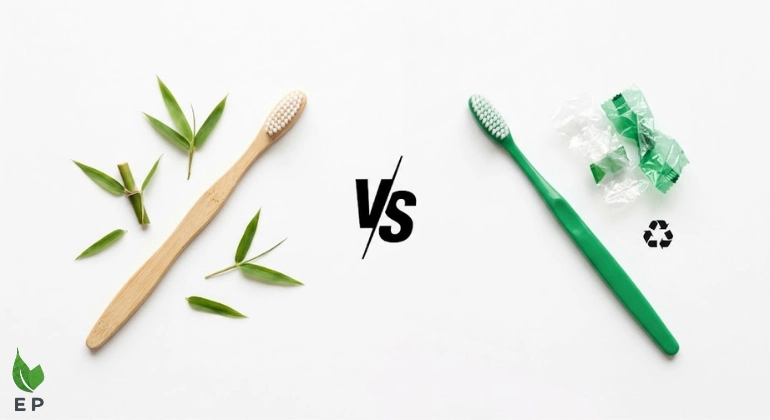
Every morning, millions of people pick up a toothbrush without ever questioning what happens to it once it’s thrown away. But here’s the thing — the bamboo toothbrush vs plastic toothbrush debate has quietly become one of the most talked-about topics in sustainable living, and for good reason. A single plastic toothbrush can take over 400 years to decompose, while a bamboo one can biodegrade in a matter of months. If you’ve ever stood in a store aisle wondering which option actually deserves a spot in your bathroom, you’re not alone — and by the end of this guide, you’ll have a clear, confident answer.
Let’s unpack this comparison step by step, covering everything from environmental impact to durability, hygiene, cost, and everyday comfort.
Before diving into the head-to-head comparison, it helps to understand why one toothbrush is considered sustainable oral hygiene and the other isn’t.
Most bamboo toothbrushes use a bamboo handle paired with bristles made from nylon, charcoal-infused nylon, or plant-based bristles (fully biodegradable bristles are still rare industry-wide). Plastic toothbrushes, on the other hand, are 100% nylon and petroleum-based plastic from tip to handle.
This is where the real difference lies. Plastic handles are made from polypropylene — a petroleum-derived material that never fully disappears; it just breaks into microplastics. Bamboo handles come from a rapidly renewable plant that grows without pesticides and regenerates in just 3–5 years. If you’re curious about the raw materials used, our detailed breakdown on what a bamboo toothbrush is made of explains the entire manufacturing process.
Here’s a clear, side-by-side look at how these two everyday products actually stack up.
| Factor | 🎋 Bamboo Toothbrush | 🧴 Plastic Toothbrush |
|---|---|---|
| Environmental Impact | Biodegradable handle, low carbon footprint | Contributes to plastic waste pollution |
| Durability | Lasts 3–4 months with proper care | Lasts 3–4 months, similar lifespan |
| Hygiene | Naturally antibacterial bamboo | Requires more frequent bristle checks |
| Price | Slightly higher upfront cost | Cheaper per unit, costlier long-term (planet) |
| Comfort & Grip | Natural, non-slip texture | Smooth, sometimes slippery when wet |
| Recyclability | Compostable handle | Rarely recycled; ends up in landfill |
This is where bamboo pulls dramatically ahead. Every year, billions of plastic toothbrushes are discarded worldwide, and almost none of them get recycled because of their mixed-material construction (plastic handle + nylon bristles + rubber grip). They end up sitting in landfills or oceans for centuries, breaking down into microplastics that enter soil, water, and even our food chain.
Bamboo toothbrush handles, by contrast, are compostable and return to the earth naturally — making them one of the simplest zero waste lifestyle swaps you can make. If you’re already exploring other easy changes, check out these 9 easy ways to reduce your plastic waste for more inspiration.
A common myth is that bamboo toothbrushes wear out faster than plastic ones — but that’s not entirely true. Both types typically last around 3 to 4 months with regular use, which is also the timeframe dentists recommend for replacement regardless of material.
The real difference is in how they age. Bamboo handles can be a little more sensitive to prolonged moisture, so proper drying matters. For tips on maximizing bamboo toothbrush durability, this guide on how long you can use your bamboo toothbrush is genuinely useful.
Both bamboo and plastic toothbrushes clean teeth equally well — the bristles do the work, not the handle material. However, bamboo has a natural edge here:
If you’re wondering whether bamboo toothbrushes are hygienic, the short answer is yes — as long as you rinse and air-dry them properly after each use. Our guide on how to keep your bamboo toothbrush clean walks through the exact steps.
Plastic toothbrushes usually win on shelf price — they’re mass-produced cheaply. But here’s the catch: that “cheap” price doesn’t account for environmental cleanup costs, landfill space, or the long-term damage of plastic waste pollution.
Bamboo toothbrushes cost slightly more per unit, but the price gap has narrowed significantly as demand has grown. Many people find the small extra cost easily justified once they consider the environmental trade-off — a value shift explored well in our complete Pakistan buyer’s guide to eco-friendly toothbrushes.
Bamboo handles tend to offer a naturally textured, non-slip grip — especially useful when your hands are wet. Plastic handles are often smoother and sometimes feel slippery, though manufacturers add rubberized grips to compensate.
If you’re still on the fence, here’s a quick rundown of why so many people are switching:
On the flip side, here’s why plastic toothbrushes are losing favor among environmentally conscious consumers:
So, bamboo toothbrush vs plastic toothbrush, which is better? Based on environmental impact, hygiene, and long-term value, bamboo comes out ahead for most everyday users. The only scenario where plastic might edge out bamboo is pure upfront cost — but even that gap is shrinking fast as more brands scale up sustainable production.
If your priority is:
For a deeper dive into why this comparison consistently favors bamboo, our earlier piece on why bamboo toothbrushes are better than plastic breaks down the science even further.
Switching to bamboo is only half the equation — using and disposing of it correctly maximizes the environmental benefit.
When it’s time to retire your toothbrush, don’t just toss it in the trash. Follow this simple 3-step disposal guide for bamboo toothbrushes to compost it correctly and remove the bristles for separate disposal.
For travelers, a bamboo toothbrush travel case keeps your brush protected and hygienic on the go.
| ✅ Pros | ❌ Cons |
|---|---|
| Biodegradable handle | Slightly higher price |
| Naturally antibacterial | Needs proper drying to avoid mold |
| Renewable material source | Bristles still mostly nylon |
| Reduces plastic waste pollution | Less availability in some regions |
If you’re building a genuinely sustainable oral hygiene routine, bamboo is the clear front-runner. It checks nearly every box — biodegradable, renewable, naturally hygienic, and increasingly affordable. Pair it with other small swaps, like a charcoal dental floss or a tongue cleaner, and you’ve built a complete eco-friendly dental care routine with minimal effort.
For a full walkthrough of building this kind of routine, this quick guide to an eco-friendly oral care routine is a great next read.
Which toothbrush is better for the environment? Bamboo toothbrushes are significantly better for the environment because their handles are biodegradable and compostable, unlike plastic toothbrushes which persist in landfills for centuries.
Is a bamboo toothbrush good for teeth? Yes. Bamboo toothbrushes clean teeth just as effectively as plastic ones since the bristles — not the handle material — do the actual cleaning work.
Do bamboo toothbrushes work as well as plastic? Absolutely. Performance-wise, bamboo and plastic toothbrushes are nearly identical; the main differences lie in sustainability, hygiene of the handle, and feel in hand.
Why should I switch to a bamboo toothbrush? Switching reduces your personal plastic waste footprint, supports renewable materials, and gives you a naturally antibacterial handle — all without sacrificing cleaning performance.
Are bamboo toothbrushes hygienic? Yes, bamboo has natural antibacterial properties. Proper drying and storage keep them just as hygienic as plastic alternatives, if not more so.
How long does a bamboo toothbrush last? On average, 3 to 4 months with regular use — the same replacement cycle recommended for plastic toothbrushes.
What are the disadvantages of bamboo toothbrushes? The main downsides are a slightly higher price point and the need for proper drying to prevent mold, since bamboo is a natural, moisture-sensitive material.
Can bamboo toothbrush bristles be recycled? Most bristles are still nylon-based and aren’t recyclable through standard programs, but the bamboo handle itself is fully compostable once bristles are removed.
Is a bamboo toothbrush worth the price? Yes, for most users the small price difference is worth it given the significant reduction in plastic waste and the added hygiene benefits.
Should I use bamboo or plastic toothbrush? For anyone prioritizing sustainability, hygiene, and long-term value, bamboo is the better overall choice.
The bamboo toothbrush vs plastic toothbrush debate ultimately comes down to a simple question: do you want a product that disappears into the earth, or one that lingers for centuries? Bamboo delivers the same cleaning performance as plastic while dramatically reducing environmental impact — making it one of the easiest sustainable swaps you can make today.
Ready to make the switch? Explore our full range of eco-friendly bamboo toothbrushes and bathroom essentials and start building a more sustainable daily routine — one small habit at a time.

Subscribe our newsletter & get notification about information discount.
Subscribe to get special offers, free giveaways, and once-in-a-lifetime deals.