Picture a Monday morning rush. A customer walks in and orders five coffees for the office. Your barista makes them perfectly, then hands them over with no carrier, and the customer juggles cups, spills one on the counter and leaves with a bad impression. That small moment is why choosing the right coffee cup carrier for bulk orders matters far more than most cafe owners expect.
A good carrier protects your drinks, makes your service look professional and keeps customers coming back. A poor one bends, leaks through or tips over at the first turn. In this guide, we cover how to choose a coffee cup carrier for bulk orders, how to compare sizes and materials, and how to buy cafe packaging in bulk without wasting money.
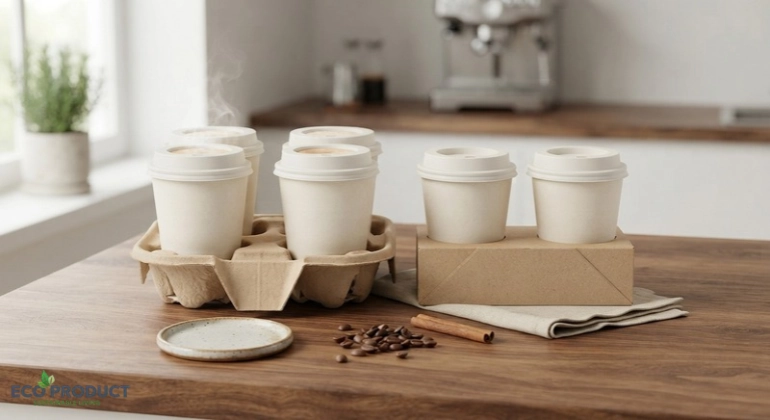
A coffee cup carrier is a tray or holder, usually made from moulded pulp or kraft paper, that holds two or more cups upright so they can be carried safely. Cafes use it for takeaway orders, delivery bags, office coffee runs, events and catering.
It looks like a small accessory, but it does real work. A carrier keeps cups stable, protects hands from heat, reduces spills and makes ordering several drinks feel effortless. For cafes that handle group orders, it is as essential as the cup and lid.
You will find ready-to-use options in our coffee cup carrier collection, including the kraft 2 cup coffee cup carrier and the kraft 4 cup drink carrier.
If you run a busy cafe, a bakery counter or a catering business, buying bulk coffee cup carriers is usually the smarter move. Single-piece buying looks cheap at first, but running out in the middle of a lunch rush costs you sales and goodwill.
Buying coffee cup carrier wholesale gives you three clear advantages. First, the cost per piece drops as quantity grows. Second, your stock stays consistent, so every order looks the same. Third, you avoid last-minute shopping trips that waste time.
That said, buy in sensible quantities. Start with the sizes you use most, track how many you consume in a month, and increase the order from there. This is the safest way to handle bulk packaging supplies without tying up cash or storage space.
The first question is practical: how many cups can a coffee carrier hold? Most cafes need only two common formats.
2 cup carriers suit individual and couple orders. They are compact, light and easy to hand over, which makes them perfect for walk-in customers and quick takeaways.
4 cup carriers suit offices, families, meetings and delivery orders. They hold more drinks in one tray, so customers can carry a full order in a single trip.
If your cafe gets frequent group orders, stock both. A customer buying two coffees should not receive an oversized four-cup tray, and a customer buying four should not be handed two small carriers.
| Feature | 2 Cup Coffee Carrier | 4 Cup Drink Carrier |
|---|---|---|
| Best for | Walk-in takeaway, couples | Offices, families, delivery |
| Cups held | 2 cups | 4 cups |
| Size and weight | Compact and light | Larger and sturdier |
| Storage space | Minimal | Moderate |
| Stability | Good for short trips | Better balance for groups |
| Ideal stock level | High, for daily use | Medium, for bulk orders |
Takeaway: Most cafes get the best value by stocking both formats and using the 2 cup option for everyday sales and the 4 cup option for group and delivery orders.
Not every carrier fits every cup. Before ordering, check what size cup carrier you need by measuring your most common cups. Many cafes use 8oz and 12oz cups, and the carrier pockets must hold them snugly without squeezing the cup walls.
A carrier that is too loose lets cups wobble and tip. One that is too tight can crush the cup or force the lid off. When testing a sample, place a filled cup in the pocket and gently tilt the carrier. If the cup stays steady, the fit is right.
Cup design matters too. Double wall cups are thicker and slightly wider than single wall ones, so test with your actual cups. Our guides on the right coffee cup size for a cafe and double wall vs single wall coffee cups will help you plan your range. If you need cups to pair with your carriers, browse our coffee cup collection, including the 12oz white double wall coffee cup and the 8oz double wall brown kraft coffee cup.
Material decides strength, looks and environmental impact. The most common choices are:
Kraft paper carriers: These are the most popular option for cafes. A kraft coffee cup carrier is sturdy, lightweight and has a natural, earthy look that suits modern cafe branding. It also fits well with customers who care about sustainability.
Moulded pulp carriers: These are thick, absorbent and very stable. They work well for hot drinks but can soften if exposed to heavy moisture for long periods.
Plastic carriers: These are rigid but less popular today because customers increasingly prefer plastic-free packaging.
If you are asking, “Are kraft coffee cup carriers eco-friendly?” the answer is generally yes. Kraft paper is made from renewable fibre and is recyclable in many settings, though disposal facilities vary, so ask your supplier about exact material details. For a wider look at sustainable choices, see our guide to sustainable packaging solutions in Pakistan.
A carrier that looks good but folds under the weight of four hot drinks is worse than no carrier at all. Always test samples before placing a bulk order.
Use this simple three-part test:
A strong, spill-proof carrier should keep its shape, hold cups firmly and resist bending. Thicker kraft board and well-designed cup pockets usually perform better. Keep in mind that no carrier can stop spills if lids are loose, so always pair carriers with well-fitting lids.
Delivery is the toughest test for any carrier. Riders brake, turn and carry bags on bikes, so drinks face far more movement than they do in a customer’s hands.
If you run delivery, choose a carrier with deep, secure pockets and a firm structure. Pair it with tight lids and, where possible, a paper bag or box to hold the entire order together. Learning how to prevent coffee spills during delivery comes down to three things: a snug carrier, a secure lid and a steady handover.
For takeaway-only cafes, a lighter carrier is often enough, since customers carry drinks for short distances. Match your choice to how most of your orders actually leave the shop.
A carrier is a small billboard. Customers carry it through offices, streets and parking lots, which means your cafe gets free exposure with every order. A clean kraft carrier already looks professional, and you can strengthen it with a branded sleeve, a sticker or a printed cup.
Our customised coffee cups with screen printing pair well with plain kraft carriers, so your logo shows on the cups while the carrier keeps a clean, natural look. This approach keeps costs sensible while still building a recognisable brand.
Many customers now notice and appreciate eco-conscious choices. Using paper and kraft carriers instead of plastic signals that your cafe cares about waste. It also supports your wider sustainability story, especially if you already use paper cups, wooden stirrers and compostable cutlery.
You can complete the set with disposable wooden coffee stirrers and natural wooden stir sticks. Small choices like these add up and help your cafe stand out in a competitive market.
Not all suppliers are equal. Before committing to a bulk order, check these points:
If you want to understand how we approach quality and trust, read why EcoProduct.pk is a trusted eco-friendly store.
Even experienced cafe owners make a few avoidable errors:
Avoiding these mistakes protects your drinks, your reputation and your budget.
Bulk carriers are especially useful during busy seasons and events. Think of office orders, weddings, corporate meetings, festival stalls and public holidays. During national celebrations, many cafes see higher group orders, and our 14 August specials guide for cafes and restaurants shows how to prepare eco-friendly cups and cutlery for those peak days.
Bakeries and dessert shops can also benefit. If you sell cakes, pastries or cookies alongside coffee, bundle your takeaway orders neatly with items from our bakery packaging category.
The best coffee cup carrier for bulk orders is the one that fits your cups, holds firm under pressure, suits your delivery style and reflects your brand. Start by understanding your order sizes, choose a sturdy material like kraft, test samples carefully and buy in quantities that match your sales.
A good carrier turns a risky handover into a smooth, professional experience. Customers remember that, and they return.
Explore our coffee cup carriers and choose the right size for your cafe. Need help planning a bulk order? Contact the EcoProduct.pk team and we will guide you to the right quantity and format.
1. How do I choose a coffee cup carrier for bulk orders?
Match the carrier to your cup sizes, choose a sturdy material such as kraft, test samples for strength and fit, and order in quantities that match your daily sales.
2. How many cups can a coffee carrier hold?
Most cafe carriers hold either two or four cups. Two cup carriers suit individual orders, while four cup carriers suit groups, offices and delivery.
3. Which is better, a 2 cup or 4 cup carrier?
Neither is better in every case. A 2 cup carrier suits quick takeaways, and a 4 cup carrier suits group orders. Most cafes stock both.
4. Are kraft coffee cup carriers eco-friendly?
Generally yes. Kraft paper comes from renewable fibre and is recyclable in many settings, but check material details with your supplier.
5. How can I prevent coffee spills during delivery?
Use a snug carrier, secure lids, and keep the carrier level during transport. Testing carriers with filled cups before ordering helps too.
6. What size coffee cup carrier do I need?
It depends on your cups. Measure your most common cups, such as 8oz and 12oz, and test a sample so the pockets hold cups firmly without crushing them.

Author at Eco Product — passionate about sustainable living and eco-friendly products.

Subscribe our newsletter & get notification about information discount.
Subscribe to get special offers, free giveaways, and once-in-a-lifetime deals.