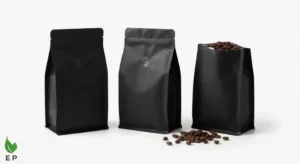
If you have ever stood in front of a packaging supplier’s catalog feeling completely overwhelmed, you are not alone. Learning how to choose the right pouch for your food product is one of the most important decisions a food business owner will ever make, because the wrong pouch can quietly ruin freshness, damage your brand image, and even trigger compliance issues before your product ever reaches a customer’s hands. The right pouch, on the other hand, protects your product, extends its shelf life, and makes your brand look polished on a store shelf or in a delivery box. This guide walks you through everything you need to know, from materials and barrier properties to cost, compliance, and design, so you can make a confident, informed decision.
It is tempting to treat packaging as an afterthought, something you sort out once the product itself is perfected. In reality, the pouch is part of the product experience. A bag of chips that goes stale in two weeks because of poor moisture protection is not a “packaging problem” in the customer’s mind, it is a quality problem with your brand. Similarly, a spice pouch that tears during transit or a coffee bag that lets aroma escape before it even reaches the shelf directly affects repeat purchases.
Choosing the right packaging for food products also plays a role in cost control, storage efficiency, and even sustainability positioning. Brands that get this right early tend to avoid expensive re-packaging decisions down the line, which is why this decision deserves the same attention you would give to sourcing ingredients or designing your logo.
A good food pouch is not just about looking nice on a shelf. It needs to balance four things at once: protection, compliance, cost, and presentation. Getting one of these right while ignoring the others usually backfires. For instance, a beautifully printed pouch with no moisture barrier will look great for exactly one delivery cycle before your snack turns soggy.
When evaluating any food packaging pouch guide, keep these four pillars in mind. Protection refers to how well the material keeps out moisture, oxygen, light, and physical damage. Compliance means the material is food-grade, safe for direct contact, and meets relevant safety standards. Cost covers everything from raw material pricing to minimum order quantities. Presentation is about how the pouch communicates your brand’s identity through printing, finish, and shape.
If you are unsure where to start, a helpful shortcut is to look at what similar products in your category are already using. Categories like kraft stand-up pouches have become a popular starting point for dry foods and snacks precisely because they balance all four pillars reasonably well.
There is no single “best” pouch type, because different products have completely different needs. A liquid sauce and a bag of roasted nuts will never use the same format, and understanding the main types of food packaging pouches available will make the rest of this decision much easier.
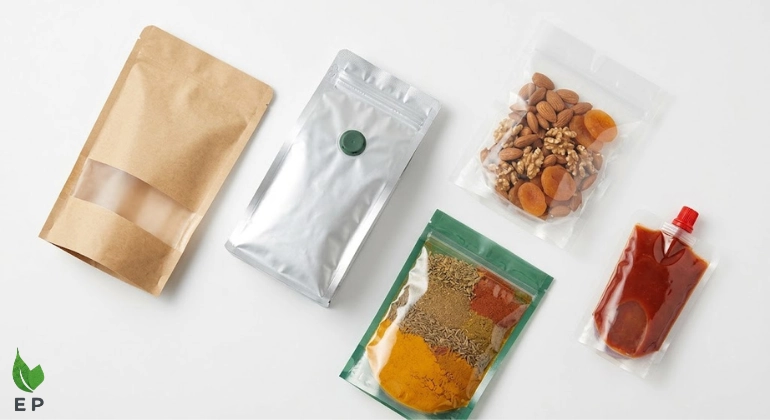
Stand-up pouches are the most versatile option and work well for snacks, powders, and pet food because they sit upright on shelves and offer good shelf presence. Flat bottom or gusseted pouches provide a similar upright stability but with a wider base, which is ideal for bulkier products like coffee beans or granola. Spout pouches are designed for liquids and semi-liquids such as sauces, juices, or baby food, since they allow controlled pouring and resealing. Retort pouches are heat-resistant and commonly used for ready-to-eat meals that need to be sterilized after sealing. Zipper lock pouches add a resealable closure, which is especially valuable for products consumed over multiple sittings, like snacks or tea.
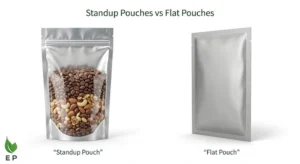
If your product falls somewhere between categories, comparing formats side by side helps clarify the trade-offs. This detailed breakdown of stand-up pouches vs flat pouches is particularly useful if you are torn between the two most common options.
Once you know the format, the next decision is material, and this is where choosing food pouch material correctly can make or break your product’s shelf life. Materials generally fall into a few families: kraft paper based, foil or metallized laminates, fully plastic laminated films, and increasingly, biodegradable or compostable options.
Kraft paper pouches have surged in popularity because they combine a natural, premium look with genuinely decent barrier properties when laminated with an inner layer. They work particularly well for dry snacks, spices, and specialty foods where brand aesthetics matter as much as function. Foil-lined and metallized pouches, on the other hand, offer superior protection against light and oxygen, making them the go-to choice for coffee, tea, and anything sensitive to oxidation. Fully laminated multi-layer films strike a balance between cost and performance and are widely used across the snack food industry. Biodegradable and compostable pouches are gaining traction among brands that want to reduce their plastic footprint without sacrificing shelf stability, though they typically come at a slightly higher cost.
Here’s a quick comparison to make the decision easier:
| Material Type | Best For | Barrier Strength | Sustainability |
|---|---|---|---|
| Kraft paper (laminated) | Snacks, spices, dry goods | Moderate to good | High |
| Foil / metallized film | Coffee, tea, aromatic products | Excellent | Moderate |
| Multi-layer laminate | Powders, general snacks | Good | Low to moderate |
| Biodegradable / compostable | Eco-conscious brands | Moderate | Very high |
If you want a closer look at how kraft-based options perform specifically for Pakistani market conditions, this guide on eco-friendly kraft stand-up pouches breaks it down further, and it pairs well with this comparison of kraft paper bags vs plastic bags if sustainability is a priority for your brand.
Beyond material choice, the specific functional properties of a pouch determine how long your product stays fresh and appealing. This is where terms like moisture barrier, oxygen barrier, and heat sealing come into play, and understanding them prevents costly mistakes later.
A moisture barrier prevents humidity from entering the pouch, which is critical for anything that goes soggy or clumps when exposed to air, such as powdered spices or crackers. An oxygen barrier slows down oxidation, which matters enormously for oily snacks, roasted nuts, and coffee, since oxygen exposure is what causes rancidity and flavor loss over time. Puncture resistance matters for products with sharp edges or heavier weight, like frozen meats or granola with nut clusters, while UV protection becomes relevant for anything stored under direct light for extended periods, such as retail shelf displays.
Heat sealing quality is another often-overlooked factor. A pouch with poor seal integrity might look fine on delivery day but fail after a few weeks of handling, leading to leaks or spoilage complaints. This is one reason why testing actual samples under real storage conditions before committing to a bulk order is always worth the extra time.
Different food categories genuinely need different packaging approaches, and mismatching them is one of the most common mistakes new food brands make. The table below gives a practical starting point based on common product types.
| Product Category | Recommended Pouch Type | Key Priority |
|---|---|---|
| Coffee & Tea | Foil-lined stand-up pouch with valve | Oxygen & aroma barrier |
| Spices & Powders | Kraft laminated pouch with zipper | Moisture barrier |
| Snacks & Nuts | Metallized or laminated stand-up pouch | Oxygen barrier, shelf appeal |
| Pickles & Sauces | Spout pouch or retort pouch | Leak-proof sealing |
| Frozen / Ready Meals | Retort pouch | Heat resistance, durability |
| Bakery & Cookies | Flat bottom gusseted pouch with window | Visual appeal, freshness |
For example, if you are packaging pickles, a purpose-built option like this stand-up pouch for pickle with window is designed specifically to handle both the visual and sealing requirements of that category. Coffee brands often lean toward a black coffee pouch with valve, since the one-way valve releases gas without letting oxygen back in.
No matter how attractive a pouch looks, it needs to meet basic food safety standards before it ever touches your product. This part of the decision is non-negotiable, and skipping it can create serious liability issues down the line.
At minimum, confirm that the inner layer of the pouch is food-grade and safe for direct contact with your specific product type, since acidic foods like pickles or sauces require different inner linings than dry snacks. Look for suppliers who can speak knowledgeably about compliance with FDA-approved materials, and if you are exporting, check whether the packaging meets the specific requirements of your destination market. HACCP-aligned production practices and tamper-evident sealing features add an extra layer of trust for consumers, particularly in categories like baby food or ready-to-eat meals where safety concerns run higher.
It is worth asking your supplier directly about certifications rather than assuming compliance based on price point alone, since this is an area where cutting corners tends to be costly later.
Once the functional side is sorted, design becomes the deciding factor in how your product performs at the point of sale. A well-designed pouch does more marketing work than most people realize, since it is often the first physical touchpoint a customer has with your brand.
Custom printed pouches allow you to control color, typography, and branding elements consistently across your product line, which builds recognition over time. Transparent window pouches are particularly effective for products where visual appeal drives the purchase decision, such as bakery items, dried fruits, or artisanal snacks, since customers like seeing what they are buying. Matte finishes tend to convey a premium, natural feel, while glossy laminates create a more vibrant, high-shelf-impact look that works well for bold, colorful branding.
Small design details like a die-cut handle or a hang hole for retail pegs can also influence how your product is displayed in stores, so it helps to think about the retail environment your product will actually live in, not just how it looks in a product photo. Options like transparent packaging pouches are worth exploring if visual transparency is part of your brand strategy.
Budget realities shape every packaging decision, and understanding the practical side of buying pouches will save you from unpleasant surprises. Costs vary significantly based on material, print complexity, order volume, and supplier location, so it helps to think beyond just the per-unit price.
Minimum order quantities matter a great deal for smaller or newer food brands, since committing to a large MOQ on an untested design can tie up capital unnecessarily. It is often smarter to start with a smaller batch, test market response, and then scale up once you are confident in both the product and the packaging choice. Lead time is another factor that catches many brands off guard, particularly around high-demand seasons, so building in buffer time for reordering avoids stockouts.
Comparing a few suppliers rather than settling on the first quote is generally worth the extra effort, since pricing and quality can vary more than expected across vendors offering seemingly similar products.
Bringing everything together, here is a practical framework you can walk through for any food product you are packaging.
Working through these steps in order, rather than starting with design or price, tends to produce far better long-term results.
If you are exploring flexible packaging for food options in Pakistan, working with a supplier who understands both local market conditions and international quality standards makes a real difference. EcoProduct.pk offers a wide range of formats, from kraft stand-up pouches to specialized options like aluminium clear stand-up pouches and 3-sided seal retort pouches, giving food brands the flexibility to match packaging precisely to their product needs.
Whether you are launching a small-batch spice brand or scaling a coffee roasting business, browsing the full pouch collection alongside supporting resources like this sustainable packaging solutions guide gives you both the product options and the context needed to make a confident choice.
Choosing the right pouch for your food product is not a decision to rush through or delegate entirely to a supplier’s default recommendation. It requires understanding your product’s vulnerabilities, matching them to the right material and format, confirming compliance, and only then layering on design and branding. Brands that take this process seriously tend to see fewer complaints, longer shelf life, and stronger repeat purchases, simply because the packaging quietly does its job without anyone noticing.
If you are ready to move from research to action, explore the full range of food-grade pouches at the EcoProduct.pk shop and request samples for your specific product before committing to a bulk order.
What is the best pouch for food packaging? There is no single best option for every product, since the ideal pouch depends on your product’s sensitivity to moisture, oxygen, and light. Kraft laminated pouches work well for dry snacks, while foil-lined pouches with valves are better suited for coffee and tea.
How do I select a food pouch material? Start by identifying your product’s biggest risk factor, whether that is moisture, oxidation, or physical damage, and choose a material that directly addresses that risk without adding unnecessary cost.
Are biodegradable pouches suitable for all food products? Biodegradable pouches work well for many dry and shelf-stable products, though they may offer slightly lower barrier performance compared to foil or multi-layer laminates, so it is worth testing them against your product’s shelf-life requirements first.
What is the difference between a stand-up pouch and a flat pouch? Stand-up pouches have a gusseted base that allows them to sit upright on shelves, offering better shelf presence, while flat pouches are simpler and often more cost-effective for products that do not need to stand independently.
Do custom printed pouches cost significantly more? Custom printing does add cost, primarily due to plate setup and minimum order requirements, but the branding benefit often outweighs the added expense for products competing on retail shelves.
How do I know if a pouch meets food safety standards? Ask your supplier directly about food-grade certification for the inner lining material and, if relevant, request documentation confirming compliance with standards like FDA approval or HACCP alignment.

Subscribe our newsletter & get notification about information discount.
Subscribe to get special offers, free giveaways, and once-in-a-lifetime deals.