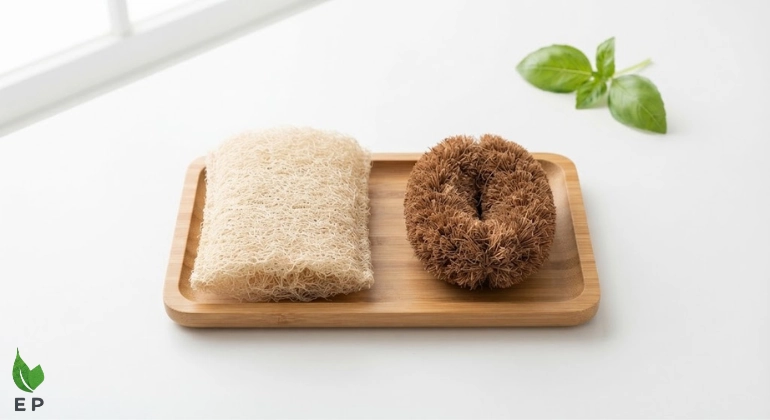
If you’ve ever stood in front of your kitchen sink holding a worn-out plastic sponge, wondering whether it’s doing more harm than good, you’re not alone. The debate around kitchen loofah pads vs dish scrub has become one of the most searched topics among households in Pakistan trying to shift toward greener living. Both tools promise clean dishes without the guilt of contributing to plastic pollution, but they work in very different ways. This guide breaks down everything you need to know — from material composition to durability, hygiene, and environmental impact — so you can confidently choose the right plastic-free cleaning options for your own kitchen.
Switching away from synthetic sponges isn’t just a trend; it’s a practical response to a very real problem. Traditional dish sponges are made from petroleum-based foam that sheds microplastics every time you scrub a pot. Over months of use, these tiny plastic fibers end up in wastewater systems and eventually in rivers and oceans. Natural alternatives like loofah pads and eco-friendly dish scrubs solve this problem at the source, offering biodegradable, compostable solutions that clean just as effectively — sometimes even better.
Kitchen loofah pads are made from the fibrous interior of the loofah plant, a member of the gourd family that grows naturally and requires no synthetic processing. Once harvested and dried, the plant’s inner fibers form a naturally textured, sponge-like material perfect for scrubbing away food residue, grease, and grime. Unlike synthetic sponges, loofah pads are entirely plant-based, which means they decompose fully once their lifespan ends.
What makes loofah pads particularly appealing is their dual functionality. The fibrous texture works well on tough, stuck-on food without scratching non-stick cookware, while still being gentle enough for delicate glassware. Many households now stock their kitchens with dedicated kitchen loofah pads specifically designed for dishwashing, separate from the softer loofahs used in the bathroom.
Beyond dishwashing, loofah fibers are also popular in bath and body care, though kitchen-specific loofah pads are typically firmer and more compact to handle grease-cutting duties. If you’re curious about how these compare structurally to synthetic sponges, our detailed breakdown on natural loofah vs synthetic sponge covers the material science in depth.
An eco-friendly dish scrub typically refers to a scrubbing pad made from natural fibers such as coconut coir, jute, or plant-based cellulose, often combined with a compostable backing. Unlike loofah pads, which come from a single plant source, dish scrubs are usually engineered products — woven or compressed from multiple natural fibers to achieve a specific texture and durability level.
The appeal of a dish scrub lies in its versatility. Coconut coir scrubs, for instance, are known for their rigid, abrasive texture that handles baked-on food and cast iron cookware exceptionally well. Jute-based scrubs tend to be softer and more absorbent, making them suitable for everyday cleaning tasks like wiping counters or washing delicate dishes.
Because dish scrubs are often manufactured with a specific end-use in mind, they tend to offer more consistency in texture and shape compared to raw loofah, which can vary slightly from batch to batch depending on how the plant grew. This makes dish scrubs a favorite among people who prioritize predictable performance in their sustainable kitchen cleaning tools.
Choosing between these two plastic-free options often comes down to your specific cleaning habits and the type of cookware you use most. Here’s a clear comparison to help you decide:
| Feature | Kitchen Loofah Pads | Eco-Friendly Dish Scrub |
|---|---|---|
| Material Source | Dried loofah plant fibers | Coconut coir, jute, or cellulose |
| Texture | Naturally coarse, slightly variable | Consistent, engineered texture |
| Best For | Everyday dishes, glassware, pots | Baked-on grease, cast iron, tough grime |
| Biodegradability | Fully compostable | Fully compostable |
| Lifespan | 3–4 weeks with proper drying | 4–6 weeks depending on fiber type |
| Water Retention | Moderate, dries fairly quickly | Higher, needs good airflow to dry |
As the table shows, both options are biodegradable and free from plastic, but their day-to-day performance differs based on the toughness of the job. If you frequently cook with cast iron or deal with burnt residue, a coir-based dish scrub may serve you better. For lighter, everyday washing, loofah pads offer a gentler and equally effective touch.
The kitchen is one of the most overlooked sources of household plastic waste. Every synthetic sponge you throw away joins millions of others in landfills, where it can take hundreds of years to break down — if it breaks down at all. In the meantime, it continues shedding microplastic particles that infiltrate soil and water systems.
Choosing plastic-free cleaning options isn’t about perfection; it’s about making consistent, small swaps that add up over time. A single household switching from plastic sponges to loofah pads or dish scrubs can prevent dozens of synthetic sponges from entering landfills each year. When you multiply that across thousands of households, the environmental impact becomes significant.
This shift also ties into a broader movement toward mindful living. Many Pakistani households are already exploring easy ways to reduce plastic waste, and kitchen cleaning tools are often one of the simplest places to start. Unlike bigger lifestyle changes, swapping a sponge for a natural fiber alternative requires no extra effort — just a different purchase decision.
Loofah pads bring several advantages that go beyond simply being plastic-free. Their natural fiber structure creates just enough abrasion to lift food particles without damaging non-stick surfaces, glass, or ceramic dishware. This balance of effectiveness and gentleness is difficult to replicate in synthetic materials, which are often either too harsh or too soft.
There’s also a hygiene advantage worth noting. Because loofah fibers are naturally porous and quick-drying, they tend to resist the buildup of bacteria and odor better than dense foam sponges, which trap moisture and become breeding grounds for microbes within days. A few practical benefits stand out clearly:
If you’re new to eco-swaps and unsure where to begin, our guide on natural loofah pad benefits for the kitchen walks through practical use cases in more detail, including tips for sensitive-skin users who also use loofah in personal care routines.
While loofah pads shine in everyday use, dish scrubs earn their place when tougher jobs come up. Coconut coir, in particular, has a naturally rigid structure that holds up well against baked-on grease, burnt rice, or stubborn stains on pots and pans. This durability means a single dish scrub can often outlast a loofah pad by a few extra weeks, depending on usage frequency.
Another advantage lies in shape and grip. Dish scrubs are typically molded into compact, easy-to-hold shapes that fit comfortably in the palm, making extended scrubbing sessions less tiring on the hand. For households that do a lot of cooking — think daily curries, fried food, or baking — this ergonomic edge can make a noticeable difference in comfort during cleanup.
Many users find that keeping both a loofah pad and a dish scrub on hand covers every scenario: the loofah for daily dishes and glassware, the scrub for pots that need a little extra muscle. This combination approach has become increasingly popular among readers exploring sustainable kitchen swaps for beginners.
Deciding between loofah pads and dish scrubs ultimately depends on three factors: the type of cookware you own, how often you cook, and how much time you’re willing to spend on maintenance. Non-stick pans and delicate glassware pair well with the gentler texture of loofah, while cast iron, steel pots, and baking trays often benefit from the firmer grip of a coir-based scrub.
Maintenance habits matter just as much as material choice. Both loofah pads and dish scrubs need to dry fully between uses to prevent mold growth and extend their lifespan. A simple habit of hanging your scrubber over the sink edge or on a small hook after each use can double its usable life. Rinsing thoroughly and occasionally soaking in a vinegar solution also helps eliminate lingering odors from either material.
For households just starting their eco-journey, it often makes sense to try both options side by side for a month. This hands-on comparison gives you a real sense of which texture suits your washing style, rather than relying solely on written descriptions. Our broader resource on best plastic-free kitchen products can help you build a complete zero-waste kitchen setup beyond just the scrubbing tool.
Switching your scrubbing tool is a great first step, but pairing it with a few smart habits amplifies the environmental benefit significantly. Using a solid dish soap bar instead of liquid soap in plastic bottles, for example, complements your new plastic-free scrubber perfectly and reduces packaging waste at the same time.
Storage also plays a role in extending the life of natural fiber tools. Keeping your loofah pad or dish scrub away from constant direct water exposure — such as sitting in a pool of dish soap residue — helps prevent premature breakdown of the fibers. A simple drying rack or a small ventilated holder near the sink makes a noticeable difference in longevity.
Here are a few quick habits worth adopting:
These small routines, combined with the right tool choice, create a genuinely sustainable cleaning cycle rather than just a one-time swap.
Loofah pads and dish scrubs are an excellent starting point, but a truly plastic-free kitchen involves rethinking several everyday tools at once. Wooden dish brushes with replaceable heads, compostable cleaning cloths, and reusable produce bags all work together to reduce your household’s plastic footprint significantly.
Many readers who start with scrubbers eventually move on to other eco-friendly kitchen tools, discovering that the transition feels far less overwhelming once the first swap is made. If you’re planning to overhaul your kitchen setup entirely, our comprehensive sustainable living guide for Pakistan offers a room-by-room breakdown of practical, budget-friendly swaps.
It’s worth remembering that sustainability isn’t an all-or-nothing commitment. Even switching just your dishwashing sponge to a natural alternative puts you meaningfully ahead of where most households currently stand — and that’s genuinely worth celebrating.
There isn’t a single universal winner in the kitchen loofah pads vs dish scrub debate — both are excellent, biodegradable alternatives to plastic sponges, and the right choice depends entirely on your kitchen habits. If your daily routine involves mostly light dishwashing and glassware, loofah pads offer a gentle, effective, and naturally hygienic solution. If you regularly tackle greasy pots, cast iron pans, or baked-on residue, a coconut coir dish scrub will likely serve you better with its firmer texture and longer-lasting grip.
The good news is that you don’t have to choose just one. Many eco-conscious households in Pakistan keep both tools on hand, using each for the job it handles best. What matters most is that you’ve made the decision to move away from plastic sponges altogether — a small change with a genuinely meaningful environmental impact.
Ready to make the switch? Explore our full range of plastic-free cleaning options, including natural loofah pads and eco-friendly dish scrubs, and take the first step toward a genuinely sustainable kitchen today.
Is a loofah pad better than a dish scrub for daily dishwashing? For everyday dishes and glassware, loofah pads are generally gentler and dry faster, making them ideal for daily use. Dish scrubs work better for tougher, greasy cookware.
How long do plastic-free kitchen scrubbers last? On average, loofah pads last 3–4 weeks and coconut coir dish scrubs last 4–6 weeks, depending on usage frequency and drying habits.
Are kitchen loofah pads hygienic compared to plastic sponges? Yes, loofah fibers dry faster and resist bacterial buildup better than dense foam sponges, which trap moisture and odor.
Can I compost my used dish scrub or loofah pad? Absolutely. Both materials are fully biodegradable and can be added to a home compost bin once they’ve reached the end of their usable life.
What’s the most durable plastic-free dish scrubbing option? Coconut coir-based dish scrubs are typically the most durable option for tough, baked-on food and heavy-duty pots and pans.

Subscribe our newsletter & get notification about information discount.
Subscribe to get special offers, free giveaways, and once-in-a-lifetime deals.