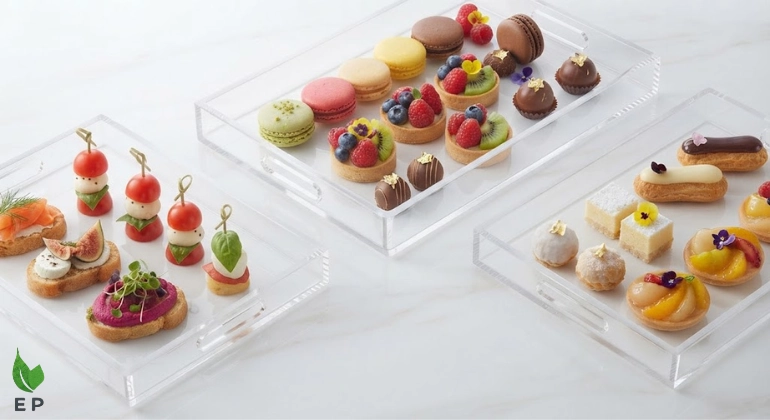
If you’ve ever walked into a restaurant and instantly felt impressed before even tasting the food, chances are the presentation did most of the talking. That’s exactly why more restaurants, cafés, and catering businesses across Pakistan are switching to acrylic trays for restaurant presentation — a small change that creates a surprisingly big impact on how customers perceive quality, hygiene, and overall dining experience. These trays aren’t just another kitchen accessory; they’re becoming a quiet but powerful branding tool for businesses that want to stand out without overspending.
In this guide, we’ll walk through why acrylic has become the go-to material for serious food presentation, what makes it different from glass, steel, or plastic, and how you can pick the right tray for your specific restaurant setup. By the end, you’ll understand exactly why this simple switch is winning over restaurant owners, event planners, and bakery brands alike.
Food presentation has quietly become one of the biggest factors influencing customer satisfaction — sometimes even more than taste itself, at least in that crucial first impression. In an era where almost every meal gets photographed before it’s eaten, the way a dish is displayed directly affects how it’s perceived, shared, and remembered.
This shift has pushed restaurant owners to rethink their restaurant tableware choices. Traditional serving trays made of steel or ceramic often feel outdated or heavy for modern, minimalist dining aesthetics. Customers today associate cleanliness, sophistication, and freshness with sleek, transparent surfaces — which is precisely where acrylic trays step in. They offer that polished, boutique-style look without requiring an expensive interior redesign.
Beyond aesthetics, presentation also plays a functional role. A well-organized buffet or dessert counter using acrylic display trays helps customers make faster decisions, reduces food handling, and keeps the serving area looking fresh throughout service hours — something traditional materials struggle to maintain consistently.
Acrylic is essentially a lightweight, shatter-resistant alternative to glass, engineered specifically to handle the demands of commercial food environments. Understanding its material properties helps explain why it has become such a popular choice in professional kitchens and dining spaces.
Unlike glass, acrylic doesn’t crack under sudden temperature changes or accidental drops, making it far more practical for busy restaurant environments where trays are constantly moved, stacked, and reused. Compared to plastic, acrylic has a noticeably more premium finish — it doesn’t scratch as easily, doesn’t discolor with repeated washing, and maintains that crystal-clear shine that instantly elevates food display.
Steel trays, while durable, tend to hide the visual appeal of food rather than highlight it. Acrylic does the opposite — its transparency lets the food itself become the centerpiece, which is exactly why transparent serving trays are now a staple in buffets, bakeries, and fine-dining setups alike.
This is where acrylic really earns its reputation. Let’s break down the specific advantages that make it worth the switch.
Restaurants are demanding environments — trays get dropped, stacked, washed repeatedly, and moved between stations dozens of times a day. Durable serving trays need to survive that without cracking, warping, or losing their shine, and acrylic handles this remarkably well. Its scratch-resistant surface means it continues looking presentable even after months of heavy use, saving restaurants from the constant cost of replacing worn-out trays.
Food safety inspectors and health-conscious customers both care deeply about cleanliness, and acrylic makes that job easier. Its non-porous surface doesn’t absorb odors, oils, or bacteria the way some plastics or wooden trays do. This makes hygienic serving solutions far simpler to maintain, especially in high-turnover buffet setups where trays are refilled multiple times per shift.
There’s a reason high-end bakeries and dessert counters lean heavily on acrylic — it creates an elegant food display without requiring expensive tableware. The clear, glass-like finish makes even simple dishes look curated and intentional, which directly influences how customers rate their overall experience.
Unlike heavy glass or steel alternatives, acrylic trays are impressively light while still holding their shape under weight. This lightweight acrylic material advantage makes a real difference for waitstaff who are constantly carrying trays across busy dining floors — less strain, faster service, fewer accidents.
While the upfront cost might be slightly higher than basic plastic, acrylic’s durability means restaurants replace trays far less frequently. When you calculate the benefits of acrylic trays over a full year of daily use, the long-term savings become obvious — fewer replacements, less breakage, and consistently professional presentation.
A few additional advantages worth noting:
The versatility of acrylic trays is honestly one of their biggest selling points — they adapt naturally to almost any dining format.
In fine-dining restaurants, acrylic trays are often used to serve appetizers or desserts with a refined, minimalist aesthetic that complements upscale interior design. Cafés and bakeries frequently rely on acrylic serving trays for restaurants to showcase pastries, cakes, and sandwiches behind display counters, where visibility and cleanliness matter most. If you’re setting up a bakery counter, pairing your display with the right containers — like a clear acrylic box with lid — creates a cohesive, professional look across your entire presentation station.
Catering businesses, meanwhile, use these trays extensively for buffet-style events, where catering presentation tools need to be both practical and visually appealing across long service hours. And for restaurants managing bakery-specific displays, understanding how to choose the right acrylic box for bakery products often goes hand-in-hand with selecting the right serving trays, since both contribute to the same overall visual language on the counter.
Even quick-service restaurants and takeaway counters benefit from acrylic — its lightweight, stackable design makes it ideal for acrylic trays for food service where speed and hygiene both matter.
To put things in perspective, here’s how acrylic stacks up against the materials restaurants have traditionally relied on.
| Feature | Acrylic Trays | Glass Trays | Plastic Trays | Steel Trays |
|---|---|---|---|---|
| Durability | High — resists cracking | Fragile, breaks easily | Moderate, scratches fast | Very high but heavy |
| Visual Appeal | Elegant, transparent | Elegant but heavy | Basic, often dull | Industrial look |
| Weight | Lightweight | Heavy | Lightweight | Heavy |
| Hygiene | Easy to clean, non-porous | Easy to clean | Absorbs odors over time | Easy to clean |
| Cost Over Time | Cost-effective long-term | Expensive due to breakage | Cheap but frequent replacement | High upfront cost |
As the table shows, acrylic manages to combine the elegance of glass with the practicality of plastic — without carrying the downsides of either. That balance is exactly why it’s become the preferred choice for restaurants aiming for both restaurant aesthetics and operational efficiency at the same time.
Selecting the right tray isn’t just about picking whatever looks nice online — it depends on how your restaurant actually operates day to day.
Start by considering the type of food you’re presenting most often. Bakeries and dessert counters usually benefit from round or compact tray shapes, similar to what you’ll find in our acrylic round tray collection, which pairs beautifully with cakes, pastries, and individual desserts. Buffet-style restaurants, on the other hand, typically need larger, flatter trays that can hold multiple serving dishes without overcrowding the display.
Thickness matters too — thicker acrylic trays handle heavier dishes and daily wear far better than thinner budget options, especially in high-traffic environments. If you’re unsure how acrylic compares to other packaging materials you might already be using in your kitchen, our detailed breakdown on acrylic boxes vs plastic boxes offers useful context that applies directly to trays as well.
Finally, think about your restaurant’s overall branding. Since acrylic trays are transparent, they tend to complement almost any color scheme or restaurant interior design, making them a safe, versatile investment regardless of your existing decor.
Since acrylic trays are reused for years rather than discarded after a few uses, they align naturally with eco-friendly serving trays trends that more restaurants are adopting as part of their broader sustainability goals. Fewer replacements mean less waste heading to landfills, and because acrylic doesn’t degrade quickly under normal kitchen use, restaurants get far more value out of each purchase compared to disposable serving options.
This ties directly into a growing shift within the hospitality industry trends landscape, where customers increasingly notice and appreciate businesses that make conscious material choices — even in small details like serving trays. It’s a subtle but effective form of restaurant branding through tableware, one that communicates care and quality without saying a word. If you’re exploring more sustainable options for your food service setup, our full acrylic box collection is a great place to see how these materials work across different use cases.
Are acrylic trays safe for serving food directly? Yes, food-grade acrylic trays are completely safe for direct food contact and are widely used across restaurants, bakeries, and catering setups without any health concerns.
Do acrylic trays scratch easily like regular plastic? No — quality acrylic trays are noticeably more scratch-resistant than standard plastic, which is why they maintain their clear, polished look even after months of daily use.
Can acrylic trays handle hot food items? Acrylic trays work best with warm to room-temperature food. For extremely hot dishes straight off the stove, it’s better to let food cool slightly before placing it on acrylic to preserve the tray’s finish over time.
How do acrylic trays compare cost-wise to glass trays? While initial costs can be similar, acrylic trays typically save money long-term since they don’t shatter or chip like glass, reducing replacement frequency significantly.
What’s the best way to clean acrylic serving trays? A soft cloth with mild soap and warm water works perfectly. Avoid abrasive scrubbers, as they can dull the glossy surface over time.
At the end of the day, the benefits of acrylic trays go far beyond just looking good on Instagram. They offer real, measurable advantages — durability that saves money, hygiene that protects your reputation, and aesthetics that elevate every dish that leaves your kitchen. For restaurants trying to stand out in an increasingly competitive dining scene, this is one of those upgrades that pays for itself many times over.
If you’re ready to bring that same polished, professional presentation to your own restaurant, café, or bakery counter, browse our full range of acrylic serving solutions and see which style fits your space best. Small changes like this often make the biggest difference in how customers remember their experience.

Subscribe our newsletter & get notification about information discount.
Subscribe to get special offers, free giveaways, and once-in-a-lifetime deals.