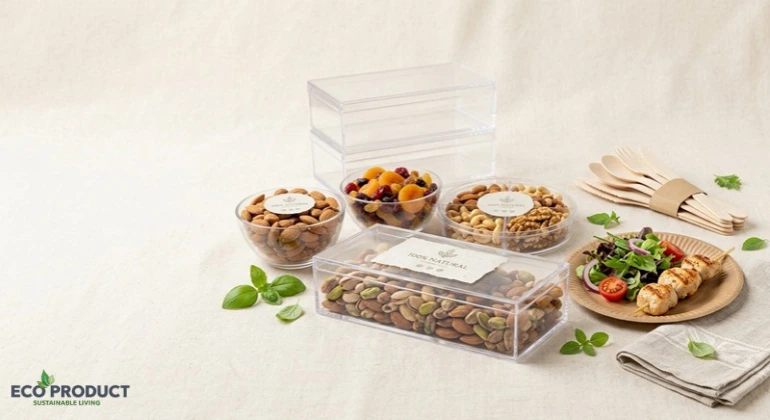
Picture a sunny weekend BBQ. The grill smells great, guests are laughing, and then someone’s plastic fork snaps in a piece of grilled chicken. It is a small moment, but it shows how much the right cutlery matters. Disposable wooden cutlery gives you a sturdier, more natural alternative. It looks good on a picnic table, feels pleasant in the hand and leaves out single-use plastic.
This guide is built for people who actually host: families planning a picnic, caterers handling a wedding, cafés running a pop-up stall and companies organising a team outing. We cover how wooden cutlery works, which events suit it best, how to plan quantities, what to check before buying and how to dispose of it properly.
Disposable wooden cutlery means single-use spoons, forks and knives made from natural wood, often birchwood. They are designed for one meal and then thrown away, much like plastic cutlery, but the material is wood instead of plastic.
Birchwood is popular because it has a fine, pale grain and a smooth finish. A good wooden spoon, fork or knife feels solid, and it does not bend under a normal serving of rice, salad or grilled meat. The natural look also suits outdoor settings, where plastic can feel out of place.
Our own range includes the birchwood wooden spoon, the eco-friendly wooden fork and the birchwood wooden knife. You can see them together in the birchwood cutlery category.
Outdoor events are tougher on tableware than indoor ones. There is wind, heat, uneven tables, standing guests and food that gets eaten on laps. Wooden cutlery handles those conditions well, for a few simple reasons.
Wood is stiffer than most thin plastic cutlery. A wooden fork can lift a piece of kebab or a chunk of fruit without flexing. Guests notice that quickly, and they stop reaching for a second fork “just in case”.
Natural wood fits picnics, garden parties, camping trips and rustic weddings. It pairs well with kraft paper bags, paper cups and simple table settings. The overall look feels intentional, not temporary.
Outdoor events create a lot of litter, and plastic cutlery is one of the most common items left behind. Choosing wood is a practical way to reduce single-use plastic at your event. For more everyday ideas, see our guide to 9 easy ways to reduce your plastic waste.
Wood does not soften or warp the way thin plastic can in warm conditions. Still, check the specifics of the product you buy, because thickness and finish vary.
Different events have different needs. Here is how wooden cutlery fits the most common ones.
BBQ food is heavy, juicy and sometimes tough. You need a fork that does not bend and a knife that can slice a soft cut. Wooden cutlery works well for grilled chicken pieces, kebabs, salads and rice. For very tough cuts, serve pre-sliced meat so guests are not sawing at it. Our 14 August BBQ and outdoor party kit shows how to pair cutlery with cups and straws for a complete setup.
For picnics, simplicity wins. Pack a bundle of wooden spoons and forks, a few knives, paper plates and a small bag for rubbish. Wooden sets are light, stack neatly and do not rattle like metal. For camping, they also burn or compost more easily than plastic if you can use proper facilities, but check what your campsite allows.
At weddings, presentation matters. A neat bundle of wooden cutlery on each plate or buffet table looks elegant and tidy. Caterers like it because it is quick to hand out and consistent across hundreds of guests. Our post on bamboo cutlery sets for events covers more event-planning ideas.
For stalls and pop-ups, speed counts. Wooden spoons and forks are easy to hand over with a cup or plate, and they make a modest stall look more polished. They also help you show customers that you care about reducing plastic.
Company picnics, launch events and staff lunches often want an eco-conscious look. Wooden cutlery sends that message without extra effort or explanation. Pair it with double wall coffee cups for a consistent, tidy setup.
Before you buy, it helps to compare the common choices for outdoor events.
| Feature | Disposable Wooden | Disposable Plastic | Reusable Steel / Bamboo |
|---|---|---|---|
| Strength | Sturdy for most meals | Can bend or snap | Very strong |
| Look | Natural, premium | Basic, utilitarian | Premium, durable |
| Single-use waste | Disposable, no plastic | Adds to plastic waste | Reused many times |
| Best for | BBQs, picnics, weddings, stalls | Low-budget bulk use | Personal use, small groups |
| Cleanup | Throw away after use | Throw away after use | Needs washing |
Wooden cutlery sits in the middle. It gives you the convenience of disposable cutlery with a more natural look and feel. For events where washing is not practical, it is hard to beat.
If you want a deeper comparison, read our wooden spoon vs plastic spoon eco-friendly comparison and our guide on why birchwood cutlery is a strong alternative to plastic. For personal everyday use, a reusable bamboo cutlery set or a stainless steel cutlery set may suit you better than disposable.
Running out of cutlery mid-event is stressful. Running out of space to store a giant surplus is annoying too. A little planning solves both.
A simple rule of thumb is to plan at least one set per guest, per course, then add a buffer. A buffer of roughly 20 to 30 percent is a common planning habit, because cutlery gets dropped, used twice by mistake or taken for snacks. This is a planning suggestion, not a fixed rule, so adjust it to your event.
Think about what you are serving too. A rice-and-curry buffet needs mostly spoons and forks. A BBQ with grilled meat needs more forks and some knives. A dessert table needs small spoons. Match the cutlery mix to the menu, not just the headcount.
| Event Type | Likely Cutlery Mix |
|---|---|
| BBQ party | More forks and knives, fewer spoons |
| Picnic | Even mix of spoons and forks |
| Wedding buffet | Spoons and forks, a few knives, dessert spoons |
| Food stall | Mostly spoons and forks |
| Tea or coffee event | Wooden stirrers and small spoons |
For hot drinks, you can add disposable wooden coffee stirrers or natural wooden stir sticks to the order.
Not all wooden cutlery is the same. A few quick checks save you from disappointment on the day.
Splinters are a common worry. Good wooden cutlery should be smooth, but it is wise to inspect a few pieces from a sample pack. If you notice rough spots, set those aside. Treat any claim of “splinter-free” or “heat resistant” as something to verify with the supplier and with your own test.
This is the most common question from event hosts, and the honest answer is: usually yes, within reason.
Wood handles warm food such as rice, curry, pasta and grilled items comfortably. It does not melt, so it will not get soft the way thin plastic can. For very hot soups or boiling liquids, test one piece first, because thin or low-quality wood may feel hot in the hand.
For heavy foods, think about the shape. A wooden fork is great for salads, rice and soft meat. A wooden knife works well on soft items such as cake, cheese, fruit and cooked chicken. It is not designed to cut through tough, thick steaks. For those, either pre-cut the meat in the kitchen or provide metal knives for the serving table.
Disposal is where many hosts get confused, so it is worth being clear.
Wooden cutlery is made from a natural material, so many people look for compost options. However, whether it can be composted depends on the product, any coatings and the facilities you have. Do not assume that every wooden item is compostable. Ask your supplier whether the cutlery is untreated and what disposal route they recommend.
In practice, the simplest approach is a clearly labelled bin at your event, so guests do not leave cutlery on the grass. If you have access to a home compost heap or a municipal composting facility, clean, untreated wooden cutlery with no food-heavy residue may be suitable for it. Otherwise, regular waste disposal is the practical choice.
The real environmental win is reducing the plastic you would otherwise use. For more ideas, read our 10 easy zero waste swaps in Pakistan and our sustainable living guide.
Be careful with labels such as “biodegradable” and “compostable”. Use them only if you can back them up, and prefer honest wording such as “plastic-free wooden cutlery”.
Cutlery is one part of the table. A matching setup makes the event feel organised and reduces the number of different items you need to source.
For hot drinks, consider double wall coffee cups and a kraft 4-cup drink carrier or 2-cup carrier for easy serving. If you are hosting a café-style event, our post on the right coffee cup size for a café helps you pick sizes.
For takeaway portions, aluminium foil trays keep hot food contained and easy to carry. Kraft paper bags are useful for handing out packed meals or goodie bags.
If you run a café or restaurant and serve at outdoor spots, our guide on 14 August specials with eco-friendly cups and cutlery shows how to adapt a seasonal menu. You can browse the full Eco Product shop to compare items in one place.
A few simple habits keep your cutlery clean and in good shape.
Store wooden cutlery in a dry place, away from moisture, direct sun and strong smells. Wood can absorb odours, so keep it away from detergents, spices and cooking oil. Keep it in its original sealed packaging until you need it, or move it to a clean, covered container.
On the day, hand out cutlery from a clean, covered container or pre-wrapped bundles. A small napkin and a spoon-and-fork pair rolled together looks tidy and helps with hygiene. Avoid leaving open bundles in dusty or windy spots, since they can pick up dirt.
Most event problems come from the same few habits. This table pairs each mistake with a fix.
| Mistake | What Happens | Better Practice |
|---|---|---|
| Ordering exactly one per guest | Runs out mid-event | Add a buffer |
| Buying only forks | Not enough spoons or knives | Match cutlery to the menu |
| Skipping a sample | Rough finish, poor quality | Check a small pack first |
| Expecting a knife to cut tough meat | Frustrated guests | Pre-cut or add metal knives |
| Storing in a damp place | Smell or mould risk | Keep dry and covered |
| Claiming “compostable” without proof | Loss of trust | Use accurate wording |
Avoiding even two or three of these will make your event run more smoothly.
Disposable wooden cutlery is a practical, good-looking choice for outdoor events. It is sturdy enough for most meals, suits BBQs, picnics, weddings and food stalls, and avoids the plastic that usually piles up at gatherings. The key is to plan well: match the cutlery mix to your menu, add a sensible buffer, check the finish before buying and dispose of it responsibly.
Start with a small sample pack, test it with the food you plan to serve and then order for your event. A little preparation turns a simple fork and spoon into a detail guests actually notice.
Ready to plan your next outdoor event? Browse the birchwood cutlery collection at Eco Product, pick the spoons, forks and knives you need, and confirm quantities and specifications with the team before placing a bulk order.
It is single-use cutlery, such as spoons, forks and knives, made from natural wood like birchwood. It is designed for one meal and offers a plastic-free alternative.
It is sturdy, looks natural and avoids single-use plastic. It suits BBQs, picnics, weddings and food stalls where guests eat on the go.
For many events, yes. It is usually stiffer and looks more premium, and it avoids plastic. Quality varies, so check the finish and thickness before buying.
It reduces the use of single-use plastic, which is a clear benefit. Its overall impact depends on sourcing, processing and how you dispose of it.
Wood is a natural material, but biodegradability depends on the product and any coating. Ask your supplier to confirm before using that word.
Cutlery made for food use is intended for that purpose. Ask your supplier to confirm food-contact suitability for the specific product.
Generally yes for warm foods such as rice, curry and pasta. Test a piece with very hot items first, since thickness and quality vary.
Good-quality wooden cutlery should have a smooth finish. Inspect a sample, and set aside any pieces with rough edges.
It works well for soft or pre-cut meat. For tough, thick cuts, slice the meat in advance or provide a sturdier knife.
Use a clearly labelled bin at your event. If you have composting access and the cutlery is untreated, composting may be an option. Check with your supplier.
It depends on the product and the composting facility. Do not assume all wooden items are compostable, and confirm details with your supplier.
Sturdy wooden forks and spoons, with a few knives, work well. Match the mix to your menu, and add a buffer for extras.
Wooden cutlery gives a neat, natural look and is easy to hand out in bulk. Choose a smooth finish and plan for enough spoons, forks and dessert spoons.
A common rule is one set per guest per course, plus a buffer of roughly 20 to 30 percent. Adjust for your menu and event length.
Eco Product lists birchwood spoons, forks and knives in its cutlery category. Confirm availability, pack sizes and bulk terms with the team.
Disposable wooden cutlery suits events. Reusable bamboo or stainless steel sets suit personal and regular use.

Author at Eco Product — passionate about sustainable living and eco-friendly products.

Subscribe our newsletter & get notification about information discount.
Subscribe to get special offers, free giveaways, and once-in-a-lifetime deals.