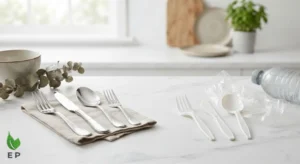
Picture a busy lunch hour. Orders pile up, riders wait at the door, and every bag leaving your kitchen holds a plastic fork, a plastic knife and a thin plastic spoon. Multiply that by a few hundred orders a day. By the end of the month, your restaurant has handed out thousands of items that customers use for ten minutes and the planet keeps for centuries.
That is exactly why biodegradable cutlery for restaurants has moved from a “nice idea” to a serious business decision. Owners are not switching only because it feels good. They are switching because customers notice, regulations are tightening, and the cost gap is smaller than most people expect.
In this guide, we unpack why restaurants and cafes are making the change, what the cutlery is made of, how it performs with hot food, what it costs, and how to switch without disrupting your kitchen. Let’s start with the big picture.
No single trend explains this shift. Several pressures arrive at the same time, and together they make plastic cutlery harder to defend.
Diners today read packaging the way they read menus. A plastic fork in a takeaway bag sends a quiet message, and so does a smooth wooden one. Younger customers in particular notice and talk about it, especially on social media. A restaurant that offers eco-friendly dining earns goodwill without saying a word.
Think about customer perception of sustainability this way. Your food may be excellent, but the last thing a customer touches is often the cutlery. If it feels flimsy and disposable, the whole meal can feel less special.
Governments across South Asia and the world are restricting single-use plastics. Rules differ by city and province, and they change often, so always verify the current requirements with your local authority. The direction, though, is clear. Restaurants that switch early avoid last-minute scrambles and stay ahead of any single-use plastic ban.
A small switch can shape how people see your whole brand. Restaurants that use natural wood cutlery, paper cups and kraft packaging look consistent and thoughtful. That consistency builds trust, and trust builds repeat orders. Brand image and loyalty rarely come from one big gesture. They grow from many small, visible choices.
Plastic cutlery is lightweight, so it blows into drains, streets and waterways easily. Because most of it is too small and dirty to recycle, it usually ends up in landfill or the environment. Owners see the bins overflow and ask a simple question: is there a better option? There is, and it is already on the market.
If you want a broader view of how everyday swaps cut waste, our guide on 9 easy ways to reduce your plastic waste is a useful companion.
Let’s clear up the basics. Biodegradable cutlery is designed to break down naturally through the action of microorganisms. It usually comes from plant-based materials rather than petroleum.
The most common options for restaurants include:
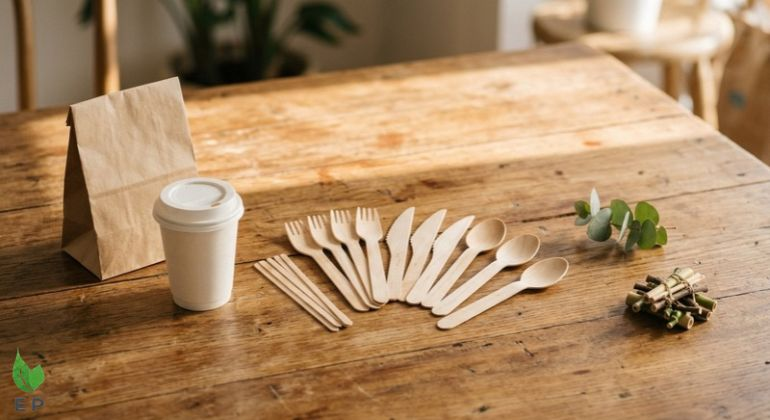
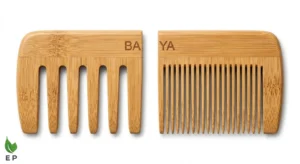
Wood and bamboo are the favourites for disposable wooden cutlery because they feel solid in the hand and look premium. If you want to understand why bamboo is such a popular raw material, read why bamboo is the most sustainable material on earth.
These two words are often mixed up, so here is a plain explanation.
Biodegradable means a product will eventually break down into natural elements. It does not promise a specific timeframe. Compostable is a stricter claim. It means the item breaks down within a set period under composting conditions, and leaves no harmful residue.
Why does this matter to you? Because honest claims protect your reputation. Plain wooden and bamboo cutlery without plastic coatings is generally the safest choice. If a supplier says “compostable,” ask for the exact material details before repeating the claim to your customers.
Let’s put the two options side by side. The table below gives a quick view before we go deeper into each point.
| Factor | Biodegradable (Wood / Bamboo) | Plastic Cutlery |
|---|---|---|
| Material | Renewable plant fibre | Petroleum-based plastic |
| Breakdown time | Months to a few years | Hundreds of years |
| Feel and look | Natural, premium | Thin, disposable |
| Heat tolerance | Good with hot food | Can bend or soften |
| Cost per piece | Slightly higher | Lower |
| Customer perception | Positive, eco-conscious | Increasingly negative |
| Regulatory risk | Low | Rising |
Plastic wins on price per piece. Biodegradable options win on almost everything else, and the price gap shrinks when you buy in bulk. For a closer look at a single item, our comparison of wooden spoons vs plastic spoons walks through feel, strength and impact.
This is the number one concern for restaurant owners, and it deserves a straight answer.
Quality wooden and bamboo cutlery handles hot food very well. Birchwood is naturally rigid, so it does not bend under a heavy portion of biryani or pasta. It also does not melt, which is a real problem with cheap plastic forks near hot gravy. Many owners are surprised to find that wooden forks feel sturdier than the plastic ones they replaced.
There are a few practical limits to keep in mind:
A practical example: a busy grill restaurant in Lahore switched from plastic to wooden forks and knives for its takeaway meals. Complaints about bent forks disappeared within weeks, and customers began commenting on how “proper” the cutlery felt. The restaurant had expected resistance. It got compliments instead.
Quality matters here. Our article on why birchwood cutlery is the best alternative to plastic explains why birchwood tends to perform best for restaurants.
Both materials are good choices. They simply suit different needs.
Birchwood has a smooth, light finish and almost no taste. It feels refined, so it suits cafes, bakeries and restaurants that want a clean look. It is also easy to produce in consistent, uniform shapes.
Bamboo has a more rustic, textured look and is very strong. It suits casual eateries, BBQ spots and outdoor events where a natural feel is part of the charm.
Neither is “better” in every case. Choose birchwood for a premium, neutral presentation, and bamboo for a natural, earthy brand. If you cater events, our post on bamboo cutlery sets for events explains how bamboo works at scale.
You can explore the full birchwood cutlery range, including the birchwood wooden knife, the eco-friendly wooden fork and the birchwood wooden spoon.
Safety comes first in any kitchen, so let’s be clear.
Good-quality wooden cutlery is made for single-use food contact. Reputable suppliers use smooth, untreated or food-safe finished wood with no harmful coatings. It should be free of splinters, strong odours and visible defects. Always ask your supplier about food-safety standards, and inspect samples before placing a large order.
Because the cutlery is single-use, there is no cross-contamination from previous diners, and no risk of mould from improper washing. Store it in a dry, covered place and keep it sealed until service. These simple habits keep it hygienic and strong.
Yes, biodegradable cutlery usually costs more per piece than basic plastic. But looking only at unit price misses the bigger picture.
Consider the full equation. Customers who value sustainability often order more from brands they trust. Better-looking packaging supports better pricing. And in markets where plastic is restricted, switching later can cost far more in rushed orders and lost time.
Bulk buying changes the maths significantly. Buying in larger quantities lowers the price per piece, and a single consistent supplier avoids mismatched sizes and quality. Many restaurants also reduce waste by giving cutlery only when customers ask for it, which cuts total usage and offsets the higher unit cost.
Here is a simple way to think about it:
For most restaurants, the monthly difference is small compared with the goodwill it creates. If you are unsure where to start, you can browse bulk-friendly options in the shop.
Takeaway is where plastic cutlery piles up fastest, so it is also where the switch makes the biggest difference. A complete eco-friendly takeaway setup goes beyond the fork.
Pair your wooden cutlery with paper cups, kraft bags and recyclable containers so the whole order feels consistent. A customer who opens a bag and finds natural materials throughout understands your values immediately. Our guide on kraft paper bags vs plastic bags and the environment explains why paper carry bags are worth the switch, and our overview of sustainable packaging solutions in Pakistan covers more options for growing food businesses.
For cafes, drinks are part of the same story. Wooden stirrers and paper cups replace plastic ones neatly. You can choose disposable wooden coffee stirrers or natural wooden stir sticks, then pair them with eco-friendly coffee cups. If you are comparing cup styles, read double wall vs single wall coffee cups and how to choose the right coffee cup size for your cafe. For group orders, a kraft 4-cup drink carrier completes the setup.
Our broader eco-friendly packaging products guide shows how to match every part of your order into one coherent look.
Catering is another area where the switch pays off quickly. Weddings, corporate lunches and family gatherings generate huge amounts of single-use waste in a few hours. A caterer who offers wooden cutlery and paper serveware stands out immediately from competitors who still use plastic.
Seasonal events create extra opportunities. For example, our post on 14 August specials for eco-friendly cups and cutlery for restaurants and cafes shows how restaurants can build campaigns around national days, and the 14 August BBQ and outdoor party kit offers a ready-made idea for outdoor events.
If your restaurant also sells reusable options to regular customers, a reusable bamboo cutlery set makes a great add-on at the counter, and our guide on why to carry bamboo cutlery everywhere gives you simple messaging to share.
A smooth switch needs a plan, not a leap. Follow these steps to avoid wasted stock and confused staff.
Count the cutlery, stirrers, straws and cups you hand out in a typical week. This tells you how much to order and where plastic is hiding.
Test a small batch of forks, knives and spoons with your actual menu. Try them with your hottest, saucy and heaviest dishes. Look at strength, finish and feel.
Takeaway and delivery use the most single-use items, so begin there. Dine-in service can switch to reusable steel cutlery later, and our comparison of stainless steel cutlery vs plastic helps you plan that stage.
Explain the “why” to your staff. Staff who understand the change will explain it to customers naturally, which turns a packaging update into a story.
Add a small note on your menu, bag sticker or social media. Something simple like “Our cutlery is wooden and plastic-free” is enough. Customers love to share good news about brands they like.
After a month, review costs, complaints and feedback. Adjust your order quantities and consider “cutlery on request” to reduce waste even more.
If you are still choosing, this table helps you match your restaurant type to the right approach.
| Restaurant Type | Best Cutlery Choice | Why It Fits |
|---|---|---|
| Fast food and takeaway | Birchwood forks, knives, spoons | Strong, affordable in bulk |
| Cafe and bakery | Birchwood spoons, wooden stirrers | Clean, premium look |
| BBQ and casual dining | Bamboo cutlery | Rustic, sturdy feel |
| Caterers and event planners | Bulk wooden cutlery sets | Consistent supply, eco image |
| Dine-in restaurants | Reusable steel plus wooden for takeaway | Lower long-term waste |
The pattern is simple. Match the material to your brand, buy in bulk once you are sure, and keep your supplier consistent.
Even well-meaning restaurants make avoidable errors. Watch out for these.
Buying the cheapest option. Very thin cutlery can splinter or snap, which creates complaints. Quality is worth a slightly higher price.
Over-claiming. Do not call cutlery “compostable” or “100% eco” unless your supplier can prove it. Honest, specific claims build trust.
Switching only one item. If you use wooden cutlery but plastic bags and cups, the message feels inconsistent. Aim for a coherent set.
Forgetting storage. Damp storage weakens wooden items. Keep them dry and covered.
Skipping the story. Customers cannot appreciate a change they never notice. A short, friendly mention goes a long way.
Restaurants are switching because of customer demand for sustainability, tightening plastic regulations and the stronger premium feel of wooden and bamboo cutlery. It also helps build a more trusted brand image.
It is usually made from plant-based materials such as birchwood, bamboo, wheat straw or similar fibres. Wood and bamboo are the most popular for restaurants because they are strong and look premium.
Yes. Quality wooden and bamboo cutlery handles hot meals well because it does not melt or bend like thin plastic. Choose smooth, well-finished pieces for best results.
Good-quality wooden cutlery from a reliable supplier is safe for single-use food contact. Check that it is smooth, splinter-free and made without harmful coatings.
It usually costs slightly more per piece than plastic, but buying in bulk narrows the gap. Many restaurants offset the difference by offering cutlery only on request.
Biodegradable items break down naturally over time, with no fixed timeframe. Compostable items must break down within a set period under composting conditions, which is a stricter standard.
The shift to biodegradable cutlery for restaurants is not a passing fashion. It is a practical response to customer expectations, regulations and plain common sense. Wooden and bamboo cutlery is strong, safe, good-looking and increasingly easy to buy in bulk. The extra cost per piece is small, and the gains in brand image, loyalty and peace of mind are real.
You do not need to change everything overnight. Start with takeaway, test samples, tell your customers and build from there. The restaurants that move early will be the ones customers remember, while the rest rush to catch up.
Upgrade your takeaway and cafe service with natural cutlery your customers will notice. Explore our birchwood cutlery collection, pick your first batch of forks, knives and spoons, or browse the full shop to build a complete eco-friendly service set today. To see why restaurants and cafes choose us, read why Ecoproduct.pk is Pakistan’s most trusted eco-friendly store.

Author at Eco Product — passionate about sustainable living and eco-friendly products.

Subscribe our newsletter & get notification about information discount.
Subscribe to get special offers, free giveaways, and once-in-a-lifetime deals.