Finding the Best Eco-Friendly Cutlery Options for Restaurants in Pakistan has become more than a passing trend — it’s quickly turning into a business necessity. As plastic pollution continues to choke drains, rivers, and landfills across cities like Karachi, Lahore, and Islamabad, restaurant owners are under growing pressure from both customers and regulators to rethink what lands on the dining table. The good news is that switching away from plastic forks and spoons no longer means sacrificing convenience, cost-efficiency, or presentation. Today’s eco-friendly cutlery market offers durable, elegant, and genuinely practical alternatives that fit every type of food business, from a small roadside café to a five-star catering service.
This guide walks through everything a restaurant owner, café manager, or catering business needs to know before making the switch — the materials available, how to choose the right one, where to source them locally, and the real-world benefits that go far beyond environmental responsibility.
Pakistan’s hospitality industry is at a genuine turning point. Several provinces, including Punjab and Sindh, have already enforced varying degrees of single-use plastic bans, and enforcement continues to tighten over time. Restaurants that still rely on cheap plastic cutlery are increasingly finding themselves on the wrong side of local regulations, not to mention customer expectations that have shifted dramatically in recent years.
Beyond compliance, there’s a quieter but equally powerful force at play: eco-conscious consumers. Diners — especially in urban centers — are actively choosing restaurants that visibly care about sustainability. A compostable fork or a bamboo spoon tucked into a takeaway box communicates something plastic simply can’t: that the business respects its customers’ values. This shift in consumer behavior is reshaping restaurant supply chains across the country, pushing food service sustainability from a “nice-to-have” into a genuine competitive advantage.
There’s also the environmental math itself. A single plastic spoon can take hundreds of years to decompose, often ending up in oceans or informal landfills that already struggle with Pakistan’s growing waste problem. Switching to biodegradable or reusable alternatives directly reduces this long-term environmental burden — something restaurants can proudly communicate to customers through packaging, menus, or social media. If you want a broader sense of how local businesses are approaching this shift, this zero-waste guide for sustainable products in Pakistan offers useful context beyond just cutlery.
Not all eco-friendly cutlery is created equal, and understanding the material differences is the first real step toward making a smart purchasing decision. Here’s how the major categories compare in practice.
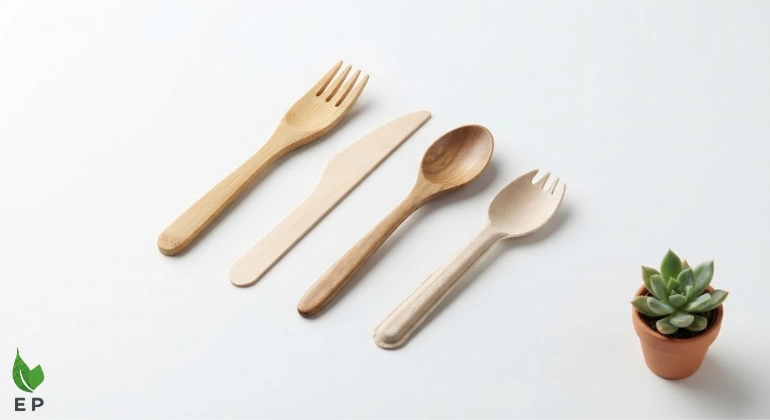
Bamboo and birchwood cutlery remain the most popular entry point for Pakistani restaurants moving away from plastic. They’re sturdy enough to handle most meals, naturally biodegradable, and give a warm, artisanal feel to takeaway orders. If you’re curious about why this particular material has become such a favorite among local food businesses, this detailed breakdown on why birchwood cutlery is the best alternative to plastic explains the strength-to-cost ratio that makes it so appealing. There’s also a focused comparison available in wooden spoon versus plastic spoon, which is worth a read if your menu leans heavily on soups, desserts, or rice dishes. For dine-in setups looking for something more premium and reusable, a reusable bamboo cutlery set also works beautifully for staff kits or loyal customer giveaways.
Made from the fibrous leftovers of sugarcane processing, bagasse cutlery is sturdy, heat-resistant, and fully compostable. It’s particularly well-suited to restaurants serving hot meals or soups, where plastic alternatives tend to soften or warp under heat. Because sugarcane is abundantly grown across Pakistan, locally sourced bagasse products are often more affordable than imported cornstarch alternatives, making them a smart choice for restaurants watching their packaging budget closely.
Cornstarch-based cutlery, often labeled as PLA (polylactic acid), closely mimics the look and feel of plastic while remaining compostable under the right conditions. It’s a strong choice for restaurants wanting a sleek, modern presentation without the environmental guilt — though it’s worth noting that true decomposition usually requires an industrial composting facility rather than a regular landfill, which is something to keep in mind when marketing it as “eco-friendly” to customers.
These are less common in Pakistan but growing in popularity, especially for upscale or themed dining experiences. Made entirely from fallen leaves, they require no chemical processing and decompose within weeks. They tend to carry a higher price point, making them better suited to premium events than everyday takeaway use — a detail worth knowing before committing to bulk orders.
For dine-in restaurants, reusable stainless steel cutlery often makes more financial and environmental sense than any disposable option. The upfront cost is higher, but it pays for itself over months of repeated use. This comparison on stainless steel cutlery versus plastic for a sustainable kitchen switch breaks down exactly how the math works out for busy restaurants, and it’s especially useful for owners trying to justify the initial investment to stakeholders.
Choosing the right cutlery isn’t just about picking whatever looks “green” on a supplier’s website. It depends heavily on how your restaurant actually operates. A fine-dining establishment with sit-down service has very different needs than a fast-food outlet focused almost entirely on takeaway and delivery.
A few practical factors should guide the decision:
Getting this balance right means restaurants don’t just reduce plastic waste — they actually improve the overall dining experience, since better materials often feel more premium in a customer’s hand. Many businesses also use seasonal demand, such as outdoor events or BBQ gatherings, as a low-risk way to test new cutlery before fully committing. This BBQ and outdoor party eco-friendly cutlery kit is a good example of how event-based trials work in practice.
To make the decision easier, here’s a side-by-side look at how the main eco-friendly cutlery materials stack up against each other under real restaurant conditions.
| Material | Durability | Cost Level | Best For |
|---|---|---|---|
| Bamboo / Birchwood | High | Moderate | Takeaway, catering, events |
| Sugarcane / Bagasse | High (heat-resistant) | Low–Moderate | Hot meals, soups, bulk orders |
| Cornstarch / PLA | Moderate | Moderate–High | Premium takeaway, cafés |
| Palm / Areca Leaf | Moderate | High | Weddings, upscale events |
| Stainless Steel (reusable) | Very High | High upfront, low long-term | Dine-in restaurants |
As the table shows, there’s no single “best” option across the board — the right choice depends entirely on how a restaurant serves its food and how much it’s willing to invest upfront versus over time.
Sourcing matters just as much as material choice. Importing eco-friendly cutlery often comes with higher shipping costs, longer lead times, and unpredictable customs delays — all of which can disrupt a restaurant’s supply chain at exactly the wrong moment. Local biodegradable cutlery brands, on the other hand, offer faster turnaround, easier bulk ordering, and the ability to build long-term supplier relationships that larger restaurant chains especially value.
EcoProduct.pk has built its reputation specifically around solving this problem for Pakistani food businesses. If you’re unfamiliar with the brand’s background, this piece on why EcoProduct.pk is Pakistan’s most trusted eco-friendly store outlines the sourcing standards and quality checks behind their product range, along with the broader mission behind helping Pakistan go green.
Restaurants looking to browse available options directly can explore the full eco-friendly cutlery and tableware shop or filter specifically through the birchwood cutlery category for ready-to-order products like the eco-friendly wooden fork, birchwood wooden knife, and birchwood wooden spoon. For dine-in setups, the stainless steel cutlery set and reusable bamboo cutlery set are both practical, ready-to-use options worth comparing side by side before placing a bulk order.
Catering businesses handling drinks or desserts alongside meals may also find it useful to pair cutlery with other eco items, such as disposable wooden coffee stirrers or wooden stir sticks, keeping the entire table setup consistently plastic-free.
Switching to eco-friendly cutlery isn’t purely an environmental decision — it carries real business value that often gets overlooked. Restaurants that make this switch early tend to position themselves ahead of regulatory curves, avoiding the scramble that happens when plastic bans suddenly get enforced more strictly in a given city or province.
There’s also a branding advantage that’s hard to replicate through marketing alone. Customers notice small details, and a thoughtfully chosen compostable fork or a branded bamboo spoon can quietly reinforce a restaurant’s commitment to quality and care. Combined with visible messaging — a small note on the receipt, a mention in the menu, or a social media post — this can meaningfully influence repeat visits and word-of-mouth referrals, especially among younger, environmentally aware diners.
Cost savings, while gradual, are real too. Bulk purchasing from local suppliers tends to narrow the price gap between plastic and eco-friendly alternatives significantly, and reusable options like stainless steel cutlery eliminate recurring disposable costs altogether after the initial investment. For restaurants planning seasonal promotions, items like the eco-friendly cups and cutlery specials for restaurants and cafés also show how sustainability-focused campaigns can double as marketing opportunities.
Switching an entire restaurant’s cutlery supply doesn’t have to happen overnight, and attempting to do it all at once often creates unnecessary friction with staff and suppliers. A phased approach tends to work far better in practice. Start by replacing the highest-volume item first — usually spoons or forks for takeaway orders — before gradually extending the switch to dine-in service and specialty items like stirrers or skewers.
It’s also worth testing materials on a smaller scale before committing to a large bulk order. Many restaurants begin by trialing eco-friendly cutlery during a single event, a seasonal promotion, or a limited menu rollout, which allows them to gauge customer reaction and durability under real kitchen conditions. Once the material proves reliable, scaling up to full restaurant-wide adoption becomes a much easier internal conversation — both for owners managing budgets and for staff adjusting to new handling procedures.
The shift toward eco-friendly cutlery is no longer optional for Pakistani restaurants hoping to stay competitive, compliant, and genuinely connected to their customers’ values. Whether it’s biodegradable bamboo, heat-resistant bagasse, or reusable stainless steel, the Best Eco-Friendly Cutlery Options for Restaurants in Pakistan ultimately come down to matching the right material to your specific menu, service style, and budget. The businesses that get this right aren’t just reducing plastic waste — they’re building a brand customers genuinely want to support.
If you’re ready to make the switch, explore the full range of sustainable cutlery and tableware options at EcoProduct.pk’s shop and start building a restaurant setup that’s cleaner, greener, and genuinely future-proof.
Q1: What is the most durable eco-friendly cutlery option for restaurants in Pakistan? Birchwood and bagasse-based cutlery tend to offer the best balance of durability and cost for most restaurant menus, especially those serving hot or oily food.
Q2: Is eco-friendly cutlery more expensive than plastic in Pakistan? Per-unit costs can be slightly higher, but bulk ordering from local suppliers significantly narrows the gap, and reusable options like stainless steel eliminate recurring costs over time.
Q3: Can compostable cutlery handle hot food without softening? Yes — bagasse and birchwood cutlery are specifically known for their heat resistance, making them suitable for soups, curries, and other hot dishes.
Q4: Where can restaurants buy biodegradable cutlery in bulk in Pakistan? Local suppliers like EcoProduct.pk offer bulk ordering options for restaurants, cafés, and catering businesses across major cities including Karachi, Lahore, and Islamabad.
Q5: Is reusable cutlery better than disposable eco-friendly cutlery? For dine-in restaurants, reusable stainless steel cutlery is generally more cost-effective long-term, while disposable compostable options remain better suited for takeaway and delivery.

Subscribe our newsletter & get notification about information discount.
Subscribe to get special offers, free giveaways, and once-in-a-lifetime deals.