Plastic pollution in Pakistan has quietly become one of the most pressing environmental challenges of our time, choking rivers, clogging drains, and littering streets from Karachi to Khyber. Every plastic bag we accept at a grocery counter, every disposable bottle we toss aside, and every takeaway container we discard adds to a crisis that is reshaping our ecosystems, harming public health, and burdening future generations. Yet here’s the encouraging part — this is a problem we can actually influence. The choices we make every single day, from what we shop with to how we store our food, ripple outward in ways most of us never stop to consider.
This blog unpacks the real scope of plastic waste in Pakistan, explores why it has become so deeply embedded in our daily lives, and — most importantly — shows you exactly how small, consistent changes can create meaningful impact. Whether you’re an eco-curious beginner or already on your sustainability journey, you’ll walk away with practical, doable steps.
Pakistan generates an estimated 3.9 million tonnes of plastic waste every year, and a significant portion of it never makes it to a proper disposal facility. Instead, it ends up in open drains, rivers, and eventually the ocean, contributing to a growing wave of ocean pollution and threatening marine life along the Arabian Sea coastline.
The roots of plastic waste in Pakistan run deep, and they’re tied to convenience, affordability, and a lack of accessible alternatives. Single-use plastic bags, disposable cutlery, and cheap packaging dominate local markets because they’re inexpensive to produce and widely available. Add to this weak waste management policy enforcement, limited recycling infrastructure, and low public awareness, and you get a perfect storm.
Urban centers bear the brunt of this. Karachi alone produces thousands of tonnes of solid waste daily, much of it plastic, and much of it ending up in landfills that leach toxic chemicals into the soil contamination cycle. Smaller cities and rural areas face similar struggles, often without even basic waste collection systems in place.
If you’re curious about just how widespread this issue is, our detailed piece on sustainable living in Pakistan breaks down the bigger picture of environmental pressures the country faces today.
Plastic pollution doesn’t stay contained to landfills — it seeps into every corner of our lives, often in ways that aren’t immediately visible.
When plastic breaks down, it doesn’t disappear. It fragments into microplastics that infiltrate soil, waterways, and even the food chain. Livestock grazing near open dumps frequently ingest plastic debris, and studies have found microplastic traces in fish caught along Pakistan’s coast. This isn’t just an aesthetic problem of litter-filled streets — it’s a slow, systemic contamination of the natural resources we depend on for food and water.
The carbon footprint of plastic production adds another layer to the problem. Manufacturing plastic relies heavily on fossil fuels, meaning every disposable item contributes to the broader climate change in Pakistan narrative, compounding issues like erratic monsoons and rising urban heat.
Beyond the environment, plastic pollution poses direct risks to human health. Burning plastic waste — a common informal disposal method in many neighborhoods — releases toxic fumes linked to respiratory issues. Chemical leaching from plastic containers, especially when exposed to heat, can introduce endocrine disruptors into food and drinking water, with long-term health consequences that researchers are still working to fully understand.
Clogged drainage systems caused by plastic waste are a major contributor to urban flooding during monsoon season, resulting in property damage and public health emergencies. Municipal governments spend significant budgets on waste clean-up efforts that could otherwise go toward infrastructure or public services.
| Impact Area | Cause | Consequence |
|---|---|---|
| Environment | Microplastics, landfill overflow | Marine life harm, soil contamination |
| Health | Burning plastic, chemical leaching | Respiratory issues, toxic exposure |
| Economy | Drainage blockages, clean-up costs | Urban flooding, municipal spending |
| Climate | Plastic manufacturing emissions | Higher carbon footprint |
This table makes one thing clear — plastic pollution isn’t an isolated environmental issue. It’s tangled up with public health, city infrastructure, and long-term economic stability.
Pakistan has taken meaningful steps toward addressing this crisis at a policy level. Several provinces have introduced a plastic bag ban, with Islamabad, Punjab, and Sindh each rolling out regulations targeting single-use plastic bags in markets and retail spaces. The Environmental Protection Agency (EPA) has also pushed for stricter national environmental policy frameworks aimed at reducing plastic manufacturing and improving municipal waste management.
That said, enforcement remains inconsistent. Many vendors continue using banned plastic bags simply because affordable, accessible alternatives aren’t always readily available at scale — which is exactly where consumer demand and eco-friendly businesses can bridge the gap.
Organizations working specifically on this front, like our own initiative, are detailed in our mission at EcoProduct.pk, where we outline how local businesses can actively support the shift toward greener alternatives even when policy enforcement lags behind.
Here’s where the story shifts from problem to solution. Daily choices to reduce plastic pollution don’t require a complete lifestyle overhaul — they require consistency. Small, repeated actions compound over time into significant reductions in household plastic waste.
Think about your typical week. How many single-use plastic items pass through your hands? Grocery bags, water bottles, disposable cutlery at a quick lunch, plastic wrap around leftovers — each one seems small in isolation, but multiplied across a household, a neighborhood, a city, the numbers become staggering.
None of these swaps demand a drastic lifestyle change. They simply ask you to pause for a second before defaulting to plastic — and choose the reusable option sitting right there in your bag or kitchen drawer instead.
For a broader roadmap, our article on 9 easy ways to reduce your plastic waste walks through additional habits you can build into your routine without much effort at all.
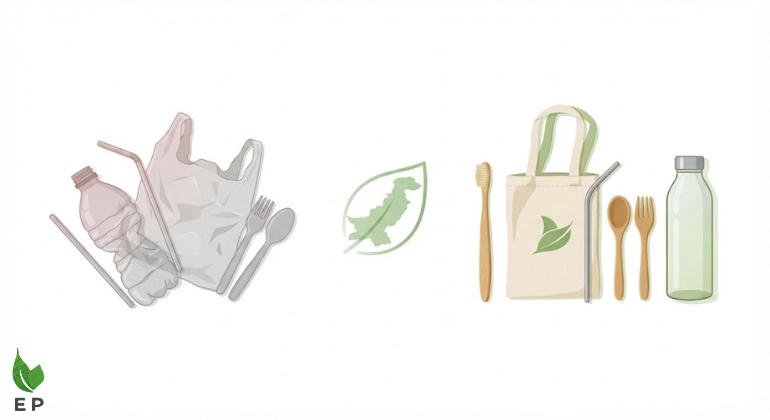
One of the biggest barriers to reducing plastic use is simply not knowing what to replace it with. Fortunately, Pakistan’s eco-conscious market has grown considerably, offering practical, affordable substitutes for nearly every disposable plastic item in your home.
| Plastic Item | Eco-Friendly Alternative | Why It Works |
|---|---|---|
| Plastic shopping bags | Cloth or cotton mesh bags | Reusable for years, machine washable |
| Plastic cutlery | Birchwood or stainless steel cutlery | Sturdy, reusable, biodegradable options |
| Plastic straws | Bamboo or steel straws | Durable, easy to clean, zero landfill waste |
| Plastic toothbrush | Bamboo toothbrush | Compostable handle, same bristle performance |
| Plastic scrubbers | Natural loofah | Naturally antibacterial, biodegradable |
| Plastic packaging | Kraft paper bags | Recyclable, sturdier for everyday use |
If you’re wondering whether these swaps actually hold up to everyday use, our detailed breakdown on kraft paper bags vs plastic bags and our comparison of wooden spoons vs plastic spoons offer real, practical insights based on daily household use.
For those wanting to go further, exploring birchwood cutlery as a full replacement for disposable plastic utensils is worth considering — our guide on why birchwood cutlery is the best plastic alternative explains exactly why it’s gaining popularity across households and cafes alike.
While individual choices matter enormously, lasting change also depends on collective momentum. Community clean-up drives, growing environmental awareness campaigns, and local businesses committing to sustainable packaging all contribute to a larger shift toward a circular economy.
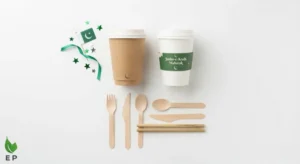
Retailers and cafes switching from plastic to biodegradable packaging play a particularly important role here, since they influence consumer behavior at scale. When a customer picks up a coffee in a compostable cup instead of plastic, or receives their order in kraft packaging instead of a plastic bag, it normalizes sustainable choices without requiring extra effort on their part.
This is also why credibility matters. If you’re evaluating which local eco-brands to actually trust and support, our transparent breakdown of why EcoProduct.pk is Pakistan’s most trusted eco-friendly store walks through our sourcing standards, product testing, and community feedback.
Here’s the truth that often gets lost in bigger conversations about policy and industry: sustainable living isn’t reserved for large-scale environmentalists or government bodies. It starts at your kitchen counter, your bathroom shelf, and your weekly grocery list.
Every reusable bag you carry, every bamboo toothbrush you switch to, every plastic bottle you refuse — these aren’t symbolic gestures. They’re measurable reductions in the plastic waste stream that eventually reaches landfills, rivers, and oceans. And when enough households make these same small shifts simultaneously, the collective impact becomes substantial.
If you’re ready to build sustainability into your daily rhythm without feeling overwhelmed, our comprehensive sustainable living guide for Pakistan and our practical zero waste swaps guide are excellent starting points, offering step-by-step transitions rather than an all-at-once overhaul.
What causes plastic pollution in Pakistan? Plastic pollution in Pakistan stems from heavy reliance on single-use plastics, weak waste management infrastructure, low recycling rates, and inconsistent enforcement of existing plastic bans.
How does plastic pollution affect Pakistan’s environment? It contaminates soil and water through microplastics, harms marine life along the coastline, blocks drainage systems causing urban flooding, and contributes to overall carbon emissions during production.
What can individuals do to reduce plastic pollution? Simple daily swaps — reusable bags, steel or bamboo straws, bamboo toothbrushes, and natural loofahs — significantly cut down household plastic waste when practiced consistently.
Is there an official plastic ban in Pakistan? Yes, several provinces including Punjab, Sindh, and Islamabad have introduced plastic bag bans, though enforcement varies and continues to improve gradually.
What are the best eco-friendly alternatives to plastic products? Cloth bags, birchwood or stainless steel cutlery, bamboo straws and toothbrushes, kraft paper packaging, and natural loofahs are widely available, affordable substitutes for common plastic items.
Plastic pollution in Pakistan is undeniably a large-scale, systemic issue — but it’s not one that only large institutions can solve. Every reusable bag, every bamboo swap, every mindful purchase chips away at the problem in a way that’s measurable, sustainable, and contagious in the best sense. When your neighbors see you carrying a cloth bag instead of plastic, or notice your kids using a bamboo toothbrush, it plants a seed. That’s how real cultural shifts happen — one household at a time.
You don’t need to change everything overnight. Start with one swap this week. Then another next month. Before long, plastic-free choices become second nature rather than an effort.
Ready to make your first swap? Explore our full range of eco-friendly, plastic-free essentials and take the first step toward a cleaner, greener Pakistan today.

Subscribe our newsletter & get notification about information discount.
Subscribe to get special offers, free giveaways, and once-in-a-lifetime deals.