Every home baker has the same moment. Someone tastes your brownies at a family dinner and says, “You should sell these.” Your heart jumps. Then the questions arrive. Where do I begin? How much money do I need? What do I put the cakes in?
This guide answers all three. If you are wondering how to start a home bakery business in Pakistan, the honest answer is that baking is only half the job. The other half is registration, pricing, branding and, above all, packaging. A beautiful cake in a weak box becomes a bad review. A simple cake in a sturdy, well-branded box becomes a repeat order.
Below, you’ll find a step-by-step plan that covers the basics and goes deeper on packaging, because that is where most beginners lose money and customers. Grab your apron, and let’s build this properly.
Short answer: it can be, but profit comes from discipline, not just talent. Demand is real. Birthdays, weddings, Eid gatherings, corporate gifting and Instagram-driven celebrations keep online cake orders flowing all year. Home bakers have an advantage here, because overheads are low and customers love personal, handmade products.
The catch is that many beginners underprice their work and forget hidden costs. Ingredients are only one line in the bill. Packaging, delivery, gas or electricity, oven wear and your own time all count. A baker who charges only for flour, sugar and butter will feel busy but broke.
The home bakers who succeed treat the business like a brand from day one. They pick a clear niche, such as custom cakes, cupcakes, cookies or desserts. They price for profit, and they present every order like a gift. That presentation starts with packaging, which we’ll cover in detail shortly.
Before you buy anything, decide what you are actually selling. A short, focused menu is easier to cost, easier to package and easier to market than a menu with fifty items.
Think about three questions. What do you bake best? What do people in your area keep asking for? And which products travel well? Cheesecakes and delicate cream cakes look wonderful but demand careful packaging. Cookies, brownies and loaf cakes travel easily and suit beginners.
A practical example: Hira, a home baker in Lahore, started with only three items. These were custom birthday cakes, cupcake boxes and cookie tins. Because her menu was small, she needed just four packaging types, so she could buy in bulk and keep her costs predictable. Once orders grew, she added new items one at a time.
Starting small isn’t a weakness. It’s the cheapest way to start a home bakery, and it protects you from wasting money on products you can’t sell.
This is the step many bakers skip, and it can cause problems later. Rules for home food businesses differ by province and can change, so always verify current requirements before you launch. In Punjab, that means checking with the Punjab Food Authority. In other provinces, contact your local food authority or municipal office.
Even before formal registration, food safety should be non-negotiable. Keep your kitchen clean and separate from household chaos during production. Wash hands and surfaces regularly, store ingredients properly and label allergens clearly. Never use packaging that hasn’t been designed for food contact, because customers trust you with what they eat.
Registration also builds credibility. When you can tell a corporate client or a café that your business is properly registered, you move from “hobby baker” to “professional supplier.” That shift opens doors to bulk orders, gifting contracts and partnerships.
Many people ask how much money they need to start a home bakery in Pakistan. The real answer depends on your city, menu and equipment. A baker who already owns an oven and basic tools will spend far less than someone starting from zero.
Instead of quoting fixed numbers that go out of date, here is a smarter way to think about it. The table below shows how a typical beginner budget is usually split. Adjust the shares to match your own menu.
| Budget Area | Typical Share | What It Covers |
|---|---|---|
| Equipment and tools | 30–40% | Oven, mixer, pans, scales, piping tools |
| Ingredients (first batches) | 20–25% | Flour, butter, chocolate, decorations |
| Packaging | 15–20% | Boxes, boards, bags, pouches, stickers |
| Branding and marketing | 10–15% | Logo, photos, social media, stamps |
| Registration and safety | 5–10% | Licences, hygiene supplies, labels |
Notice that packaging takes a meaningful slice. That is deliberate. Packaging is what customers touch first, and it follows your cake into their homes, offices and photo feeds. Skimping here is one of the most common beginner mistakes.
If your budget is tight, start with the essentials: sturdy cake boxes, a few board sizes and a simple branded sticker. Add custom printing later when orders justify it.
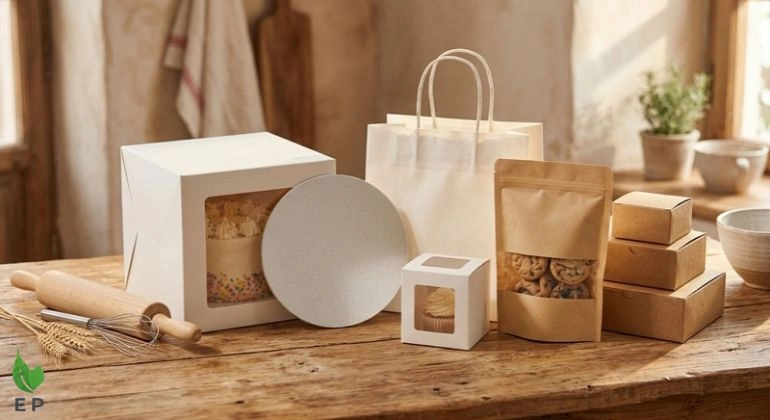
Now we reach the heart of this article. Good packaging does four jobs at once. It protects your product, keeps it food-safe, represents your brand and simplifies delivery. Let’s go through each type of packaging you will need.
The cake box is your main workhorse. Choose boxes that are strong, grease-resistant and clearly sized for your standard cakes. A box that is too big lets the cake slide. A box that is too small crushes the frosting.
Measure your most common cake sizes first, then buy boxes with about one to two centimetres of clearance. For a deeper look at materials, sizes and styles, read our complete guide to cake boxes for bakeries. When you’re ready to order, you can browse sturdy cake boxes directly.
Here is a secret that experienced bakers know: the box doesn’t hold the cake. The board does. A weak base bends, and bending cracks buttercream and shifts layers. Thin boards suit light sponge cakes, while heavier, tiered or fondant cakes need drum boards.
If you aren’t sure which one you need, our comparison of a cake drum board vs a regular cake board makes the choice simple. You can explore the full range of cake boards and cake drum boards in different colours, such as white or golden, to match your brand.
If you sell cupcakes or slices, individual boxes make your product feel premium and make gifting easy. They also protect decorations from touching each other. Single cupcake boxes work well for walk-in orders and gift sets, while cake slice boxes suit cafés, events and dessert menus.
A carry bag finishes the experience. It keeps the box level, gives customers a handle and puts your brand on the street. A paper bag also looks more premium than a flimsy plastic one. You can compare white paper cake bags and black paper cake bags to see which style suits your brand, or browse the full cake bag category.
Dry bakes need different packaging from cakes. Cookies, granola and brownies do well in gusseted pouches, window bags or gift tins. A flat-bottom gusseted bakery pouch stands neatly on a shelf, and a brown kraft paper bag with a clear window lets customers see what they’re buying. For gift hampers, a metal tin looks elegant, and our tin boxes buyer’s guide explains how to choose one.
Choosing packaging gets easier when you match it to the product. This table gives you a quick starting point.
| Product | Best Packaging | Why It Works |
|---|---|---|
| Custom cakes | Cake box + board + carry bag | Protection, stability, premium look |
| Cupcakes | Single or multi-cupcake box | Prevents frosting damage |
| Cake slices | Slice box | Hygienic, portion-friendly |
| Cookies and brownies | Gusseted pouch or window bag | Fresh look, shelf-ready |
| Gift hampers | Tin box or kraft box | Reusable, giftable |
As a rule, choose packaging that suits the product first and your brand second. Then use colours, stickers and stamps to tie everything together.
Delivery is where many home bakeries fail quietly. A cake that arrives damaged costs you the order, a refund and sometimes a public complaint. Fortunately, most delivery disasters are preventable.
Start with a firm base, a snug box and a non-slip surface inside the delivery vehicle. Keep cakes level, avoid sudden braking and never stack boxes on top of each other. In hot weather, chill the cake first and deliver it quickly, because heat softens frosting faster than you’d expect.
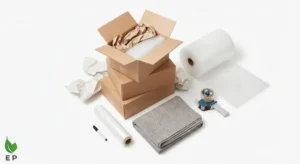
Our detailed walkthrough on how to package a cake for delivery without damage covers boards, boxes and padding step by step. For fragile add-ons or decorative accessories, our comparison of bubble wrap vs packing paper helps you pick the right cushioning, and you can seal boxes securely with clear packaging tape.
A practical example: Sana, who bakes from home in Karachi, lost two cakes in her first month because boxes slid on the back seat. She switched to a thicker board, added a non-slip mat and started taping lids with a simple seal sticker. Her damage rate dropped to almost zero, and her reviews improved within weeks.
You don’t need a design agency to look professional. You need consistency. Pick one or two brand colours, a clean logo and a simple tone of voice, then repeat them everywhere.
Here are the cheapest ways to brand a home bakery:
A plain white box with a neat logo sticker often looks more premium than a cluttered, over-printed one. As orders grow, you can move to custom-printed packaging and bulk orders, which lower the cost per unit. Our guide to eco-friendly packaging products in Pakistan shows how to build a consistent look without overspending.
Branding also extends to your online presence. Instagram is the shop window for most home bakeries, so every box you pack is also potential content. A customer who loves the unboxing will post it, and that post becomes free marketing.
Eco-friendly packaging isn’t just good for the planet. It’s also good for your brand. Customers increasingly notice waste, and they reward bakeries that care.
Kraft paper boxes, paper bags and recyclable pouches give a natural, handmade feel that suits home bakeries perfectly. They also help you stand out in a market full of glossy plastic. Our article on kraft paper bags vs plastic bags and the environment explains the differences in plain language, and our overview of sustainable packaging solutions in Pakistan covers more options for growing businesses.
One caution: be honest about your claims. Only call a product “biodegradable” or “compostable” if the supplier can confirm it. Customers trust bakers who are clear about what they use, and honesty builds the kind of reputation that money can’t buy.
If you sell cakes in clear display containers or premium gift sets, you might also consider acrylic options. Our guide on how to choose the right acrylic box for bakery products helps you decide when acrylic makes sense.
Pricing is where passion meets arithmetic. A simple formula keeps you safe: add up ingredient cost, packaging cost, labour, utilities and delivery, then add a profit margin. Many beginners forget packaging and labour, which quietly eats their profit.
Track your packaging cost per order carefully. A cake that costs a little more to package may justify a higher selling price, because presentation raises perceived value. Customers pay more for a cake that arrives in a clean box, on a firm board, inside a branded bag.
Don’t compete only on price. Someone will always be cheaper. Compete on quality, reliability and presentation instead. Over time, that builds recurring customers who order for every birthday and celebration.
When your volume grows, buying wholesale lowers unit costs. You can compare options in our bakery packaging category and see everything available in the shop.
The first ten customers usually come from people you already know. Offer small tasting boxes, ask for honest feedback and request reviews. A friendly message and a neatly packed sample beat any advertisement.
Next, build a simple routine on social media. Post clear photos of finished cakes, behind-the-scenes clips and short customer stories. Always include your price range and ordering method so people don’t have to guess. Respond quickly, because speed signals reliability.
You can also partner with local cafés, event planners and gift shops. A neat set of cake slice boxes and cookie pouches makes it easy for them to stock your products. Corporate gifting during festive seasons is another strong channel, especially if your packaging looks premium.
Finally, protect your reputation. One late or damaged order can undo a dozen good ones, so be honest about lead times and never accept more orders than you can handle.
Here is a simple checklist to keep you on track. Tick each item before your launch week.
Work through the list at your own pace. Most beginners are ready to launch within a few weeks if they stay focused.
Even talented bakers repeat the same errors. Knowing them in advance saves money and stress.
Underpricing. Charging only for ingredients leaves no room for growth. Include every cost.
Buying packaging last. Packaging affects recipes, delivery and pricing, so plan it early.
Choosing weak boards. A strong box on a weak board still fails.
Ignoring food safety. Hygiene mistakes damage trust faster than any bad review.
Doing everything alone forever. As orders grow, outsource delivery or packaging prep so you can keep baking.
Choose a focused menu, check registration and food-safety rules with your local food authority, set a budget, buy suitable packaging, build simple branding and start taking orders through social media.
It depends on your equipment and menu. If you already own an oven and basic tools, you can start with a small budget focused on ingredients, packaging and branding.
Requirements vary by province and may change. Check with your provincial food authority, such as the Punjab Food Authority, before launching.
Most bakers need cake boxes, cake boards, carry bags, cupcake or slice boxes and pouches for cookies. Choose food-grade, sturdy options that match your products.
Use a firm board, a snug box, a non-slip surface and keep the cake level and cool during transport.
Start with a small menu, use the equipment you already have, buy basic packaging in small batches and build your brand with stickers and social media.
Learning how to start a home bakery business in Pakistan is less about one big leap and more about many small, smart steps. Choose a clear menu, respect food safety, price for profit and build a brand people remember. Then give every order the packaging it deserves.
Your cakes may win the first order. Your packaging wins the second, the third and the tenth. Treat every box as a handshake, and your home kitchen can grow into a brand customers trust.
Start your bakery journey with packaging that protects your cakes and shows off your brand. Explore our full range of bakery packaging, pick your first set of cake boxes and cake bags, or browse the shop to build a complete, matching set today.

Author at Eco Product — passionate about sustainable living and eco-friendly products.

Subscribe our newsletter & get notification about information discount.
Subscribe to get special offers, free giveaways, and once-in-a-lifetime deals.