If you’ve ever grabbed a to-go coffee and noticed how it stays comfortably warm in your hand without scalding your fingers, you’ve already experienced the quiet engineering genius behind modern packaging. The short answer to why insulated ripple cups keep coffee hot longer than ordinary paper cups lies in a clever combination of trapped air pockets, double-wall construction, and a textured outer surface that slows down heat transfer. It sounds simple, but the science behind it is surprisingly fascinating, and once you understand it, you’ll never look at your morning coffee cup the same way again.
In this guide, we’ll walk through exactly how ripple wall technology traps heat, why it outperforms single-wall and even some double-wall alternatives, and how cafés across Pakistan are using this innovation to improve customer experience while cutting down on waste. Whether you run a coffee shop or simply want to understand what’s happening in your hand every morning, this breakdown will give you the full picture.
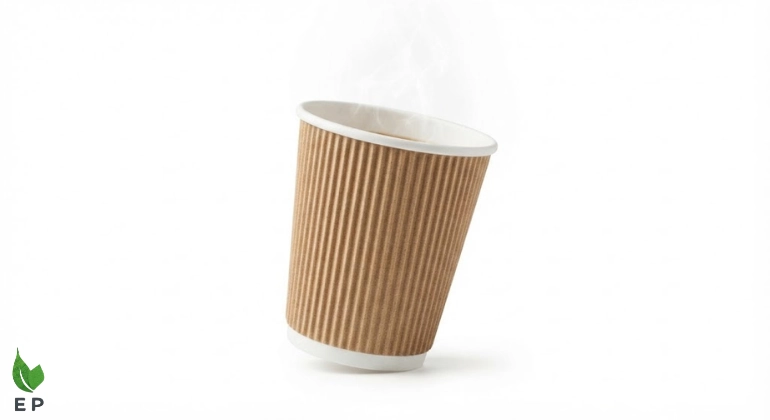
At first glance, a ripple cup looks like any other disposable coffee cup — just with a slightly wavy, corrugated exterior. But that texture isn’t decorative. It’s functional engineering disguised as design.
Standard single-wall paper cups rely on a thin layer of material between your drink and your hand. That’s fine for cold beverages, but for hot coffee, it means heat travels almost directly from the liquid to your skin, forcing you to either use a sleeve or juggle the cup uncomfortably. Insulated coffee cups solve this problem by adding a second layer, and ripple cups take it a step further by shaping that layer into a corrugated pattern that creates small air pockets between the inner and outer walls.
These air pockets act as a natural barrier. Air is a poor conductor of heat, which means it slows down how quickly warmth escapes from the cup to the outside world — and more importantly, to your hand. This is the same principle used in double-glazed windows and insulated jackets, just scaled down to fit in your palm.
If you’re curious how this compares to other packaging styles, our detailed comparison on double-wall vs single-wall coffee cups breaks down the practical differences in everyday café use.
Understanding coffee cup heat retention requires a quick look at how heat actually moves. Heat always travels from a warmer area to a cooler one, and it does this in three ways: conduction, convection, and radiation. In a coffee cup, conduction is the main culprit — heat moves through the solid material of the cup wall from the hot liquid inside to the cooler air outside.
A single layer of paper offers very little resistance to this process, which is why plain paper cups cool down fast and heat up your hand almost immediately. Insulated designs interrupt this conductive pathway by introducing a thermal barrier — a layer of trapped air or an actual physical gap between two walls of material. Since heat struggles to move efficiently through air, the overall rate of heat loss slows down dramatically.
Here’s where it gets interesting. A flat double-wall cup already improves insulation by adding a second layer, but the corrugated or “ripple” shape increases the surface area of trapped air without adding significant bulk or material cost. The wavy structure creates multiple small insulating chambers rather than one single flat gap, and more chambers generally mean more resistance to heat transfer. It’s a bit like comparing a single blanket to a quilted one — the quilting (or in this case, the rippling) creates pockets that trap warmth more effectively than a flat surface of the same thickness.
This is the core reason behind ripple wall technology being favored by cafés that serve hot beverages at higher volumes. It delivers insulation performance close to foam cups, but without the environmental drawbacks associated with polystyrene.
Think of the ripple cup’s construction as two layers working as a team. The inner layer holds the hot coffee and maintains food-grade safety standards, while the outer layer — shaped into gentle waves — sits slightly apart from it. That gap, filled with ordinary air, becomes the real hero of the story.
In practice, this means your coffee stays noticeably hotter for a longer stretch of time compared to a basic paper cup, and your hand stays comfortable even without a cardboard sleeve. It’s a small design choice with a big impact on daily convenience, especially during Pakistan’s hot summers when you still want your coffee piping hot without the cup becoming unbearable to hold.
A few practical observations from everyday use:
If you run a café or restaurant and want to see this difference firsthand, our coffee cup collection includes both standard and insulated ripple options so you can compare performance side by side.
To make the comparison easier to visualize, here’s a quick breakdown of how different cup types perform when it comes to thermal insulated cups behavior and everyday usability.
| Cup Type | Heat Retention | Comfort to Hold | Best For |
|---|---|---|---|
| Single-Wall Paper Cup | Low — cools quickly | Requires a sleeve | Cold drinks, quick service |
| Standard Double-Wall Cup | Moderate — decent insulation | Comfortable without sleeve | Everyday hot beverages |
| Insulated Ripple Cup | High — slows heat loss significantly | Very comfortable, no sleeve needed | Cafés, long commutes, premium service |
As the table shows, the ripple design isn’t just a cosmetic upgrade — it genuinely changes how the cup performs under real-world conditions. For a deeper dive into selecting the right size for your café’s menu, check out our guide on choosing the right coffee cup size for your café.
Beyond the comfort factor, there’s a strong business case for switching to insulated ripple cups. Customers notice small details, and a cup that keeps their coffee hot without burning their hands leaves a lasting impression of quality. It subtly communicates that a brand cares about the little things — and in the competitive café industry, that perception matters.
There’s also the sustainability angle. Many disposable coffee cups on the market still rely on plastic-lined designs or foam inserts that are difficult to recycle. Ripple cups, especially those made with recyclable or compostable materials, offer a more responsible alternative without sacrificing performance. They align well with the growing demand for eco-friendly cups among Pakistani consumers who are increasingly aware of their environmental footprint.
For cafés and restaurants looking to upgrade their packaging ahead of busy seasons or special promotions, our roundup of eco-friendly cups and cutlery for restaurants and cafés is a useful starting point for sourcing in bulk.
Let’s bring this down to earth with a few everyday scenarios where the difference becomes obvious.
Picture a delivery rider carrying a hot coffee across the city during rush hour. In a basic paper cup, that coffee would likely be lukewarm by the time it reaches the customer. In an insulated ripple cup, the temperature retention is strong enough that the drink arrives noticeably warmer, improving the overall delivery experience and reducing complaints about cold drinks.
Or consider a busy office where someone pours their coffee, gets pulled into a meeting, and returns twenty minutes later. With a standard cup, that coffee is often disappointing by the time they get back to it. With a ripple cup, the heat loss is slow enough that the first sip still feels close to fresh.
Cafés have picked up on this too. Several coffee shop owners we’ve worked with report fewer customer complaints about temperature after switching to ripple-style cups, along with a noticeable drop in sleeve usage — which also saves on packaging costs over time. If you’re planning a bulk order, pairing your cups with a matching coffee cup carrier makes multi-cup orders easier to transport without spills.
Not every ripple cup is built the same, and picking the right size and material matters depending on your use case. A smaller cup, like an 8oz option, works well for espresso-based drinks or quick servings where portion control matters. A larger 12oz cup suits drip coffee, lattes, or customers who prefer a longer sipping session.
Material quality also plays a role in performance. Thicker cup wall thickness generally improves insulation but can increase cost slightly, so it’s worth balancing performance with budget depending on your business volume. For businesses that want branding on their cups, customization is also worth exploring — a well-branded cup not only insulates well but also reinforces your identity with every customer interaction.
Here are our two most popular ripple cup options for reference:
If branding matters to your business, our customized coffee cup range lets you combine insulation performance with your own logo and design.
So, why do insulated ripple cups keep coffee hot longer? It all comes down to smart, simple physics — trapped air pockets slowing conductive heat loss, a double-wall structure adding an extra thermal barrier, and a corrugated design maximizing insulation without unnecessary bulk. It’s a small innovation that solves a problem most of us didn’t even realize we had, until we held a cup that just worked better.
Whether you’re a café owner trying to improve customer satisfaction or someone who simply wants their coffee to stay warm during a busy commute, switching to insulated ripple cups is a practical upgrade with real, noticeable benefits. It’s one of those rare packaging choices that improves comfort, protects the environment, and elevates brand perception all at once.
Ready to make the switch? Browse our full range of insulated ripple coffee cups and find the perfect fit for your café, office, or everyday coffee routine — because every cup of coffee deserves to stay as warm as the moment you poured it.
Q: How do insulated cups work to keep coffee hot? Insulated cups work by creating a barrier — usually a layer of trapped air between two walls — that slows down the natural movement of heat from the hot liquid to the cooler outside air.
Q: Why does coffee stay hot longer in ripple cups specifically? The corrugated ripple pattern creates multiple small air pockets rather than one flat gap, increasing insulation efficiency compared to standard double-wall cups.
Q: Are insulated ripple cups eco-friendly? Yes, most ripple cups are made from recyclable or compostable paper-based materials, making them a more sustainable alternative to foam or plastic-lined cups.
Q: What’s the difference between double-wall and ripple wall cups? Double-wall cups use two flat layers with a single air gap, while ripple wall cups shape that gap into a wavy pattern, increasing insulating surface area for better heat retention.
Q: What size insulated ripple cup is best for a café? It depends on your menu — 8oz cups suit espresso-based drinks, while 12oz cups work better for lattes, cappuccinos, and larger servings.

Subscribe our newsletter & get notification about information discount.
Subscribe to get special offers, free giveaways, and once-in-a-lifetime deals.