If you have ever opened a bag of almonds and caught a stale, paint-like smell, you already know what poor packaging does. Learning how to choose packaging for dry fruits is not only about looks. It decides whether your cashews stay crisp, whether your walnuts turn bitter, and whether a customer buys from you a second time.
Dry fruits and nuts are valuable and sensitive products. They are rich in natural oils, they absorb moisture from the air, and they react quickly to light, heat and oxygen. Pakistan’s hot summers and humid monsoon months make the problem even harder. The right dry fruit packaging works like a small protective shield around every pack, whether you sell 100 g retail bags, 1 kg wholesale packs or Eid gift boxes.
This guide explains what actually damages dry fruits, which packaging materials work best, how to match packaging to your use case, and what mistakes to avoid. By the end, you should be able to choose with confidence.
Before comparing bags and boxes, it helps to understand what you are protecting against. Four things cause most of the damage.
Oxygen is the biggest threat to nuts. Almonds, cashews, walnuts and pistachios contain unsaturated fats that react with oxygen over time. This reaction is called oxidation, and it is the reason nuts go rancid. Rancid nuts are not always dangerous, but the taste and smell become unpleasant, and customers notice immediately. Walnuts are especially delicate because of their high polyunsaturated fat content.
Moisture works differently. Nuts that absorb humidity lose their crunch, and moisture also encourages mold. Dried fruits such as raisins, apricots and dates have the opposite issue: they can dry out and harden, or become sticky and clump if humidity gets in. Good moisture-proof packaging protects both types.
Light and heat speed up oxidation. A clear bag sitting on a sunny shelf can shorten shelf life of nuts noticeably. Heat inside a delivery van or a shop window does the same.
Pests and odours are the fourth concern. Weak or thin packaging can be penetrated by insects, and nuts easily absorb strong smells from nearby products.
So the goal of dry fruit packaging is simple: block oxygen, moisture, light and pests while keeping the product looking attractive.
When you compare options, these are the features that matter most.
A strong oxygen barrier is the first one. Look for multi-layer laminates, because a single thin plastic layer lets oxygen through over weeks and months. Aluminium or metallised layers give the best protection.
Next is airtight packaging with a reliable seal. A pouch can have excellent film but still fail if the heat seal is weak or the zipper does not close properly. Resealable packaging also helps your customer, since people rarely finish a 500 g pack in one sitting.
Food-grade materials are non-negotiable. Dry fruits go straight into the mouth, so the inner layer that touches the product must be certified food-safe. Always ask your supplier to confirm food-grade quality before placing a bulk order, and request samples to test.
Finally, consider product protection in transit. Cashews and pistachios can break if packs are crushed during shipping, so a sturdy gusset or a rigid tin may be a better fit than a flat bag.
Here is a quick comparison of the most common options. It covers the main dry fruit packaging materials and where each one fits best.
| Packaging Type | Barrier Strength | Best For | Main Limitation |
|---|---|---|---|
| Aluminium foil stand-up pouch | Excellent (oxygen, light, moisture) | Almonds, cashews, walnuts, long shelf life | Product is hidden unless a window is added |
| Kraft stand-up pouch with aluminium lamination | Very good | Premium retail, eco-conscious brands | Slightly higher cost than plain plastic |
| Clear zipper stand-up pouch | Moderate | Raisins, dates, quick-selling items | Light exposure, shorter shelf life for nuts |
| Vacuum sealed bags | Excellent | Wholesale, bulk storage, long transport | Can crush delicate pieces, less shelf appeal |
| Tin boxes | Good with inner liner | Gifting, premium positioning | Heavier and costlier |
| Acrylic boxes | Low to moderate | Display, short-term gift hampers | Not airtight on their own |
No single option wins in every situation. The best choice depends on what you sell, how fast it sells, and who buys it.
For most sellers, stand-up pouches offer the best balance of protection, price and shelf appeal. They stand upright on shelves, give you a large print area for branding, and take little storage space.
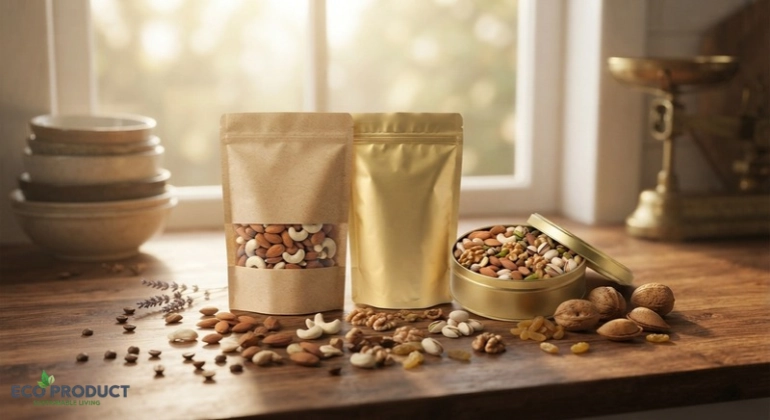
If your priority is long freshness preservation, choose a pouch with an aluminium layer. The aluminium foil stand-up pouch blocks light almost completely, which is ideal for walnuts, almonds and cashews. If you want a more natural look with strong protection, a kraft paper pouch with aluminium lamination gives you an earthy, premium feel without giving up the barrier.
Do you want customers to see what is inside? A window is a smart compromise. A brown kraft stand-up pouch with window lets shoppers see the product while the rest of the pouch still shields it from light. You can browse the full range in our kraft stand-up pouches collection or read more about kraft stand-up pouches as eco-friendly packaging.
For items that sell quickly, such as raisins, dried dates or trail mix, a clear zipper stand-up pouch works well. The product looks fresh and inviting, and the zip keeps it protected between uses. For slow-moving nuts, though, clear film alone is risky because light speeds up spoilage.
If you are unsure about pouch styles, our comparison of stand-up pouches vs flat pouches explains when each shape makes sense.
This is one of the most common questions sellers ask, so let’s answer it directly.
Vacuum sealed bags remove most of the air before sealing, so there is far less oxygen to start the oxidation process. This makes them excellent for wholesale, bulk storage and long-distance shipping. The downside is that vacuum pressure can crush brittle products like pistachios or cashew halves, and the tight, wrinkled look is less appealing on a retail shelf.
Stand-up pouches look better, are easier to open and reseal, and suit retail. On their own they trap some air inside, so they protect less over the long term than a vacuum pack. The good news is that you can close that gap with nitrogen flushing or oxygen absorbers. Nitrogen flushing replaces the air in the pouch with inert gas, and oxygen absorbers are small food-safe sachets that remove leftover oxygen after sealing.
A simple rule of thumb works well here. Choose vacuum bags for bulk, storage and wholesale. Choose barrier stand-up pouches, ideally with nitrogen or an oxygen absorber, for retail packs where appearance matters.
For dry fruit packaging for retail, your pack has to protect the product and also sell it on a crowded shelf or a busy website. That means thinking about three things together.
Pack size should match how people buy. Small 100 g to 250 g packs suit trial buyers and snack shoppers, while 500 g and 1 kg packs suit families and regular customers. As a rough guide, a 250 g pouch of almonds usually fits a pouch of around 12 x 20 cm plus a bottom gusset, but dimensions vary with the product’s density, so always test fill with your own nuts before ordering thousands of units.
Packaging design matters more than many sellers expect. A clean layout, a clear product name, weight, origin and a visible expiry or packing date build trust quickly. Matte finishes feel premium, and kraft tones signal natural quality.
Packaging cost should be viewed per pack, not per unit alone. A slightly more expensive pouch that adds three extra months of freshness costs far less than returns, wasted stock and lost reviews.
Gifting is where presentation takes over. During Eid, Ramadan, weddings and corporate seasons, buyers pay extra for packaging that looks luxurious.
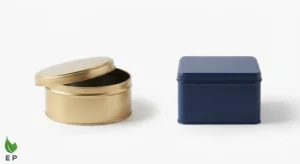
Tin boxes are a favourite for dry fruit gift boxes because they look premium, can be reused, and protect contents well when paired with an inner pouch or liner. A golden round tin box or a square golden tin box instantly lifts a hamper. If you are deciding on a shape, our guide to round vs square tin boxes and the tin boxes buyer’s guide walk through the details. You can also explore the full tin boxes category.
For display-style hampers, a clear acrylic box with lid shows off colourful assortments beautifully. Keep in mind that acrylic is not airtight by itself, so it is best for short-term gifting or for packs placed inside sealed inner pouches.
A smart gifting setup is a layered one: sealed barrier pouches inside a decorative tin or box. The customer gets the look, and the nuts get the protection.
If you supply shops, restaurants or other resellers, dry fruit packaging wholesale has a different priority list. Protection during storage and transport comes first, and presentation comes second.
Larger barrier pouches or vacuum bags of 1 kg to 5 kg work well, packed inside sturdy cartons to prevent crushing. Our e-commerce boxes are useful for shipping to customers or distributors. Label each bag with the product name, weight, batch and packing date so your buyers can rotate stock properly.
Many wholesalers also choose custom dry fruit packaging once volumes grow. A branded pouch with your logo, colours and product details turns plain stock into a recognisable brand, and it makes your products easy to reorder.
Customers are paying more attention to waste, and eco-friendly packaging for dry fruits has become a real selling point. Kraft paper-based pouches and bags look natural, feel premium and appeal to environmentally aware buyers. If you are curious about the environmental difference, our article on kraft paper bags vs plastic bags breaks it down.
There is one honest point to keep in mind. A pure paper bag with no barrier layer will not protect nuts well for long. Most good eco-friendly options combine kraft exteriors with a thin protective lining. That is why laminated kraft pouches are popular: they keep the natural look while still offering strong moisture-proof packaging. For more ideas, see our overview of eco-friendly packaging products in Pakistan and sustainable packaging solutions.
Many sellers pick pouch size by guessing, then discover the pack looks half empty or will not close. A better method takes about ten minutes.
Weigh your target amount, for example 250 g of almonds. Fill a few sample pouches in different sizes and check three things: whether the product sits comfortably without bulging, whether there is enough headspace above for a clean seal and zipper, and whether the pouch stands upright on a shelf.
| Typical Pack Weight | Suggested Use | Common Pouch Style |
|---|---|---|
| 100–250 g | Retail trial, snacks | Small stand-up pouch with zipper |
| 500 g | Family retail | Medium stand-up or gusseted pouch |
| 1 kg | Regular buyers, small wholesale | Large flat-bottom gusseted pouch |
| 2–5 kg | Bulk and wholesale | Vacuum or heavy-duty barrier bag |
Treat these as starting points rather than fixed rules. Light items like dried apricot slices need more volume than dense almonds, so always test with your own product.
Even the best packaging cannot rescue products kept in poor conditions. Store sealed packs in a cool, dry, dark place away from direct sunlight, stoves and exterior walls that heat up. A stable temperature around or below room temperature is ideal, and in hot weather an air-conditioned storeroom makes a real difference to how to keep dry fruits fresh for months.
Avoid stacking heavy cartons on soft pouches, and never store packs on the floor in humid areas. If you handle large volumes, rotate stock using a first-in, first-out system so older batches sell first.
Customers can help too. Add a short line on your pack, such as “Store in a cool, dry place and reseal tightly after use.” It protects your product after it leaves your hands.
Sellers often lose freshness to avoidable errors. Using fully transparent bags for slow-moving nuts is one of the most common, because light and oxygen do their work quietly on the shelf. Another is choosing packaging purely on price. A cheap thin pouch may save a few rupees but cost far more in spoiled stock.
Skipping a sealing test is another trap. A pouch that looks sealed can leak air, so check seals before scaling up. Overfilling pouches stresses seams and zippers. Ignoring food-grade confirmation is the most serious mistake, because it affects customer safety and your brand reputation.
Before ordering, run through this short list:
If you can answer yes to all six, you are in a strong position.
What is the best packaging for dry fruits?
For most nuts, a multi-layer stand-up pouch with an aluminium or metallised barrier and a good zipper offers the best balance of protection and shelf appeal. For bulk, vacuum bags are an excellent choice.
Which packaging keeps nuts fresh longer?
Packaging with a strong oxygen barrier lasts longest. Vacuum sealed bags, or barrier pouches with nitrogen flushing or oxygen absorbers, keep nuts fresh longer than ordinary clear bags.
Why do nuts go rancid?
Nuts contain natural oils that react with oxygen, a process called oxidation. Heat, light and moisture speed it up, which gives nuts a stale, bitter smell and taste.
How do I choose food-grade packaging for nuts?
Ask your supplier to confirm that the inner layer that touches the product is food-grade, and request samples. Avoid unlabelled or unbranded bags with no material information.
How can I prevent moisture in dry fruits?
Use airtight, moisture-proof packaging with a good seal, keep packs in a cool dry place, and consider moisture or oxygen absorber sachets for long storage.
How do I pack dry fruits for gifting?
Place sealed barrier pouches inside a decorative tin or gift box. This gives you a luxury look while keeping the contents fresh.
What packaging do I need for a dry fruit business?
Most businesses need barrier stand-up pouches for retail, vacuum or heavy-duty bags for wholesale, tin or gift boxes for seasonal gifting, and shipping cartons for delivery.
Knowing how to choose packaging for dry fruits comes down to a few clear decisions. Understand what spoils your product, pick a material with the right barrier, match the format to your channel, and test before you scale. A well-chosen pouch or tin protects your nuts, strengthens your brand and keeps customers coming back.
Explore our range of stand-up pouches, transparent pouches and tin boxes at Eco Product PK, and find the right packaging for your dry fruits and nuts today.

Author at Eco Product — passionate about sustainable living and eco-friendly products.

Subscribe our newsletter & get notification about information discount.
Subscribe to get special offers, free giveaways, and once-in-a-lifetime deals.