If you’ve ever wondered why your favorite coffee stays fresh for months while a loaf of bread goes stale in days, the answer often comes down to one unsung hero of modern packaging: aluminum foil pouches. These flexible, silvery bags aren’t just a design choice — they’re an engineering solution built to fight the three biggest enemies of freshness: moisture, oxygen, and light. Whether you’re a food brand owner in Pakistan looking for reliable foil pouches for food packaging or simply curious about what makes your snacks last so long, this guide breaks down exactly how aluminum foil pouches work and why they’ve become the gold standard for shelf-stable products.
At their core, aluminum foil pouches are flexible packaging bags made by laminating a thin layer of aluminum foil with other protective films, such as polyester or polyethylene. This combination creates what’s known as a multilayer laminate structure — a sandwich of materials where each layer plays a specific defensive role. The aluminum layer blocks light and gases, while the outer and inner films provide strength, printability, and heat-sealability.
Unlike a single sheet of kitchen foil, these pouches are engineered products. Many are classified as food grade aluminum pouches, meaning they’re manufactured under safety standards suitable for direct contact with consumables. You’ll also hear the term metalized foil pouches, which refers to a slightly different process where a thin layer of aluminum is vacuum-deposited onto a plastic film rather than laminated as a solid foil sheet. Both types serve similar purposes, though solid foil laminates generally offer stronger barrier properties.
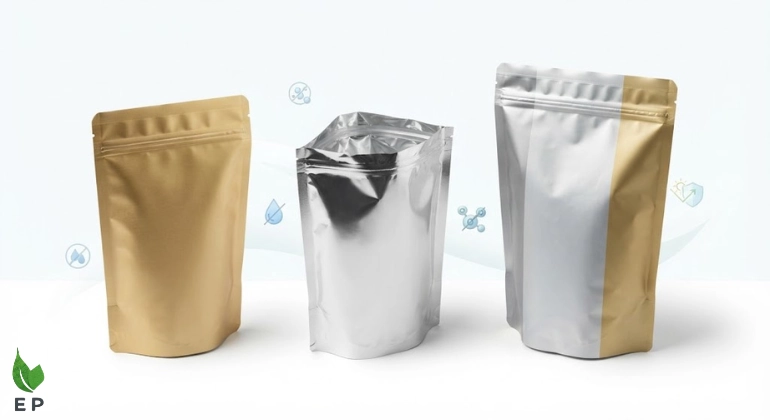
If you’re exploring packaging options for your own brand, EcoProduct’s range of aluminum foil standup pouches shows how this technology is applied in real, ready-to-use formats — from coffee bags to spice pouches.
Understanding how aluminum foil extends shelf life requires looking at what actually causes food and products to degrade. Spoilage isn’t random — it’s driven by predictable chemical and biological processes that packaging can either accelerate or slow down dramatically.
Water vapor is one of the fastest ways to ruin dry goods. It encourages mold growth, clumping in powders, and texture loss in crackers or cereals. Aluminum’s molecular structure is virtually impermeable to water vapor, which is why moisture barrier packaging built around foil layers can keep products dry for extended periods — sometimes years, in the case of military rations and pharmaceutical blister packs.
Oxygen reacts with fats, oils, and pigments, causing rancidity and color fading. This is oxidation, and it’s the reason nuts go stale or coffee loses its aroma. Oxygen barrier films made from aluminum foil reduce oxygen transmission rates to near-zero, dramatically slowing this chemical breakdown. That’s a major part of why foil pouch shelf life often outperforms plastic alternatives by a wide margin.
Ultraviolet and visible light trigger photodegradation, breaking down vitamins, flavors, and even the structural integrity of certain compounds. Because aluminum foil is completely opaque, it functions as effective light-blocking packaging, protecting sensitive products like vitamins, medications, and specialty coffees from light-induced spoilage that clear plastic simply can’t prevent.
Together, these three barriers explain what makes foil pouches airtight and why they’re considered a benchmark in food preservation technology.
It’s easy to assume a foil pouch is “just foil,” but the reality is more sophisticated. A typical pouch might include three to five distinct layers, each contributing something different. The outer layer usually handles printing and abrasion resistance. The middle aluminum layer delivers the barrier protection we’ve discussed. The inner layer, often polyethylene, ensures the pouch is heat sealable, allowing manufacturers to create airtight seals during packaging without compromising the barrier integrity.
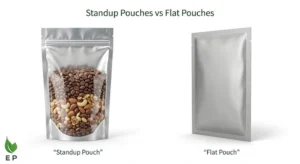
This layered approach is also what makes flexible packaging solutions so versatile. The same core technology can be adapted into stand-up pouches, flat pouches, spouted pouches, or retort pouches depending on the product’s needs. For anyone comparing formats, EcoProduct’s breakdown of standup pouches vs flat pouches is a useful next read to understand which shape suits your product best.
For products that require sterilization after sealing — like ready-to-eat meals — 3-sided seal retort pouches take this laminate concept even further, withstanding high-temperature processing without losing their barrier performance.
One of the most common questions brands ask is whether foil pouches are genuinely better than standard plastic packaging, or if it’s just marketing. The honest answer depends on what you’re protecting, but the data consistently favors foil when shelf life is the priority.
| Factor | Aluminum Foil Pouches | Standard Plastic Packaging |
|---|---|---|
| Oxygen Barrier | Near-zero transmission | Moderate to high transmission |
| Moisture Protection | Excellent, long-term | Good, but degrades over time |
| Light Protection | Complete (opaque) | Poor unless specially treated |
| Shelf Life Impact | Extends significantly | Shorter, product-dependent |
| Recyclability | Requires specialized recycling | Often easier to recycle |
| Cost | Slightly higher upfront | Generally lower |
This aluminum foil vs plastic pouch comparison shows that while plastic can be more budget-friendly and easier to recycle in some regions, foil pouches win decisively when contamination protection and long-term freshness are non-negotiable — think coffee, pharmaceuticals, pet food, or export products that spend weeks in transit.
Beyond the science, there are practical business advantages that make aluminum foil packaging bags a smart investment for brands of all sizes:
This combination of function and form is exactly why shelf life extension through foil packaging has become a competitive advantage rather than just a technical detail.
Theory is helpful, but seeing these barriers in action makes the value obvious. Consider a specialty coffee roaster shipping beans across Pakistan. Without an oxygen and light barrier, the beans would lose their aroma and go stale within a couple of weeks. Packaged in a foil pouch with a one-way degassing valve, that same coffee stays fresh for months while still releasing built-up CO2 — a perfect example of engineering meeting practicality.
Spice brands face a similar challenge. Ground spices are highly sensitive to moisture and light, both of which cause color fading and flavor loss. A kraft paper with aluminum lamination pouch offers the rustic, eco-conscious look customers love on the outside, while the inner foil layer does the real preservation work.
Pet food manufacturers also rely heavily on this technology. Because pet food often contains fats that oxidize quickly, brands frequently choose black standup pouches with aluminum lamination to combine strong barrier performance with bold, shelf-ready branding.
Even smaller retail formats benefit — a black coffee pouch with valve demonstrates how specialty features like degassing valves pair naturally with foil’s protective qualities for a complete freshness solution.
When shelf life needs to be pushed even further, businesses often combine foil pouches with vacuum sealing. Removing air before sealing eliminates the oxygen that causes oxidation in the first place, working alongside the pouch’s inherent oxygen barrier films for a compounding preservation effect. This approach is common in dried meats, cheese, and premium snack foods where every extra week of shelf life translates directly into reduced waste and higher profitability.
This is where food preservation technology truly comes together — it’s not just one feature doing the work, but multiple layers of protection reinforcing each other. A vacuum-sealed foil pouch essentially removes the three main spoilage triggers simultaneously: air, light, and moisture.
A common misconception is that flexible packaging can’t be eco-friendly. In reality, aluminum foil bags for storage often reduce overall environmental impact compared to rigid alternatives like glass jars or thick plastic tubs, simply because they use far less raw material per unit of product protected and take up less space during transport, cutting fuel emissions.
Brands looking to balance sustainability with performance are increasingly pairing foil-lined pouches with recyclable outer materials. EcoProduct’s broader work in sustainable packaging solutions reflects this shift, showing how Pakistani businesses can adopt high-performance packaging without abandoning environmental responsibility. For brands specifically exploring greener formats, the eco-friendly packaging products collection offers a good starting point for comparison.
Not every product needs the same pouch specification, and choosing correctly can save both money and unnecessary waste. A few practical questions help narrow down the right fit:
For businesses still comparing base materials before committing to foil, browsing kraft standup pouches alongside foil-laminated options can clarify which combination of protection, cost, and presentation best matches your product line.
Do aluminum foil pouches really extend shelf life more than plastic? Yes. Because aluminum blocks nearly all oxygen, moisture, and light transmission, products stored in foil pouches typically last significantly longer than those in standard plastic packaging, especially for oils, coffee, and dried goods.
Are aluminum foil pouches safe for direct food contact? Food grade aluminum pouches are manufactured specifically to meet safety standards for direct food contact, making them suitable for snacks, spices, coffee, and similar consumables.
Can aluminum foil pouches be recycled? Recycling depends on the specific laminate structure. Some multilayer pouches require specialized recycling facilities, while single-material foil options are easier to process. Checking with local recycling programs is recommended.
What’s the difference between metalized foil pouches and pure aluminum foil pouches? Metalized pouches use a thin vacuum-deposited aluminum layer on plastic film, while pure foil pouches use a solid laminated aluminum sheet. Solid foil generally offers stronger barrier performance.
Which products benefit most from foil pouch packaging? Coffee, spices, pet food, pharmaceuticals, dried fruits, and any product sensitive to oxidation or light exposure benefit significantly from foil-based packaging.
Choosing the right packaging isn’t just about aesthetics — it directly determines how long your product stays fresh, how much waste you generate, and how confident customers feel about quality. Aluminum foil pouches solve a real, measurable problem by combining moisture resistance, oxygen blocking, and light protection into a single flexible format that’s both practical and cost-effective.
If your brand is ready to reduce spoilage, extend foil pouch shelf life, and present products with a premium finish, explore EcoProduct’s full range of aluminum foil packaging solutions and find the exact specification your product deserves.

Subscribe our newsletter & get notification about information discount.
Subscribe to get special offers, free giveaways, and once-in-a-lifetime deals.